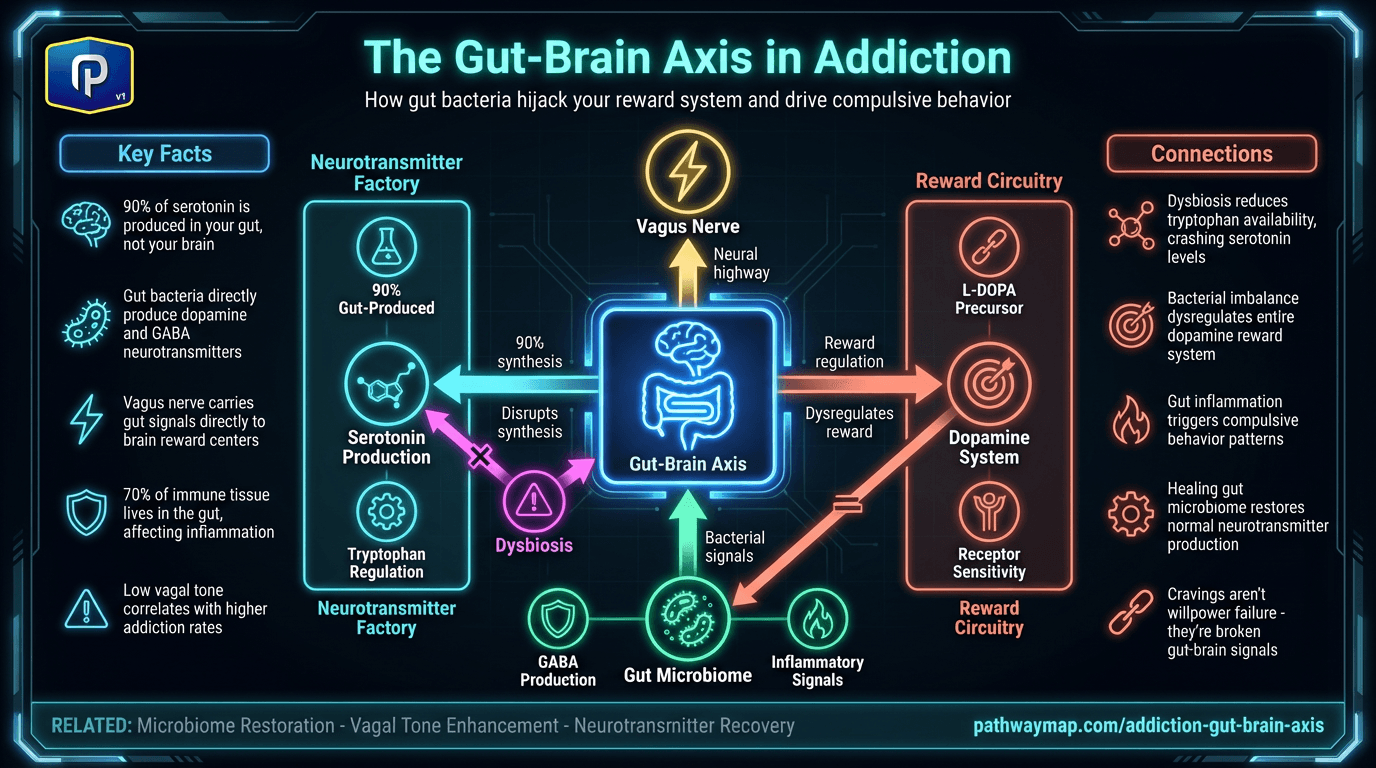
Gut-Brain Axis in Addiction
Your cravings might not originate in your brain at all. They might be coming from your gut.
Here's what most people miss: 90% of your body's serotonin is produced in your gut, not your brain. Your gut bacteria directly influence dopamine production, GABA levels, and the inflammatory signals that drive compulsive behavior. When your gut microbiome is disrupted—what we call dysbiosis—it's not just digestion that suffers. It's your entire reward system.
This isn't alternative medicine. It's basic neuroscience that most addiction treatment completely ignores.
The Gut-Brain Connection Is Physical
The gut and brain communicate through three main pathways:
- The vagus nerve - A direct neural highway carrying signals both ways
- The bloodstream - Metabolites, neurotransmitters, and inflammatory signals
- The immune system - 70% of immune tissue lives in the gut
The vagus nerve is the primary conduit. It runs from your brainstem to your intestines, transmitting information about gut bacteria, inflammation, and nutrient status directly to brain regions that control mood, stress response, and reward-seeking behavior.
When researchers cut the vagus nerve in mice, gut bacteria could no longer influence anxiety or stress behavior. The connection was severed.
In humans, low vagal tone correlates with higher rates of addiction, depression, and anxiety. This isn't coincidence—it's mechanistic.
Your Gut Bacteria Make Your Neurotransmitters
Let's get specific about what's actually happening:
Serotonin (90% Gut-Produced)
Enterochromaffin cells in your gut lining produce the vast majority of your body's serotonin. They need tryptophan to do this. Gut bacteria provide and regulate tryptophan availability.
Certain strains like Lactobacillus plantarum and Bifidobacterium infantis increase tryptophan levels. Others consume it. When dysbiosis shifts the balance toward tryptophan-depleting bacteria, serotonin production drops.
The result: Mood crashes, increased anxiety, and the exact neurochemical state that drives substance use as self-medication.
Dopamine (Gut Bacteria Produce and Regulate It)
Multiple bacterial species directly produce dopamine, including Bacillus and Serratia species. Others produce L-DOPA, dopamine's direct precursor.
But here's what matters for addiction: gut bacteria also regulate how much dopamine precursor (tyrosine) reaches the brain, how sensitive dopamine receptors become, and how quickly dopamine is cleared.
Dysbiosis doesn't just reduce dopamine. It dysregulates the entire dopamine system—the same system hijacked by addictive substances.
GABA (Your Calming Neurotransmitter)
Lactobacillus and Bifidobacterium species produce GABA. When these beneficial bacteria decline—which happens with antibiotic use, poor diet, stress, and substance abuse—GABA production plummets.
Less GABA means more anxiety, worse sleep, and increased vulnerability to addiction. It also means more glutamate activity, which reinforces addictive learning and makes cravings more intense.
Leaky Gut Makes Everything Worse
Here's where the gut-brain connection becomes actively destructive:
When your intestinal barrier breaks down—leaky gut—things that should stay in your digestive tract start entering your bloodstream:
- Lipopolysaccharide (LPS) from gram-negative bacteria
- Undigested food proteins
- Bacterial metabolites
LPS is particularly damaging. It triggers massive inflammatory responses, activating microglia in the brain and increasing neuroinflammation.
Neuroinflammation does three things that perpetuate addiction:
- Reduces dopamine receptor density - You need more stimulation to feel the same reward
- Increases glutamate activity - Strengthens addictive learning and cravings
- Impairs prefrontal cortex function - Weakens impulse control and decision-making
This is why alcohol dependence correlates with elevated LPS levels. Chronic drinking damages gut barrier integrity, increases LPS translocation, drives neuroinflammation, and creates a vicious cycle.
The same pattern shows up with opioid use, stimulant abuse, and even behavioral addictions paired with poor metabolic health.
Specific Bacteria That Matter
Not all gut bacteria are equal. Some strains actively support recovery; others worsen addiction vulnerability.
The Good Players
Lactobacillus rhamnosus Reduces anxiety and depression in human trials. Increases GABA receptor expression in regions controlling emotion and fear response.
Bifidobacterium longum Reduces stress and improves mood. Decreases cortisol and inflammatory markers.
Lactobacillus plantarum Increases tryptophan availability and supports serotonin synthesis. Also strengthens gut barrier integrity.
Akkermansia muciniphila Strengthens the gut barrier and reduces inflammation. Depletion correlates with metabolic dysfunction and addiction severity.
The Problem Bacteria
Candida overgrowth Produces acetaldehyde—the same toxic metabolite that alcohol breaks down into. Creates brain fog, mood swings, and cravings that mimic alcohol withdrawal.
Klebsiella and Enterobacter species Produce LPS and promote leaky gut. Overgrowth increases systemic inflammation.
Proteobacteria overgrowth Marker of dysbiosis. Correlates with inflammation, metabolic dysfunction, and poor mental health outcomes.
What Substances Do to Your Gut
Almost every addictive substance damages the gut microbiome:
Alcohol
Alcohol depletes beneficial Lactobacillus and Bifidobacterium while increasing pathogenic bacteria. It directly damages intestinal cells, increases permeability, and elevates LPS.
The damage starts with moderate drinking and worsens with chronic use.
Opioids
Opioids slow gut motility, disrupt bile flow, and cause severe dysbiosis. They reduce microbial diversity and increase pathogenic bacteria.
Chronic opioid use also depletes gut-derived serotonin, contributing to the depression common in addiction.
Stimulants
Methamphetamine and cocaine increase gut permeability and inflammation. They disrupt appetite regulation, often leading to poor nutrition that further degrades the microbiome.
Sugar and Processed Foods
Not a substance in the traditional sense, but equally destructive. High sugar intake feeds pathogenic bacteria and yeast, depletes beneficial strains, and increases inflammation.
Food addiction and substance addiction share the same gut dysfunction.
The SIBO and Candida Problem
Two specific gut conditions make addiction recovery significantly harder:
Small Intestinal Bacterial Overgrowth (SIBO)
Bacteria that should stay in the colon migrate to the small intestine. They ferment food before you can absorb nutrients, producing gas, bloating, and inflammatory byproducts.
SIBO increases intestinal permeability and reduces neurotransmitter precursor absorption. You can eat adequate protein and still be deficient in tryptophan and tyrosine.
Common symptoms:
- Bloating within 1-2 hours of eating
- Brain fog after meals
- Alternating constipation and diarrhea
- Chronic fatigue
Candida Overgrowth
Yeast overgrowth in the gut produces acetaldehyde, ethanol, and other neurotoxic metabolites. These compounds cross the blood-brain barrier and impair cognition.
People with candida overgrowth often report:
- Intense sugar cravings
- Alcohol-like brain fog
- Mood swings
- Poor impulse control
These aren't character flaws. They're metabolic consequences of gut dysfunction.
Protocols That Actually Work
Standard addiction treatment ignores gut health. Here's what to do instead:
Foundation Protocol
L-Glutamine: 5-15g daily Glutamine is the primary fuel for intestinal cells. It repairs gut barrier integrity, reduces permeability, and decreases inflammation.
Start with 5g twice daily (morning and evening). Increase to 15g total if severe leaky gut.
Multi-Strain Probiotics Look for formulas containing:
- Lactobacillus rhamnosus
- Bifidobacterium longum
- Lactobacillus plantarum
- Bifidobacterium breve
Minimum 20 billion CFU daily. Up to 100 billion during active recovery.
Prebiotics Feed the beneficial bacteria. Best sources:
- Inulin 5-10g daily
- Partially hydrolyzed guar gum (PHGG) 5g daily
- Resistant starch 10-20g daily
Or eat: onions, garlic, asparagus, artichokes, green bananas.
Gut Barrier Repair
Zinc Carnosine: 75-150mg daily Specifically heals intestinal barrier damage. Take on an empty stomach.
Colostrum: 2-5g daily Rich in immunoglobulins and growth factors that repair gut lining.
Deglycyrrhizinated Licorice (DGL): 500-1000mg before meals Soothes and heals digestive tract. Doesn't raise blood pressure like regular licorice.
Anti-Inflammatory Support
Omega-3 Fatty Acids: 2-4g EPA/DHA daily Reduces gut and neuroinflammation. Choose high-quality fish oil or algae-based sources.
Curcumin: 500-1000mg daily Use enhanced absorption forms (with piperine or phytosome). Powerful anti-inflammatory.
Quercetin: 500-1000mg daily Stabilizes mast cells and reduces histamine-driven inflammation.
SIBO Protocol (if suspected)
Herbal Antimicrobials (2-4 weeks):
- Berberine 500mg three times daily
- Oregano oil 150-200mg twice daily
- Neem extract 300mg twice daily
Followed by aggressive probiotic restoration
Consider working with a practitioner for breath testing and treatment monitoring.
Candida Protocol (if suspected)
Antifungals (4-8 weeks):
- Caprylic acid 1000-2000mg three times daily
- Undecylenic acid 250-500mg daily
- Pau d'arco tea 2-3 cups daily
Plus:
- Saccharomyces boulardii 5-10 billion CFU (probiotic yeast that competes with candida)
- Strict sugar elimination
- Biofilm disruptors (NAC, enzymes)
Vagal Tone Enhancement
Gargling Gargle water vigorously for 30 seconds, 3-4 times daily. Stimulates vagus nerve through throat muscles.
Cold exposure Splash cold water on face or take cold showers. Activates vagus nerve and improves tone.
Singing or humming Vibrations stimulate vagal pathways. 5-10 minutes daily.
Deep diaphragmatic breathing 6 breaths per minute (5-second inhale, 5-second exhale) activates vagal response.
Fermented Foods (Real Food Probiotics)
Daily consumption:
- Sauerkraut (raw, unpasteurized) 2-4 tablespoons
- Kimchi (raw) 2-4 tablespoons
- Kefir (dairy or water) 4-8oz
- Kombucha 4-8oz
- Miso (unpasteurized) in soups
Start small if new to fermented foods. Too much too fast can cause die-off reactions.
What to Expect: Timeline and Adjustments
Week 1-2: Possible worsening Die-off of pathogenic bacteria releases toxins. You might feel worse before feeling better. Brain fog, fatigue, mood swings are common.
Push through unless symptoms are severe. Support with:
- Activated charcoal (away from other supplements)
- Extra water
- Gentle movement
- Rest
Week 3-4: Stabilization Gut barrier begins healing. Inflammation decreases. Energy and mood start improving.
Week 6-8: Noticeable improvement Cravings diminish. Sleep improves. Mental clarity returns. Emotional regulation gets easier.
Month 3-6: Sustained changes Microbiome diversity increases. Neuroinflammation decreases significantly. Dopamine and serotonin regulation normalize.
This isn't quick. But it's addressing root causes, not just managing symptoms.
Case Example: Sarah's Recovery
Sarah, 34, had been drinking 1-2 bottles of wine nightly for six years. Multiple attempts at quitting failed within weeks. She described "unbearable anxiety" and cravings that felt "impossible to resist."
Comprehensive stool testing revealed:
- Severely depleted Lactobacillus and Bifidobacterium
- Candida overgrowth
- Elevated inflammatory markers
- Very low beneficial bacteria diversity
Her protocol:
- L-glutamine 15g daily (5g three times)
- High-dose probiotics (100 billion CFU)
- Candida protocol with caprylic acid and S. boulardii
- Omega-3s, curcumin, quercetin
- Strict elimination of sugar and processed foods
- Vagal tone exercises daily
Results:
- Week 1-2: Significant die-off symptoms, continued drinking
- Week 3: First alcohol-free day in six years
- Week 5: Sleeping through the night, less anxiety
- Week 8: Alcohol-free for 21 days, cravings "manageable"
- Month 4: Two social events without drinking, "felt in control"
- Month 6: Sustained recovery, retested microbiome showing normalized bacterial diversity
She relapsed once at month 5 during extreme stress. But instead of spiral, she recognized the pattern, intensified gut protocol, and recovered within days.
"Before, quitting felt like fighting my own brain. After healing my gut, my brain started working with me instead of against me."
Case Example: Marcus and Stimulant Addiction
Marcus, 28, used methamphetamine for five years. After detox, he struggled with severe depression, zero motivation, and relentless cravings.
Testing showed:
- Gut dysbiosis with low Akkermansia
- Elevated LPS (endotoxemia)
- Markers suggesting leaky gut
- Very low serotonin metabolites
His protocol:
- L-glutamine 10g daily
- Zinc carnosine 150mg
- Probiotics with specific focus on dopamine-producing strains
- Mucin-supportive nutrients (to restore Akkermansia)
- Tyrosine and tryptophan supplementation
- Omega-3s at 4g daily
Results:
- Week 2: Digestive symptoms improved
- Week 4: First glimpse of motivation returning
- Week 8: Depression lifting, exercise felt possible
- Month 4: Engaged in job training, cravings "background noise"
- Month 9: Employed full-time, sustainable recovery
His follow-up testing showed:
- Akkermansia restored to healthy levels
- LPS normalized
- Inflammatory markers dropped 70%
"I thought I'd broken my brain permanently. Turns out I'd broken my gut. Once that healed, everything else followed."
The Diet Question
You can take every supplement listed, but if your diet continues feeding dysbiosis, you won't get far.
Eliminate or drastically reduce:
- Refined sugar (feeds pathogenic bacteria and yeast)
- Processed foods (additives damage microbiome)
- Artificial sweeteners (disrupt beneficial bacteria)
- Excess alcohol (obviously)
- Gluten and dairy (if sensitive—common with leaky gut)
Emphasize:
- Vegetables (fiber feeds good bacteria)
- Quality protein (provides neurotransmitter building blocks)
- Healthy fats (reduce inflammation)
- Fermented foods (natural probiotics)
- Resistant starch (powerful prebiotic)
This isn't a restriction diet. It's feeding the right bacteria so they can feed your brain what it needs.
Why This Works When Willpower Doesn't
Traditional addiction treatment focuses on behavior modification, coping skills, and willpower. Those matter. But when your gut-brain axis is broken, you're fighting neurochemistry with psychology.
It's like trying to think your way out of hypoglycemia. Your brain is receiving distorted signals:
- Low serotonin screaming for mood regulation
- Dysregulated dopamine driving reward-seeking
- Inflammation impairing impulse control
- Vagal dysfunction preventing stress recovery
You can't willpower your way through broken neurotransmitter synthesis.
But you can restore the systems that make neurotransmitters. You can reduce the inflammation impairing your prefrontal cortex. You can heal the gut-brain signaling that's been hijacked by dysbiosis.
When those systems work, cravings diminish. Mood stabilizes. Impulse control returns. Not because you're trying harder—because your biology is supporting you instead of sabotaging you.
The Bottom Line
The gut-brain axis isn't alternative medicine. It's well-established neuroscience that addiction treatment largely ignores.
Your gut bacteria:
- Produce 90% of your serotonin
- Regulate dopamine synthesis and receptor sensitivity
- Create or consume GABA
- Control inflammation that directly impacts addiction vulnerability
- Send constant signals to your brain via the vagus nerve
When dysbiosis disrupts these systems, cravings aren't about weakness. They're about broken neurotransmitter regulation.
The solution isn't more willpower. It's restoring gut health so your brain has the neurochemical resources to support recovery.
This takes time. It requires consistency. But it addresses mechanisms that conventional treatment misses entirely.
My Protocol
I maintain gut health as foundational to mental health and addiction recovery:
Daily core:
- L-glutamine 10g (split doses)
- Multi-strain probiotics (50 billion CFU)
- Omega-3s 3g EPA/DHA
- Zinc carnosine 75mg
- Fermented foods with meals
Periodic intensive support:
- SIBO or candida protocols as needed
- Increased probiotics during stress
- Antimicrobial herbs if signs of overgrowth
Lifestyle:
- Vagal tone exercises daily
- Cold showers
- Organic whole foods, minimal sugar
- Sleep prioritization (gut bacteria have circadian rhythms too)
Result? Stable mood, minimal cravings, resilience during stress. Not because I have superior willpower—because my gut-brain axis functions properly.
That's the difference between fighting biology and working with it.