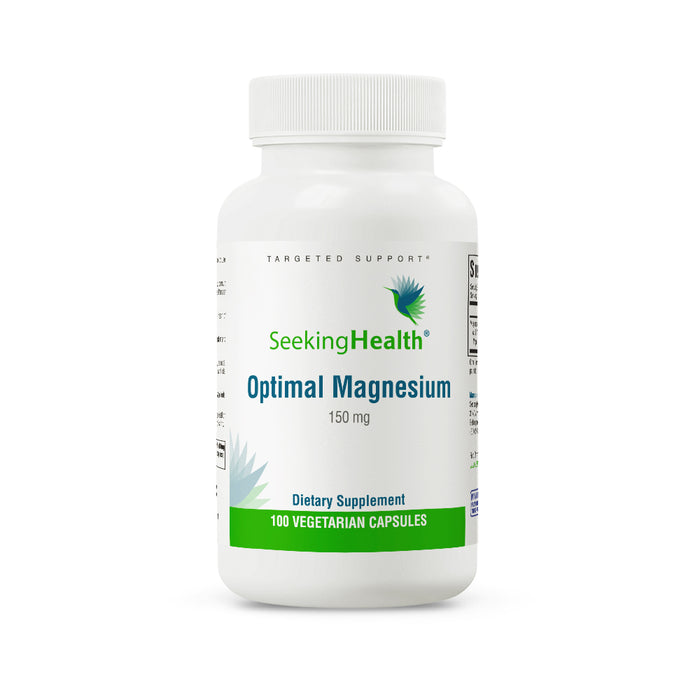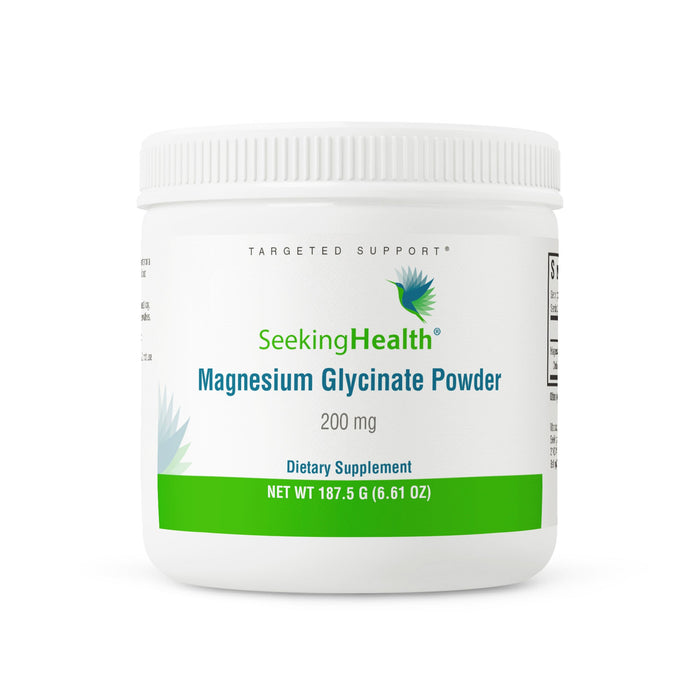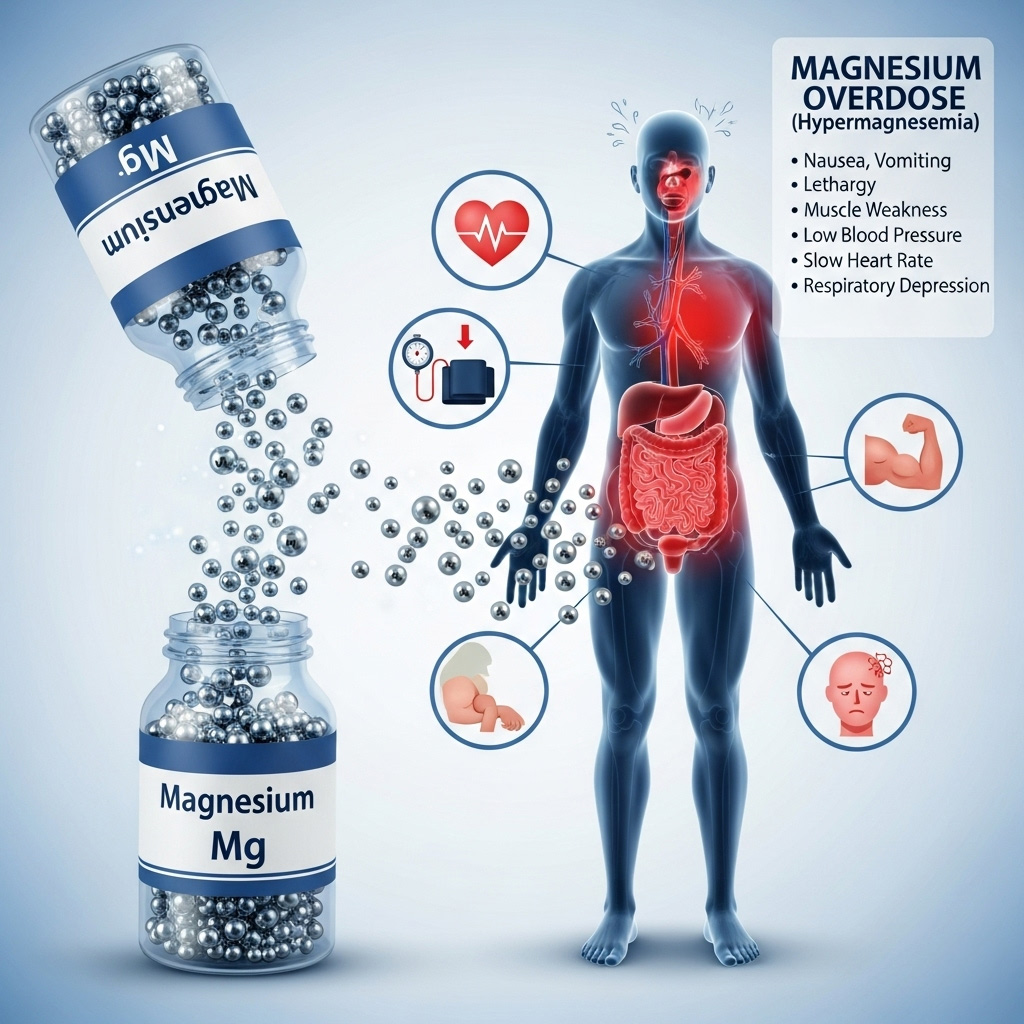

Magnesium is a mineral our body needs to stay healthy. Taking magnesium pills is usually safe for people with healthy kidneys. But if our kidneys don’t work well, we can get too much magnesium in our body, and that can be dangerous. When kidneys work at less than 30% of normal, they can’t get rid of extra magnesium. This report will help us understand how our kidneys keep us safe from too much magnesium.
How Healthy Kidneys Keep Us Safe
Our kidneys are like super-smart filters. Every day, they clean about 2,400 mg of magnesium from our blood. That’s like cleaning a teaspoon of magnesium! The kidneys are so good at their job that they put most of it back into our body and only get rid of about 100 mg each day.
Our kidneys have three special parts that work together like a team. The first part saves 10-25% of the magnesium. The second part does most of the work and saves 65-70%. The third part makes tiny adjustments and saves 3-7%. It’s like having three goalies on a soccer team!
When we have too much magnesium, our kidneys are smart. They can change from saving almost all of it to getting rid of most of it. Healthy kidneys can handle huge amounts – up to 5,000 mg a day. That’s 50 times more than what we normally need!
What Happens When Kidneys Don’t Work Well
When kidneys start to get sick, they can still do their job at first. If kidneys work at more than 30% of normal, they work extra hard to get rid of magnesium. They increase how much they throw away from 3-5% up to 15-20%.
The Danger Zone: When kidneys work at less than 30% of normal, they can’t keep up anymore. Think of it like a drain that’s mostly clogged – water backs up no matter how hard you try to drain it.
When kidneys only work at 20% of normal, they can only filter 800 mg of magnesium instead of 2,400 mg. Even if they try their hardest, they can only get rid of 160 mg a day. That’s barely more than what our body takes in from food!
When kidneys work at less than 10% of normal, the situation gets really bad. About 10-15% of people in the hospital with very sick kidneys get too much magnesium in their blood. Even regular antacids or laxatives with magnesium can make them very sick in just a few days.
Warning Signs: From Mild to Dangerous
Early Signs (We Might Not Notice)
When magnesium levels go up a little bit (2.5-4.0 mg/dL), many people feel fine. But some might feel:
- Weak or tired
- Sick to their stomach
- Dizzy
- Face feels warm and red
The most important early sign is low blood pressure that medicine can’t fix. If this happens, doctors need to check magnesium levels right away!
Medium Warning Signs (Time to Get Help!)
When levels reach 7-12 mg/dL, we see clear signs something is wrong:
- The knee-tap test stops working (doctors can’t make our knee jump)
- Muscles get very weak
- Feeling very sleepy
- Heart beats too slowly
- Heart tests show problems
Dangerous Signs (Emergency!)
When levels go above 12 mg/dL, people can’t move their muscles at all. They might stop breathing on their own. Their heart can stop working right and might even stop beating. This is why people with kidney problems need to be very careful with magnesium!
How Much Magnesium Is Safe?
For People with Healthy Kidneys
The government says healthy people can safely take 350 mg of magnesium pills each day. This doesn’t count the magnesium in our food. Most people take 200-400 mg and do just fine. Some people take more for headaches or heart health, but they need a doctor to watch them.
For People with Kidney Problems (But Not Too Bad)
People whose kidneys work at 15-59% of normal can still take magnesium if a doctor watches them. They might start with 200-300 mg a day. The doctor will do blood tests every 2-4 weeks to make sure it’s safe.
For People with Very Sick Kidneys
People whose kidneys work at less than 15% of normal usually shouldn’t take magnesium pills. If they really need them, they might take only 50-100 mg a day with blood tests every week. Just 1,000-1,650 mg a day can make them very sick – that’s way less than what would hurt someone with healthy kidneys!
Why Kidney Problems Make Magnesium Dangerous
Here’s the big difference:
Healthy kidneys: Can handle 50 times the normal amount of magnesium before we get sick. It’s really hard to take too much by accident.
Sick kidneys: Can only handle 3-5 times the normal amount. Regular doses of some medicines can cause problems.
Older people need to be extra careful – 93% of people who needed emergency treatment for too much magnesium were elderly. As we get older, our kidneys don’t work as well, but we might not know it without a test.
Remember: People with sick kidneys are 10 times more likely to get sick from magnesium than people with healthy kidneys!
What We Learned
Magnesium pills are safe for most people, but our kidneys need to work well to get rid of extra magnesium. When kidneys work at less than 30% of normal, they can’t protect us anymore. The signs of too much magnesium start small (feeling tired) but can get very serious (heart problems).
Before taking magnesium pills, especially if we’re over 65 or have health problems, we should ask our doctor to check how well our kidneys work. Even people with kidney problems might be able to take magnesium if a doctor watches them carefully.
The most important thing to remember: If someone loses their knee-jerk reflex, they need help right away – this means they have too much magnesium and need treatment fast!