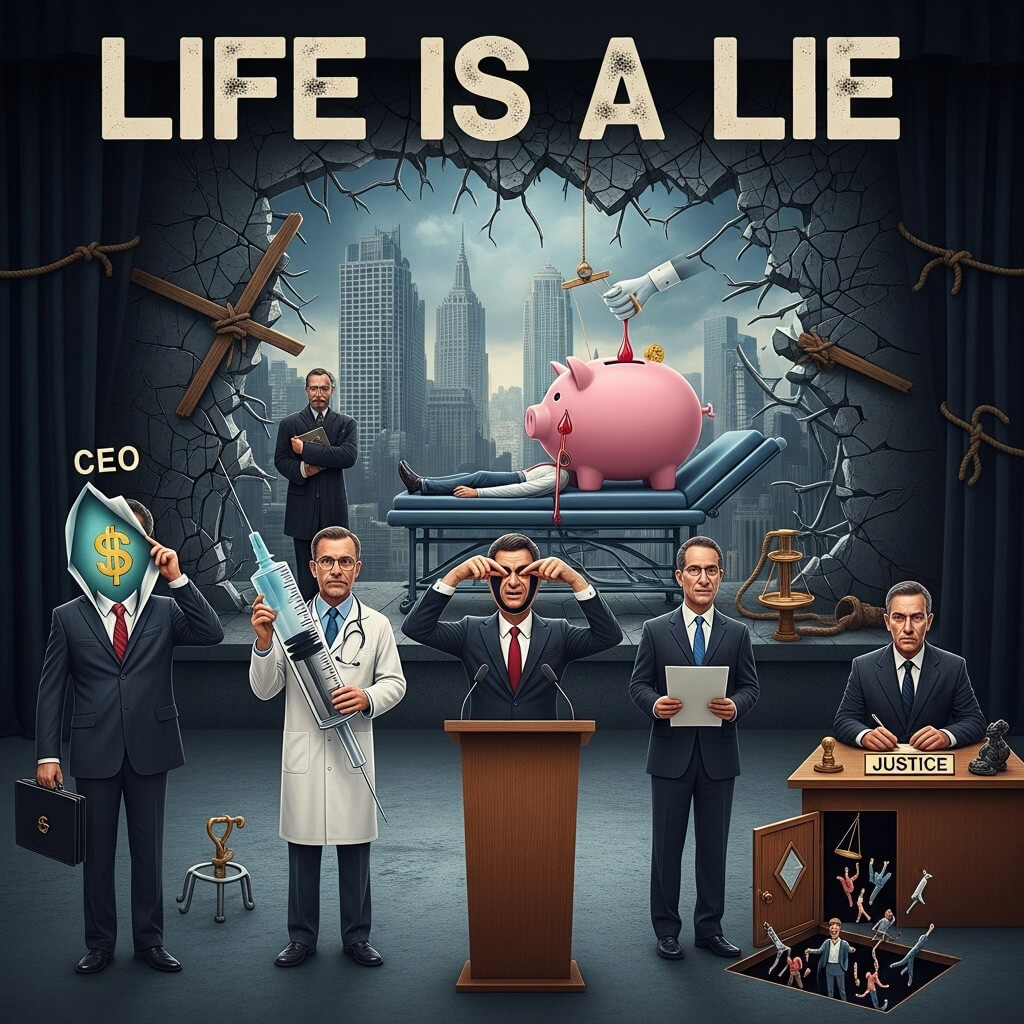
This comprehensive investigation reveals systematic corporate misconduct across major industries that receives minimal media coverage despite causing massive public harm. The evidence shows a pattern of regulatory capture, media suppression through advertising leverage, and deliberate concealment of practices that damage health, environment, and worker safety while extracting billions from consumers.
Tech industry surveillance and manipulation
The technology sector has created an unprecedented surveillance apparatus while conducting psychological experiments on users without consent. Amazon operates a sophisticated union surveillance network, hiring Pinkerton Detective Agency operatives to infiltrate warehouses and maintaining “heat maps” tracking organizing activity across all facilities. The company has received over 240 unfair labor practice charges while claiming “First Amendment rights” to engage in union busting.
Facebook’s hidden 2012 emotional contagion experiment manipulated 689,003 users’ news feeds to test emotional responses without consent, altering content to increase negative or positive emotions and measuring the psychological impact. This received minimal coverage despite representing one of the largest unauthorized psychological experiments in history.
The FTC has issued massive penalties that go largely unreported: Gravy Analytics sold location data from medical facilities and domestic violence shelters; BetterHelp shared mental health data with Facebook for advertising despite privacy promises; Premom sold fertility tracking data. These companies face minimal consequences – BetterHelp’s $7.8 million fine represents a fraction of profits from exploiting vulnerable users’ most sensitive information.
Google’s monopolistic practices extend far beyond search. Court documents revealed “Project Bernanke” – an internal system manipulating ad auctions to favor Google’s products, extracting 30%+ from all digital advertising flowing through its systems. Despite federal judges finding illegal monopolization in both search and ad tech markets in 2024-2025, Google avoided breakup and continues dominant market control.
Pharmaceutical industry’s deadly deceptions
The pharmaceutical sector shows the most egregious pattern of prioritizing profits over lives. Johnson & Johnson has paid $25.1 billion in penalties since 2000 across 81 violations – the highest of any US company. Internal documents reveal J&J knew of asbestos contamination in baby powder since the 1920s but leveraged massive advertising budgets to suppress media coverage by threatening ad withdrawals from news outlets investigating the story.
Patent manipulation costs patients billions annually. Research shows 78% of “new” drug patents are for existing medications with trivial modifications. The “Big Three” insulin manufacturers coordinated with pharmacy benefit managers to raise prices 1,000% since the 1990s for insulin costing under $2 to produce.
Clinical trial fraud pervades the industry. A Nature investigation suggests up to 25% of trials may be “problematic or entirely fabricated.” The Miami Clinical Trial Fraud Ring fabricated pediatric asthma data; Bristol-Myers Squibb’s trials showed systematic record manipulation affecting thousands of patients. Yet FDA enforcement dropped from 100+ warning letters annually to just 1 in 2023 and 0 in 2024, acknowledging decades of “lax” oversight.
The opioid crisis extends far beyond Purdue Pharma. McKinsey earned $93+ million advising Purdue to “turbocharge” OxyContin marketing to high-volume prescribers while knowing it fueled addiction. Teva Pharmaceuticals operated copay kickback schemes while fixing generic drug prices. The 2025 DOJ takedown charged 324 defendants in $14.6 billion healthcare fraud schemes, including Texas pharmacies distributing millions of opioid pills to street dealers.
Food industry contamination and deception
Major food companies systematically expose consumers to toxins while hiding health risks. 95% of baby foods contain heavy metals including lead, arsenic, and cadmium linked to neurodevelopmental damage. Despite knowing this since 2019, the FDA took until 2025 to set non-binding “guidance” for just lead – with no enforcement power. The WanaBana incident revealed lead levels 200 times higher than proposed limits, yet regulatory response only came after public exposure.
PFAS “forever chemicals” contaminate food packaging across the industry. While the FDA announced companies would “voluntarily” phase out PFAS in 2024, this followed state bans forcing compliance. A March 2024 study found 68 PFAS chemicals in global packaging, with 61 unauthorized for use. Companies have known since the 1960s that PFAS cause cancer and reproductive harm but continued use while marketing products as “eco-friendly.”
Microplastics pervade the food supply. A September 2024 study identified 79 cancer-causing chemicals from plastics in food processing. Simply opening plastic bottles releases millions of microplastic particles. People with microplastics in arteries are twice as likely to have heart attacks or strokes, yet the FDA claims “insufficient evidence” while taking no regulatory action.
Nestlé exemplifies systematic harm. The company adds 2-6 grams of sugar to baby food in developing countries while selling sugar-free versions in wealthy nations. A National Bureau of Economic Research study estimates Nestlé formula marketing caused 10.87 million infant deaths between 1960-2015 in countries without clean water access. Nestlé saleswomen dressed as nurses to promote formula despite knowing breast milk superiority and sanitation issues.
Financial sector’s predatory schemes
The banking industry operates through systematic fraud with minimal consequences. The 2023 regional banking crisis revealed deeper problems than reported: Silicon Valley Bank, Signature Bank, and First Republic Bank collapses cost the FDIC $31.5 billion, with 90% of deposits uninsured. The FDIC Inspector General found the agency unprepared for these failures despite clear warning signs.
Wells Fargo’s violations extend far beyond fake accounts. The bank paid $3.7 billion in CFPB penalties for creating 3.5 million unauthorized accounts, wrongfully repossessing vehicles, improperly denying mortgage modifications leading to foreclosures, and charging surprise overdraft fees when customers had sufficient funds. Despite nine active consent orders, no executives faced criminal prosecution.
Student loan servicer Navient affected 12 million borrowers through systematic abuse: steering borrowers to expensive forbearance instead of affordable repayment plans, causing $4 billion in avoidable interest; failing to report disabled veteran loan discharges correctly; misallocating payments to generate fees. Only permanently banned from federal servicing in 2024 after decades of documented harm.
The LIBOR manipulation scandal affected $350+ trillion in global markets with banks systematically rigging interest rates for nearly a decade. Despite $9+ billion in fines, only 16 individuals were charged in the US with mixed convictions. Traders offered bribes of “50,000 dollars, 100,000 dollars… whatever you want” to manipulate rates affecting mortgages, credit cards, and loans worldwide.
Energy and automotive environmental crimes
The energy sector’s climate deception extends far beyond ExxonMobil. BP, Shell, and Chevron spent $700 million funding academic research to influence climate science while internal documents showed certainty that “gas doesn’t support climate goals.” Companies used identical consultants as the tobacco industry to manufacture doubt about climate science while planning massive fossil fuel expansion.
“Cancer Alley” along the Mississippi River exemplifies environmental racism. This 85-mile stretch contains 200+ petrochemical plants where 90% of residents in hardest-hit areas are Black. Cancer risks reach 47 times the national average, with preterm birth rates of 25.3% versus 10.5% nationally. Louisiana regulators permit 7-21 times higher emissions in Black communities than white areas – the EPA found “significant evidence” of racial discrimination.
The electric vehicle “green” transition hides massive exploitation. 70% of global cobalt for batteries comes from Congo, with 15-30% from mines using children as young as 7 in dangerous conditions. Lithium extraction consumes 500,000 gallons of water per ton. Battery production is 3 times more energy-intensive than conventional vehicles, yet companies market EVs as “completely environmentally friendly.”
Texas power grid manipulation during crisis extracted billions from consumers. During Winter Storm Uri, ERCOT overcharged $16 billion by keeping prices at $9 per kilowatt-hour (7,400% increase) for two days after outages ended. Energy Transfer Partners made $2.4 billion selling gas at inflated prices. In 2023, ERCOT’s new system artificially keeps 2,500+ megawatts offline during peak hours, quadrupling prices while companies are paid $2,000+ per megawatt to sit idle.
Auto emissions cheating pervaded the industry beyond Volkswagen. Fiat Chrysler, Mercedes-Benz, and BMW all used illegal software to shut off emissions controls. Real-world testing found vehicles exceeding legal limits by 10-14 times. Despite criminal fraud charges and $800+ million settlements, the pattern of software manipulation to circumvent testing dates back decades with minimal executive accountability.
Retail and fashion exploitation
Amazon warehouse conditions represent the worst in American industry. The company has the highest injury rate in warehousing at 5.1 per 100 employees – double the national average. Multiple workers died during 2023 heatwaves. OSHA cited Amazon at 10 facilities for musculoskeletal hazards. The company spent $14+ million on union-busting consultants while facing federal investigation for fraudulent schemes hiding injury rates.
Ultra-fast fashion companies Shein and Temu facilitate massive forced labor. Congressional investigation revealed they ship 600,000 packages daily to the US, representing 30% of all de minimis shipments globally. Temu has NO system to ensure Uyghur Forced Labor Prevention Act compliance and openly admits not prohibiting products from Xinjiang. Workers face 17-hour shifts for $20 daily base pay, docked $14 for mistakes.
Starbucks operates the largest union-busting campaign in NLRB’s 90-year history with 771 unfair labor practice charges, 113 legal decisions against the company, and 73 illegally fired workers ordered reinstated. The company spent an estimated $240 million on union-busting while systematically closing unionized stores and denying benefits to union workers.
Fashion industry toxic exposure affects millions. Over 8,000 chemicals are used in textile manufacturing. Sandblasting for denim causes emphysema and death from silica dust. Carbon disulfide in viscose production causes psychosis and leukemia. Azo dyes increase lung, bladder, and gastrointestinal cancers. Workers handle these chemicals without protection while managers threaten punishment for complaints.
Systematic patterns of corporate harm
This investigation reveals consistent patterns across all industries:
Regulatory capture pervades oversight agencies. The FDA went from 100+ annual warning letters to pharmaceutical companies to zero. Louisiana environmental regulators operate a “revolving door” with polluters. Financial regulators routinely join banks they previously supervised. OSHA fines remain minimal despite deadly violations.
Media suppression through advertising leverage keeps scandals hidden. Johnson & Johnson threatens news outlets with ad withdrawal to kill investigations. Pharmaceutical companies outspend public health advocates thousands to one. Tech platforms control information distribution while committing the violations they might expose.
Criminal immunity for executives enables continued abuse. Despite $25+ billion in J&J penalties, no executive prosecutions. Wells Fargo’s massive fraud yielded no criminal charges for leadership. Only complete collapses like FTX result in prosecution, while systematic harm continues without individual accountability.
Environmental racism and worker exploitation target the vulnerable. Cancer Alley shows 7-50 times higher cancer risk in Black communities. Amazon’s highest injury rates affect predominantly minority warehouse workers. Fashion industry exploitation focuses on women and children in developing nations. Student loan abuse targets first-generation college students.
Financial extraction through crisis represents deliberate strategy. Texas power companies made billions during winter storm deaths. Pharmaceutical companies raised insulin prices 1,000% for life-saving medication. Banks charged overdraft fees during pandemic economic crisis. Private equity profits from housing shortages they help create.
The scale of hidden harm
The documented evidence shows corporate misconduct causes:
- Millions of preventable deaths from pharmaceutical fraud and environmental poisoning
- Hundreds of billions extracted through financial manipulation and predatory lending
- Systematic poisoning of communities of color through environmental racism
- Mass psychological manipulation and surveillance affecting billions globally
- Destruction of democratic organizing through illegal union busting
- Intergenerational health damage through chemical exposure and contamination
These represent not isolated incidents but systematic business models prioritizing profit over human life. The combination of regulatory failure, media capture, and criminal immunity has created an environment where corporations operate with effective impunity while causing massive public harm.
The underreporting of these scandals relative to their impact represents one of the most significant failures of modern journalism and democracy. Only sustained public pressure, whistleblower revelations, and rare criminal prosecutions have exposed fragments of these systematic abuses. The evidence demands fundamental reform of corporate regulation, criminal accountability for executives, and media independence from corporate influence.