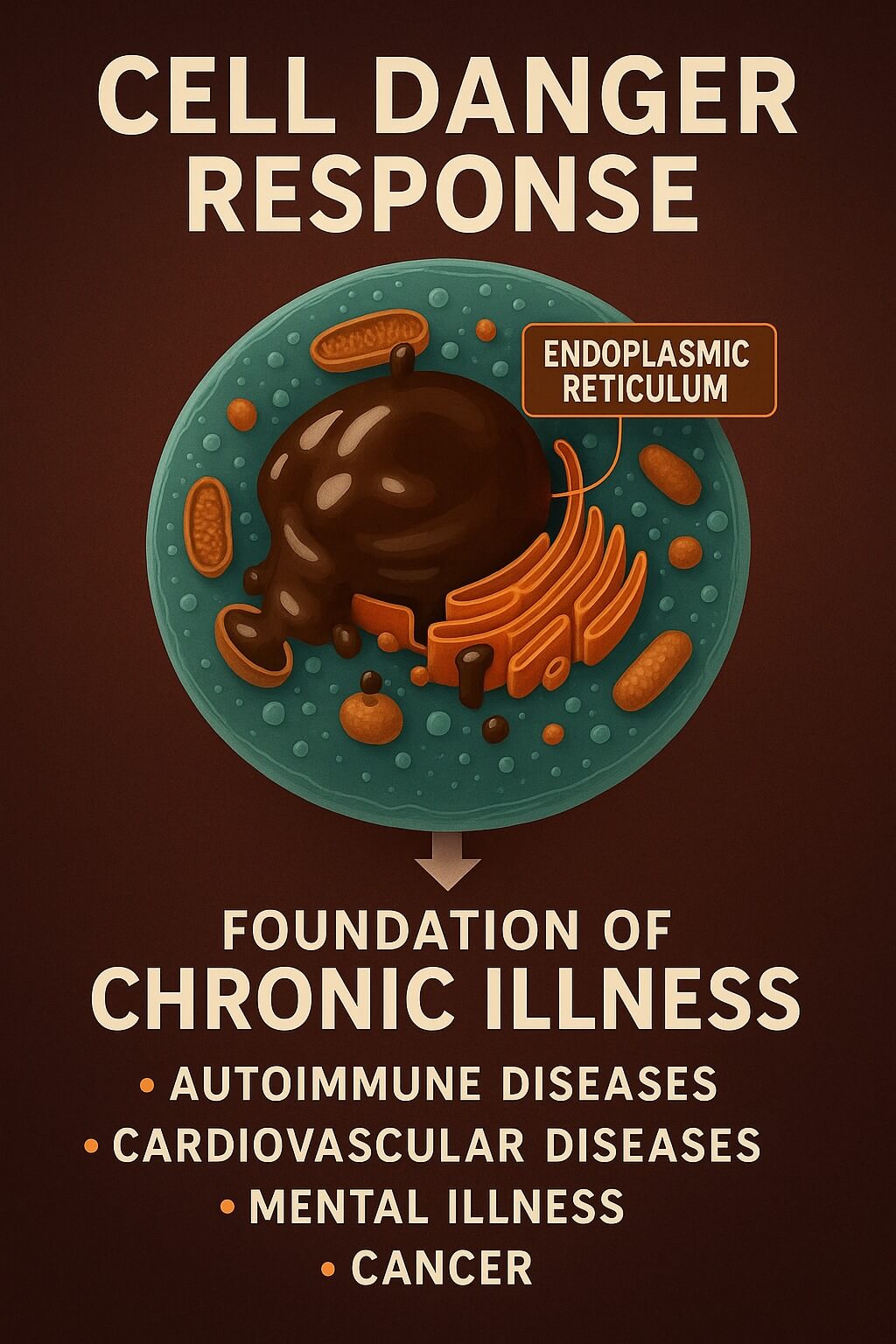

When the human body encounters megadoses of iodine (50mg or more, less for some of us), it triggers a remarkable cascade of cellular and metabolic responses that go far beyond simple thyroid suppression. These responses represent an ancient biological defense system, unique among nutrients, that can either protect and heal or overwhelm cellular systems depending on dose, duration, and individual genetic factors. The body’s reaction to high-dose iodine reveals a sophisticated interplay between protective mechanisms and metabolic disruption, offering both therapeutic potential and significant risks.
Iodine’s Unique Chemical Architecture Drives Cellular Responses
Iodine possesses chemical properties that no other nutrient can match, explaining why it triggers such distinctive biological responses. As the largest stable halogen with seven valence electrons, iodine can exist in multiple oxidation states (-1, 0, +1, +3, +5, +7), enabling it to participate in complex redox reactions involving up to 12 electron transfers. This versatility far exceeds trace elements like zinc or selenium, which operate in single oxidation states. Most critically, molecular iodine (I₂) forms charge-transfer complexes with biological molecules—a unique capability that allows it to modulate cellular signaling in ways other nutrients cannot. These complexes create distinctive spectral changes and enable iodine to act as both an electron donor and acceptor, fundamentally altering cellular redox balance.
The distinction between iodine’s various forms proves crucial for understanding its effects. Molecular iodine (I₂) penetrates cell membranes through facilitated diffusion and directly forms bioactive iodolipids like 6-iodolactone, which activate nuclear receptors and trigger apoptosis in abnormal cells. In contrast, iodide (I⁻) requires active transport via the sodium-iodide symporter and primarily supports thyroid hormone synthesis. At high concentrations, these different forms create a dynamic equilibrium that affects everything from membrane integrity to mitochondrial function. Unlike other halogens that are either too reactive (fluorine) or lack essential biological roles (bromine), iodine achieves an optimal balance between reactivity and stability that enables complex protective responses.
The Wolff-Chaikoff Effect Represents Just the Tip of the Iceberg
The famous Wolff-Chaikoff effect—where high iodine temporarily suppresses thyroid hormone production—represents merely one component of a sophisticated multi-system protective response. At the molecular level, high intracellular iodide concentrations above 10⁻³ molar trigger formation of inhibitory iodopeptides that suppress thyroid peroxidase, while simultaneously pushing the reaction toward tri-iodide (I₃⁻) formation, sequestering the I₂ needed for hormone synthesis. Within 26-50 hours, the thyroid “escapes” this effect by downregulating the sodium-iodide symporter, reducing intracellular iodide below the inhibitory threshold.
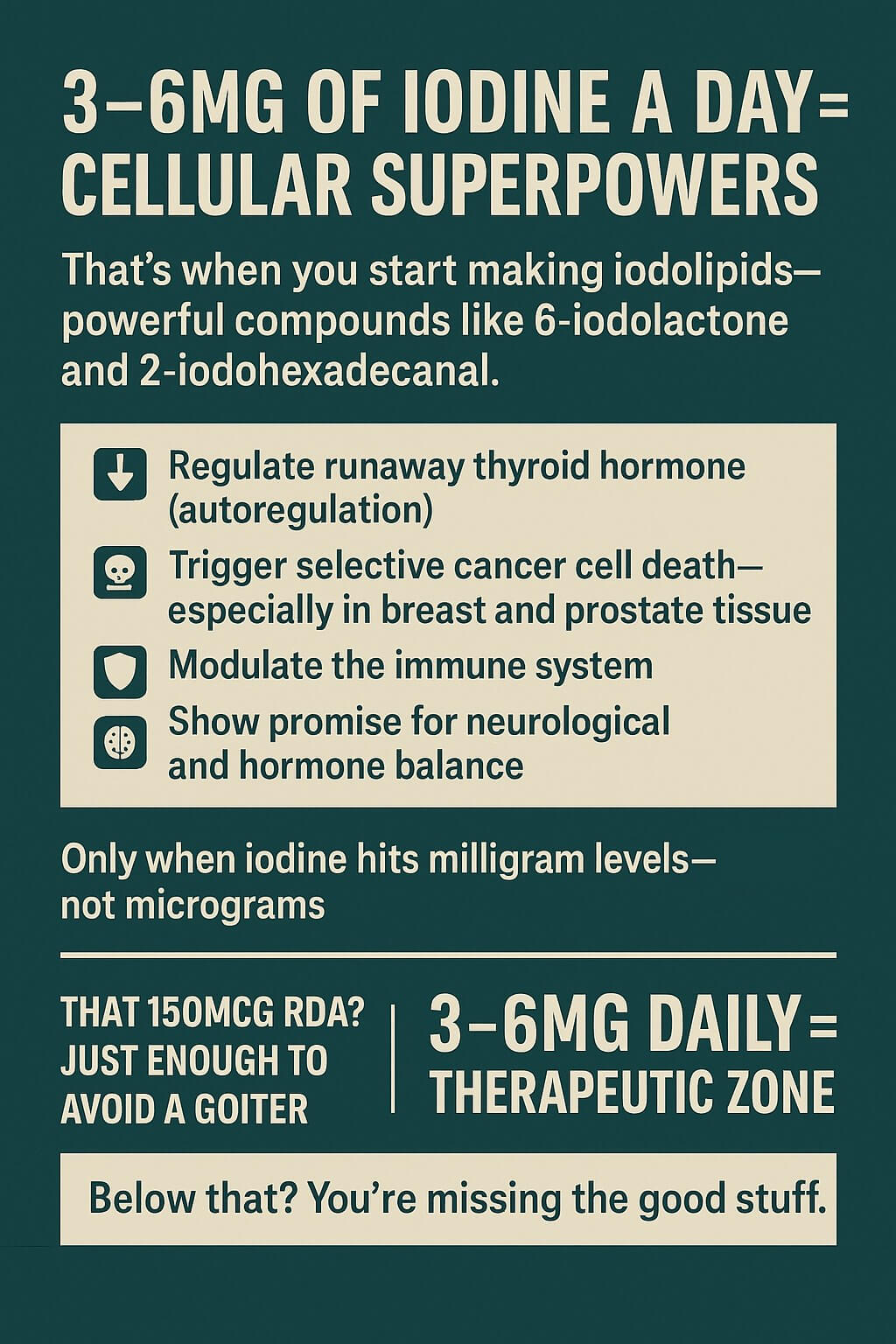
But the systemic responses extend far beyond the thyroid. High-dose iodine activates the Nrf2 pathway, triggering expression of Type II antioxidant enzymes including superoxide dismutase, catalase, and glutathione peroxidase. Molecular iodine directly neutralizes hydroxyl radicals and hydrogen peroxide while preventing lipid peroxidation in cell membranes. The formation of iodolipids—particularly 2-iodohexadecanal and 6-iodolactone—creates potent signaling molecules that inhibit cellular proliferation, induce apoptosis in abnormal cells, and activate PPAR-γ nuclear receptors. These iodolipids provide negative feedback on thyroid function while exhibiting anti-cancer properties across multiple tissue types.
Metabolic Pathways Undergo Dramatic Reprogramming
When cells encounter high-dose iodine, fundamental metabolic processes undergo dramatic alterations that can either optimize function or cause cellular dysfunction depending on the concentration. At therapeutic doses (10-100 μM), iodine forces cells to shift from glycolytic to oxidative metabolism, potentially improving metabolic efficiency. However, at higher concentrations (100-1000 μM), severe disruption occurs.
The glycolytic pathway experiences immediate impact through hexokinase II inhibition, blocking the initial phosphorylation of glucose. Simultaneously, oxidative phosphorylation suffers as iodine acts as a dual inhibitor of Complex I in the electron transport chain while demonstrating uncoupling effects that dissipate the proton gradient needed for ATP synthesis. Research shows the P/O ratio significantly decreases, indicating impaired efficiency of ATP production. The pentose phosphate pathway, crucial for generating NADPH needed for biosynthesis and antioxidant defense, becomes compromised as glucose-6-phosphate dehydrogenase activity declines.
These metabolic disruptions create a threshold effect. Below certain concentrations, cells mount adaptive responses that may enhance resilience. Above this threshold, cells experience “iodoptosis”—a newly identified form of rapid cell death characterized by membrane disintegration, mitochondrial swelling, and complete metabolic collapse occurring within minutes to hours at toxic doses.
Mitochondria Serve as Both Targets and Mediators
Mitochondria play a central role in cellular responses to high-dose iodine, serving as both primary targets and mediators of protective or destructive effects. At lower therapeutic doses, iodine can selectively dissipate mitochondrial membrane potential in cancer cells while preserving normal cell mitochondria, triggering apoptosis through cytochrome c release. This selectivity appears related to the higher arachidonic acid content in cancer cell membranes, providing more substrate for iodolipid formation.
However, at higher concentrations, mitochondrial dysfunction becomes universal. Iodine causes rapid mitochondrial swelling, disrupts the inner membrane structure, and abolishes oxidative phosphorylation. The resulting energy crisis forces cells to rely on inefficient anaerobic metabolism, producing only 2 ATP molecules per glucose instead of the normal 36. Paradoxically, while causing mitochondrial stress, iodine also activates protective heat shock proteins and DNA repair systems, suggesting an attempt at cellular adaptation even during metabolic disruption.
Detoxification Systems Activate in Waves
One of the most clinically significant effects of high-dose iodine involves activation of multiple detoxification pathways. Phase I detoxification ramps up through cytochrome P450 enzyme activation, particularly CYP1A1 and CYP1A2, while Phase II conjugation pathways see increased activity of glutathione S-transferases (13% increase), superoxide dismutase (23% increase), and total cellular antioxidant capacity (40% increase).
High-dose iodine uniquely mobilizes heavy metals from tissue storage sites. Mercury excretion increases several-fold within 24 hours, while lead mobilization occurs rapidly from both soft tissue and bone storage. Cadmium and aluminum show different kinetics, with aluminum requiring weeks to months before significant excretion begins. This metal mobilization occurs through competitive displacement from binding sites and iodine’s natural chelating properties.
Perhaps most importantly, iodine remains the only known method to effectively remove toxic halogens from the body. Bromide excretion increases 50% within 24 hours, while fluoride elimination jumps 78% in the same timeframe. This halogen displacement occurs through competitive inhibition at cellular receptors, with iodine’s larger atomic weight (126.9) giving it advantages over lighter halogens. The detoxification of bromide from tissues can continue for weeks to months, often causing temporary symptoms including fatigue, brain fog, and skin rashes as these toxins mobilize.
Individual Genetic Variations Determine Response Patterns
The wide variability in how people respond to high-dose iodine largely stems from genetic polymorphisms in detoxification and metabolic enzymes. Up to 78% of certain populations lack functional GSTM1 genes, severely impairing their ability to process mobilized toxins. MTHFR variants (C677T and A1298C) affect cellular methylation and can create 10-100 fold differences in detoxification capacity. Those with multiple SNPs in Phase II enzymes often experience intense detoxification reactions, while fast metabolizers with high Phase I but inadequate Phase II activity may generate toxic intermediates faster than they can be cleared.
These genetic factors explain why some individuals experience profound healing responses while others cannot tolerate even modest doses. Slow metabolizers with CYP1A2 variants process environmental toxins more slowly and may experience prolonged detoxification symptoms. In contrast, those with robust glutathione systems and efficient Phase II pathways often report rapid improvements in energy, mental clarity, and overall health.
Organ Systems Mount Coordinated Responses
Different organs respond to high-dose iodine according to their specific functions and iodine-concentrating abilities. The liver, bearing the primary detoxification burden, upregulates CYP450 enzymes and increases bile production to eliminate lipophilic toxins. The kidneys, responsible for excreting over 90% of dietary iodine, enhance glomerular filtration and toxin clearance. The lungs utilize iodine’s mucolytic properties to break down mucus and clear pathogens, while the skin serves as a secondary excretion pathway through sweat.
Notably, multiple organs beyond the thyroid express sodium-iodide symporters and concentrate iodine for local functions. Breast tissue requires iodine for normal architecture, with deficiency leading to fibrocystic changes that can progress to hyperplasia and potentially cancer. The prostate similarly concentrates iodine, with both molecular iodine and iodide demonstrating anti-proliferative effects and activation of apoptotic pathways in abnormal cells.
Clinical Protocols Reveal Healing Versus Stimulation Dynamics
Clinical research distinguishes between healing responses—sustained benefits from achieving tissue iodine sufficiency—and stimulation effects—transient symptoms during initial supplementation. Healing responses include restoration of normal glandular architecture, reduction in cysts and nodules, enhanced cellular differentiation, and improved energy metabolism. Stimulation effects manifest as temporary hyperthyroid-like symptoms, TSH elevation lasting up to 6 months, and detoxification reactions as toxic halogens get displaced.
Japanese populations consuming 1-3mg of iodine daily (primarily from seaweed) demonstrate significantly lower rates of breast and prostate cancers, though some studies suggest increased thyroid cancer risk with excessive intake. Clinical protocols developed by Abraham, Brownstein, and Flechas typically employ 12.5-50mg daily during loading phases, with maintenance doses of 12.5-25mg. These doses, while 42-333 times the RDA, aim to achieve whole-body sufficiency rather than merely preventing goiter.
Success with high-dose protocols requires specific companion nutrients: selenium (200-400mcg) for thyroid protection and hormone metabolism, magnesium (200-1200mg) for T4 to T3 conversion, vitamin C (2000-10000mg) for oxidative stress reduction, B-vitamins for energy metabolism, and unrefined sea salt for halogen detoxification support.
Adaptation Follows Predictable Phases
The body’s adaptation to high-dose iodine typically follows three distinct phases. The initial response (days 1-14) often brings temporary “hyper” feelings—jitteriness, anxiety, insomnia—as the body adjusts and begins displacing toxic halogens. Some experience immediate energy improvements and mental clarity, while about 5% cannot initially tolerate oral dosing.
During deep tissue saturation (weeks 2-52), iodine gradually penetrates tissues while detoxification continues. Metal mobilization becomes apparent, and tolerance typically improves with adaptation. The maintenance phase (12+ months) sees stable tissue saturation with minimal detoxification reactions, though higher doses may still be used periodically for antimicrobial effects.
Benefits emerge on different timelines: energy improvements within days to weeks, fibrocystic breast disease resolution in 2-6 months, metal detoxification over several months, and hormonal optimization in 3-6 months. The 24-hour iodine loading test, showing greater than 90% excretion of a 50mg dose, indicates tissue sufficiency has been achieved.
The Protection-Toxicity Paradox Defines Therapeutic Windows
The research reveals a fundamental paradox: the same mechanisms that provide therapeutic benefits at certain doses can cause cellular destruction at higher concentrations. This biphasic response means iodine can function as an antioxidant at low doses while becoming pro-oxidant at high doses. Below toxic thresholds, cells activate adaptive responses—upregulating antioxidant enzymes, enhancing DNA repair, improving mitochondrial efficiency. Above these thresholds, the same pathways become overwhelmed, leading to oxidative damage, energy depletion, and cell death.
This narrow therapeutic window varies significantly between individuals based on genetics, toxic burden, nutritional status, and organ function. What serves as a healing dose for someone with robust detoxification systems might overwhelm another person with compromised pathways. The presence of autonomous thyroid nodules, positive thyroid antibodies, or certain genetic polymorphisms can dramatically shift an individual’s optimal dosing range.
Implications for Human Health Optimization
The cellular and metabolic responses to high-dose iodine reveal the body’s remarkable capacity for both adaptation and dysfunction. When properly implemented with appropriate monitoring and cofactor support, high-dose iodine protocols offer potential benefits including enhanced detoxification, improved glandular health, optimized metabolism, and reduced cancer risk. The ability to mobilize heavy metals and displace toxic halogens addresses modern environmental challenges that didn’t exist when current RDA levels were established.
However, these same mechanisms that enable healing can rapidly cause harm when doses exceed individual tolerance or lack proper support. The research emphasizes that high-dose iodine represents a powerful intervention requiring careful patient selection, comprehensive monitoring, and gradual dose titration based on individual response. The distinction between sufficiency (preventing deficiency diseases) and optimization (achieving maximal cellular function) remains central to understanding when higher doses might be appropriate.
Understanding these complex cellular responses to high-dose iodine ultimately reveals that the body treats iodine not merely as a nutrient but as a fundamental regulator of cellular metabolism, detoxification, and protection. Its unique chemical properties enable biological effects impossible with other nutrients, explaining both its essential role in human health and its potential for therapeutic application when thoughtfully applied within appropriate clinical contexts.
Additional Clinical Considerations
Research shows iodine modulates immune cell function, with evolutionary evidence suggesting its role in primitive immune systems. Modern clinical applications extend beyond thyroid health to include antimicrobial effects through redox modulation.
The sodium-iodide symporter’s expression in multiple tissues explains iodine’s systemic effects. Detailed molecular characterization reveals tissue-specific regulation, while physiological studies demonstrate variable uptake kinetics.
Extrathyroidal effects include antioxidant, differentiator, and immunomodulator functions. Prostate tissue shows particular responsiveness, with protective effects against inflammation and apoptotic effects in abnormal cells.
Iodine’s biological roles span from thyroid hormone synthesis to direct cellular effects. Clinical studies demonstrate successful treatment of fibrocystic breast disease with molecular iodine, supporting its therapeutic potential beyond simple deficiency correction.
Protocol Implementation and Monitoring
Clinical implementation requires careful monitoring including TSH, free T3, free T4, and thyroid antibodies. Japanese dietary patterns provide insights into safe long-term consumption, though individual variation remains significant.
Epidemiological studies show complex relationships between iodine intake and cancer risk. Tissue-specific effects depend on molecular form and concentration, with different organs showing varying optimal ranges.
Practitioners report wide-ranging benefits from optimized iodine status, though controversy persists regarding optimal dosing. The “Great Iodine Debate” continues as environmental halogen exposure increases.
Some practitioners warn against high-dose supplementation in autoimmune thyroid conditions, while others advocate for its essential role in modern health challenges. Structured protocols emphasize gradual titration and comprehensive support.
Research Perspectives and Clinical Applications
Optimal dosing remains controversial, with recommendations ranging from 150mcg to 50mg daily. Clinical trials demonstrate efficacy for specific conditions, while practitioners report success with individualized protocols.
Traditional dietary patterns suggest higher intakes may be beneficial, though modern environmental toxins complicate assessment. Advanced testing methods help determine individual needs.
Cellular redox signaling represents a key mechanism of action, with antioxidant effects varying by dose and tissue. Anti-cancer properties continue to be investigated.
Prevention and treatment of iodine-induced thyrotoxicosis requires careful management. Some practitioners discourage high doses, while others prescribe for specific women’s health conditions. Individual assessment remains crucial, with toxicity considerations balanced against therapeutic benefits.
Cellular Mechanisms and Safety Considerations
High iodide concentrations induce apoptosis through p53-independent mechanisms involving oxidative stress. Understanding these mechanisms helps optimize therapeutic applications while minimizing toxicity risks.
Molecular iodine’s extrathyroidal effects include immunomodulation, with differential tissue responses based on concentration and form. Health benefits must be balanced against potential risks, particularly at doses exceeding established safety guidelines.
Note from the Author
I am one of few voices in the iodine community shouting start slow and move up slowly. I am doing this because most of us do not understand what they are getting into and we already have intuition against taking a lot of this stuff.
By going slow we can learn how more about this stuff and experience some of it before diving in face first.
What is being largely overlooked by people advertising large doses of iodine is that some of us cannot handle large amounts of iodine yet. So reading about how great it is on the internet and trying it without realizing what can happen, and knocking ourselves on our butt, is not a great thing to do.
I have had so many people reach out over the years asking how to support their system after causing chaos with high dose iodine, copper or other nutrients. I’m voiced about this to help people avoid these issues.
There is a mix between low and slow and high dose. First we find our threshold of iodine we can take without feeling like crap. Then we pause for a few days and take twice as much as our threshold, and then go back to pausing for a few days will we see how we respond. This gives us a jolt of what megdosing can do, but without possibly opening the floodgates and pushing ourselves into an episode