Glutamate & Neurological Health: A Complete Course
Course Overview
This course will take you from understanding the basics of glutamate metabolism to implementing comprehensive strategies for optimizing neurological health. We'll cover why blaming genetics misses the point, how to identify your specific metabolic bottlenecks, and what actually works to restore glutamate-GABA balance.
What you'll learn:
- The complete glutamate metabolism pathway and where it breaks down
- Why nutrient deficiencies matter more than genetic variants
- How to identify glutamate dysregulation in yourself or loved ones
- Evidence-based interventions with dosing protocols
- How to build a personalized support plan
- When to suspect other root causes beyond glutamate
Module 1: Understanding Glutamate - Beyond the Fear
Lesson 1.1: What Glutamate Actually Does
Glutamate is not the enemy. It's the most abundant excitatory neurotransmitter in your brain. Without it:
- No learning
- No memory formation
- No synaptic plasticity
- No neural development
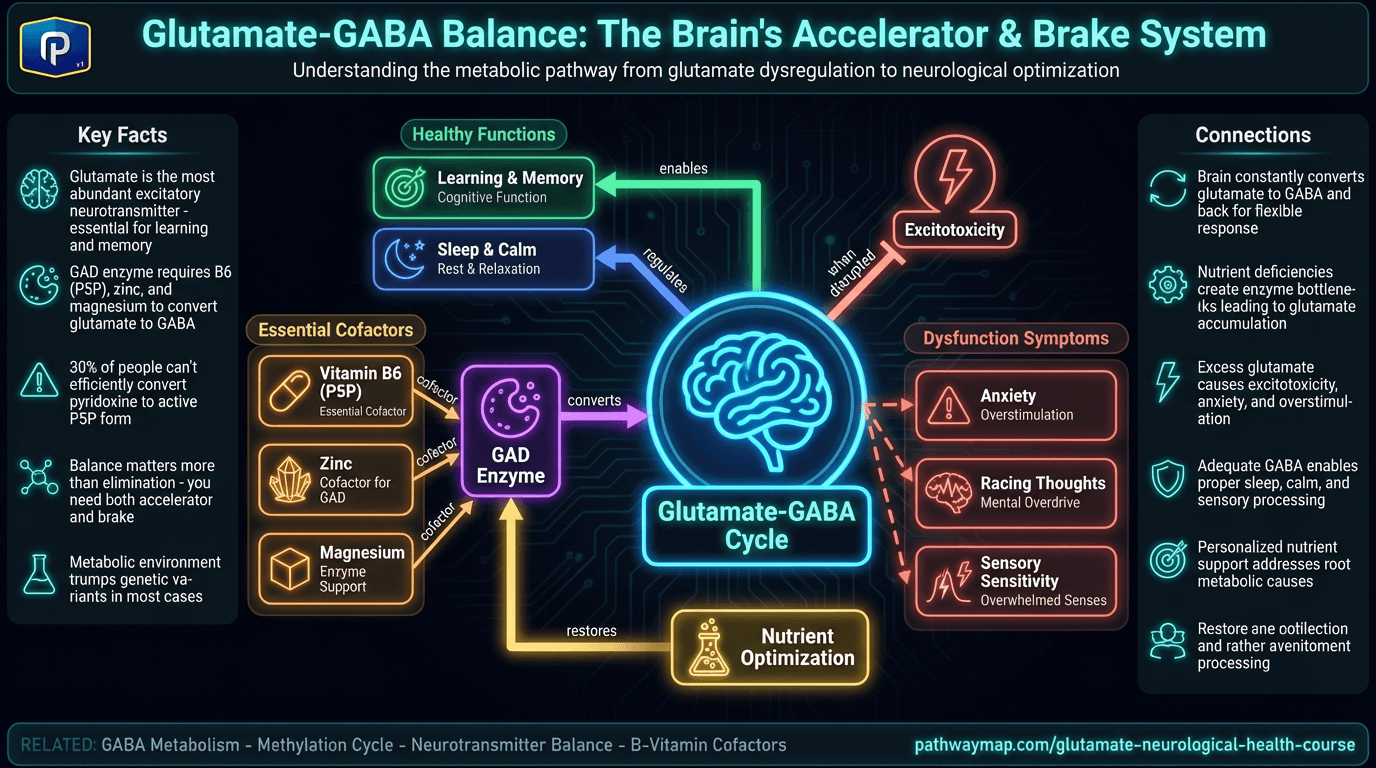
The accelerator analogy: Glutamate is your brain's gas pedal. GABA is the brake. You need both. The problem isn't having an accelerator—it's when the brakes fail.
Lesson 1.2: The Glutamate-GABA Cycle
The conversion pathway:
Glutamate → [GAD enzyme + B6 (P5P) + Zinc + Magnesium] → GABA
This isn't a one-way street. Your brain constantly converts glutamate to GABA and back, maintaining balance. When this system works, you have:
- Appropriate excitation for learning and focus
- Adequate inhibition for calm and sleep
- Flexible response to changing demands
When it fails:
- Excess glutamate → excitotoxicity, anxiety, overstimulation
- Insufficient GABA → poor sleep, racing thoughts, sensory sensitivity
Lesson 1.3: The Genetics Myth
Common narrative: "You have MTHFR/GAD1/COMT variants, so you're doomed to glutamate problems."
Reality: Genetic variants influence enzyme efficiency but operate within a metabolic context.
Consider two people with identical GAD1 variants:
Person A:
- Severe B6, zinc, magnesium deficiency
- High oxidative stress
- Chronic inflammation
- Gut dysfunction
- Result: Significant glutamate dysregulation
Person B:
- Optimal nutrient status
- Low inflammation
- Healthy gut
- Good stress management
- Result: Minimal to no symptoms
The difference isn't genetics—it's metabolic environment.
Module 2: The Metabolic Systems Behind Glutamate Regulation
Lesson 2.1: The GAD Enzyme System
Glutamic acid decarboxylase (GAD) converts glutamate to GABA. This enzyme absolutely requires:
Vitamin B6 (P5P form):
- 30% of people can't convert pyridoxine to P5P efficiently
- This means dietary B6 or standard supplements don't become functional B6
- Without adequate P5P, GAD enzyme can't work
- Result: Glutamate accumulates, GABA drops
Zinc:
- Cofactor for GAD enzyme activity
- Modulates NMDA receptors (primary glutamate receptors)
- 17% global deficiency rate, higher in certain populations
- Deficiency increases glutamate sensitivity while reducing GABA production
Magnesium:
- Required for B vitamin utilization
- Natural NMDA receptor blocker
- 48-60% of Americans consume insufficient amounts
- Acts as glutamate buffer even when conversion to GABA is impaired
Lesson 2.2: Glutamate Clearance - The Astrocyte System
Astrocytes are specialized brain cells that vacuum up excess glutamate from synaptic spaces. They use ATP-dependent transporters (EAAT1/GLAST and EAAT2/GLT-1).
What impairs this system:
Oxidative stress:
- Heavy metals (mercury, lead, aluminum) damage transporters
- Pesticides reduce clearance capacity up to 70%
- Inflammatory cytokines impair function
- Solution: Antioxidant support (glutathione, vitamin E, polyphenols)
Energy deficiency:
- Transporters require ATP to function
- Mitochondrial dysfunction from nutrient deficiencies reduces ATP
- B vitamins, CoQ10, magnesium, iron all critical
- Solution: Mitochondrial support nutrients
Neuroinflammation:
- Activates microglia, reduces astrocyte transporter expression
- Creates self-reinforcing cycle with glutamate
- Solution: Address inflammation sources (gut, food sensitivities, infections)
Lesson 2.3: The Glutathione Connection
Glutathione synthesis requires three amino acids:
- Glutamate
- Cysteine (usually the limiting factor)
- Glycine
The vicious cycle:
- Poor methylation → limited cysteine
- Limited cysteine → reduced glutathione synthesis
- Glutamate can't be incorporated into glutathione
- Glutamate accumulates
- Oxidative stress increases (low glutathione)
- Increased oxidative stress further impairs glutamate clearance
- More glutamate accumulation
Breaking the cycle:
- NAC provides cysteine directly
- Glycine supplementation (often overlooked)
- Methylation support (B12, folate, betaine)
- Result: Glutathione production increases, glutamate accumulation decreases
Lesson 2.4: The Gut-Brain Glutamate Axis
Your intestinal cells metabolize 70-90% of dietary glutamate before it reaches your bloodstream. This is your first line of defense.
When gut function fails:
Leaky gut:
- Damaged tight junctions allow more glutamate through
- Reduces local metabolism
- Inflammatory cytokines cross blood-brain barrier
- Impairs astrocyte glutamate clearance in the brain
Dysbiosis:
- Clostridium species produce glutamate
- Reduced beneficial bacteria that consume it
- Imbalance shifts toward production
- Increases systemic glutamate load
Chronic inflammation:
- Reduces enterocyte function
- Increases intestinal permeability
- Activates systemic immune response
- Creates brain inflammation affecting clearance
Module 3: Identifying Glutamate Dysregulation
Lesson 3.1: Neurological Symptoms
Classic presentation:
- Anxiety (especially "wired" anxiety, not depressive anxiety)
- Panic attacks
- Racing thoughts that won't stop
- Sensory sensitivity (light, sound, touch)
- Difficulty calming down
- "Wired but tired" feeling
Sleep disruption:
- Difficulty falling asleep (mind won't quiet)
- Waking with racing thoughts
- Feeling "on edge" even when exhausted
- Dreams that are intense or disturbing
Cognitive symptoms:
- Brain fog with overstimulation
- Difficulty filtering sensory input
- Overwhelm in busy environments
- Poor executive function under stress
Lesson 3.2: Physical Manifestations
Pain conditions:
- Migraines (elevated glutamate in brain scans)
- Fibromyalgia
- Chronic pain syndromes
- Muscle tension and spasms
Neurological conditions:
- Seizures (glutamate's role in epilepsy well-established)
- Movement disorders
- Tremors
- Tics
Lesson 3.3: Conditions Associated with Glutamate Dysregulation
Strongly associated:
- Autism spectrum disorders (most consistent neurochemical finding)
- Anxiety disorders
- OCD
- ADHD (especially hyperactive presentation)
- Migraines
- Epilepsy
Moderately associated:
- Bipolar disorder
- Schizophrenia
- Tourette syndrome
- PANS/PANDAS
- Long COVID brain fog
Contributing factor in:
- Alzheimer's disease
- Parkinson's disease
- ALS
- Multiple sclerosis
- Chronic fatigue syndrome
Lesson 3.4: Testing and Assessment
Direct measures (limited availability):
- MRS (magnetic resonance spectroscopy) shows brain glutamate
- CSF glutamate levels (invasive, rarely done)
- Plasma amino acid testing (indirect, limited correlation to brain)
Indirect assessment (more practical):
- Organic acids testing (markers of neurotransmitter metabolism)
- Nutrient testing (B6, zinc, magnesium, B12, folate)
- Genetic testing (GAD1, MTHFR, COMT, CBS variants)
- Gut health testing (microbiome, permeability, inflammation)
- Heavy metal testing (interference with glutamate metabolism)
Clinical assessment:
- Response to glutamate-containing foods (MSG, aged cheese, fermented foods)
- Response to GABA support (magnesium, B6, taurine)
- Pattern of symptoms (anxiety, insomnia, sensory sensitivity)
- Family history of neurological conditions
Module 4: Comprehensive Intervention Strategies
Lesson 4.1: Foundation Nutrients (Everyone Needs These)
Vitamin B6 (P5P form):
- Dosing: 25-50mg daily
- Why P5P: Bypasses conversion issues affecting 30% of population
- Timing: Morning or split into two doses
- Safety: P5P is safer than high-dose pyridoxine (nerve toxicity above 200mg long-term)
Magnesium:
- Dosing: 400-600mg elemental daily
- Forms: Glycinate (calming), threonate (brain-specific), malate (energy)
- Timing: Split dose or before bed
- Bowel tolerance: Reduce if loose stools, switch forms if needed
Zinc:
- Dosing: 15-30mg daily
- Always with copper: 1-2mg to prevent imbalance
- Form: Picolinate or glycinate for absorption
- Testing: Helpful to establish baseline status
B-Complex:
- Methylated forms (B12 as methylcobalamin, folate as 5-MTHF)
- Riboflavin (B2): 100-400mg for migraines
- Supports overall methylation and energy metabolism
Lesson 4.2: Glutathione Pathway Support
N-Acetylcysteine (NAC):
- Dosing: 600mg 2-3x daily (1200-1800mg total)
- Provides cysteine for glutathione synthesis
- Clinical evidence in autism, OCD, schizophrenia
- Empty stomach for best absorption
Glycine:
- Dosing: 3-5g daily
- Often overlooked but required for glutathione
- Also glycinergic (calming effects)
- Mix in water, neutral taste
Selenium:
- Dosing: 200mcg daily
- Required for glutathione peroxidase enzyme
- Don't exceed 400mcg daily (toxicity risk)
Alpha-lipoic acid:
- Dosing: 300-600mg daily
- Regenerates glutathione and other antioxidants
- Supports mitochondrial function
- R-lipoic acid is more bioavailable
Lesson 4.3: Mitochondrial and Energy Support
CoQ10 (ubiquinol form):
- Dosing: 100-300mg daily
- Higher doses for migraines (300mg)
- Supports ATP production for glutamate transporters
- Take with fats for absorption
PQQ (pyrroloquinoline quinone):
- Dosing: 10-20mg daily
- Promotes mitochondrial biogenesis
- Neuroprotective effects
- Synergistic with CoQ10
B-vitamins (repeated for emphasis):
- B1 (thiamine): 100-300mg for energy metabolism
- B2 (riboflavin): 400mg for migraines
- B3 (niacin or niacinamide): 500-1000mg
- All support ATP production
Lesson 4.4: Direct GABA Modulation
Taurine:
- Dosing: 500-3000mg daily
- Modulates GABA receptors
- Reduces excitotoxicity
- Very safe, well-tolerated
L-theanine:
- Dosing: 200-400mg daily
- Increases GABA, dopamine, serotonin
- Reduces glutamate excitotoxicity
- Promotes alpha brain waves (alert relaxation)
Magnesium threonate:
- Dosing: 1500-2000mg (144mg elemental)
- Crosses blood-brain barrier better than other forms
- Direct CNS effects on GABA/glutamate balance
- Often before bed for sleep support
GABA (direct):
- Limited blood-brain barrier penetration
- Some benefit may be through vagal nerve or gut-brain axis
- 250-750mg if trying
- Taurine and L-theanine generally more effective
Lesson 4.5: Gut Health Interventions
Probiotics:
- Multi-strain formula with Lactobacillus and Bifidobacterium
- 25-100 billion CFU daily
- Reduces glutamate production by gut bacteria
- Supports intestinal barrier function
L-glutamine:
- Dosing: 5-15g daily
- Supports enterocyte health
- Reduces intestinal permeability
- Paradoxically helps despite being glutamine (metabolized locally)
Digestive enzymes:
- Full-spectrum with meals
- Ensures complete protein breakdown
- Reduces peptide permeability
- Decreases inflammatory load
Address dysbiosis:
- Consider SIBO/SIFO testing if indicated
- Herbal antimicrobials or prescription if needed
- Rebuild with probiotics and prebiotics
- Healing diet (remove inflammatory foods)
Lesson 4.6: Inflammation and Oxidative Stress Reduction
Curcumin:
- Dosing: 500-1000mg 2x daily with black pepper or liposomal form
- Reduces neuroinflammation
- Protects against glutamate excitotoxicity
- Multiple mechanisms of neuroprotection
Omega-3 fatty acids:
- Dosing: 2-4g combined EPA/DHA daily
- Reduces inflammation
- Supports neuronal membrane health
- Choose quality source (third-party tested for mercury)
Vitamin E (mixed tocopherols):
- Dosing: 400-800 IU daily
- Prevents oxidative damage from glutamate
- Works synergistically with other antioxidants
- Natural forms preferred
Polyphenols:
- Green tea (EGCG): 400-800mg
- Resveratrol: 250-500mg
- Quercetin: 500-1000mg
- Multiple neuroprotective mechanisms
Module 5: Building Your Personalized Protocol
Lesson 5.1: Assessment Framework
Step 1: Identify your primary symptoms
- Neurological (anxiety, sensory sensitivity, racing thoughts)
- Sleep disruption
- Pain conditions
- Cognitive symptoms
- Digestive issues
Step 2: Consider your history
- When did symptoms start?
- What preceded symptom onset? (infection, stress, toxin exposure)
- Family history of neurological conditions
- Previous interventions and responses
Step 3: Assess current status
- Nutrient testing if available
- Diet quality and restrictions
- Current supplement regimen
- Medication interactions to consider
Step 4: Identify likely bottlenecks
- B6 deficiency (conversion issues)
- Magnesium deficiency (very common)
- Gut dysfunction (leaky gut, dysbiosis)
- High toxic burden (metals, pesticides)
- Chronic inflammation
- Mitochondrial dysfunction
Lesson 5.2: Tier 1 - Foundation (Start Here)
Everyone begins with:
Daily foundation:
- P5P 25-50mg
- Magnesium glycinate 400-600mg
- Zinc 15-30mg + copper 1-2mg
- B-complex (methylated)
This addresses the most common deficiencies affecting 40-60% of population. Give 4-6 weeks to assess response.
Expected improvements:
- Better sleep quality
- Reduced anxiety baseline
- Improved stress resilience
- Less sensory sensitivity
Lesson 5.3: Tier 2 - Glutathione Support (Add If Needed)
Indicators you need this tier:
- Tier 1 helped but plateaued
- Known toxic exposures
- Poor detoxification history
- Chronic fatigue alongside neurological symptoms
Add:
- NAC 1200-1800mg daily
- Glycine 3-5g daily
- Selenium 200mcg daily
- Alpha-lipoic acid 300-600mg
Give another 4-8 weeks. Glutathione pathway support often creates significant additional improvement.
Lesson 5.4: Tier 3 - Mitochondrial and Advanced Support
Indicators you need this tier:
- Fatigue as prominent feature
- Multiple interventions with partial response
- History suggesting mitochondrial issues
- Poor exercise tolerance
Add:
- CoQ10 200-300mg daily
- PQQ 10-20mg daily
- Additional B-vitamins for energy
- Taurine 1000-3000mg
- L-theanine 200-400mg
This tier addresses energy production needed for glutamate clearance and provides direct GABA modulation.
Lesson 5.5: Tier 4 - Gut and Inflammation Focus
Indicators you need this tier:
- Digestive symptoms present
- Food sensitivities
- Autoimmune conditions
- Histamine issues
Add:
- Probiotics (quality multi-strain)
- L-glutamine 5-15g daily
- Digestive enzymes
- Curcumin 1000mg 2x daily
- Omega-3 2-4g daily
Address gut dysfunction that's preventing other interventions from working fully.
Lesson 5.6: Adjustment and Optimization
Track your response:
- Keep symptom journal
- Rate sleep quality daily (1-10)
- Note anxiety levels
- Track sensory sensitivity
- Monitor energy
Adjust based on response:
- If no improvement in 6 weeks, move to next tier
- If partial improvement, optimize current tier first
- If negative response, reduce dose or remove trigger
- Some nutrients need 3-6 months for full effect
Common adjustments:
- Magnesium form switching (glycinate vs threonate)
- B6 dose finding (some need 100mg P5P)
- NAC timing (some do better split dose)
- Adding vs removing supplements based on response
Module 6: Special Considerations
Lesson 6.1: Migraines and Glutamate
Migraine-specific protocol:
Essential:
- Magnesium 400-600mg daily (41% reduction in frequency)
- Riboflavin (B2) 400mg daily
- CoQ10 300mg daily
Helpful additions:
- NAC for oxidative stress
- Avoid known glutamate triggers
- Consistent sleep schedule
- Stress management
Timeline: Often see improvement within 8-12 weeks.
Lesson 6.2: Autism Spectrum and Glutamate
ASD-specific considerations:
Most evidence-based:
- NAC 900-2700mg daily (reduces irritability, repetitive behaviors)
- B6 + magnesium (decades of research)
- Gut health interventions (70% have GI issues)
Address common co-factors:
- Food sensitivities (gluten, dairy often problematic)
- Dysbiosis (comprehensive stool testing)
- Nutrient deficiencies (often multiple)
- Heavy metal burden
Behavioral improvements often lag biochemical improvements by weeks to months.
Lesson 6.3: Anxiety Disorders
Anxiety-specific protocol:
Foundation:
- P5P 50-100mg for GABA production
- Magnesium glycinate 400-600mg
- Taurine 1000-3000mg
- L-theanine 200-400mg
If anxiety includes panic:
- Higher magnesium (up to 800mg)
- Magnesium threonate before bed
- Address blood sugar (crashes trigger panic)
- Consider adrenal support
If anxiety includes obsessive thoughts:
- NAC 1800-2400mg (OCD evidence)
- Inositol 12-18g daily
- GABA modulation with taurine/theanine
Lesson 6.4: Pediatric Considerations
Dosing adjustments:
- Generally 25-50% adult dose for children under 50 lbs
- 50-75% adult dose for children 50-100 lbs
- Individual tolerance varies
Safety:
- P5P very safe in children
- Magnesium (watch bowel tolerance)
- NAC well-studied in pediatric populations
- Always involve healthcare provider
Common in pediatric neurological issues:
- Gut dysfunction
- Food sensitivities
- Nutrient deficiencies from picky eating
- Environmental toxin exposure
Lesson 6.5: When to Suspect Other Root Causes
Red flags suggesting look beyond glutamate:
- No response to comprehensive glutamate protocol
- Worsening with interventions that should help
- Symptoms don't fit glutamate pattern
- Other systems clearly dysfunctional
Consider:
- Lyme and co-infections
- Mold toxicity
- Heavy metal toxicity (beyond support, needs chelation)
- Autoimmune conditions
- Chronic infections
- Hormonal imbalances (thyroid, sex hormones, cortisol)
These conditions may have glutamate dysregulation as a symptom, but treating glutamate alone won't resolve the underlying issue.
Module 7: Lifestyle and Environmental Factors
Lesson 7.1: Sleep Optimization
Sleep deprivation increases glutamate and reduces GABA. Non-negotiable for glutamate balance.
Sleep hygiene basics:
- Consistent bedtime (within 30 minutes)
- Cool room (65-68°F)
- Dark room (blackout curtains or eye mask)
- No screens 1-2 hours before bed
Supplement timing for sleep:
- Magnesium threonate 1-2 hours before bed
- Taurine before bed if needed
- L-theanine if racing thoughts at bedtime
- Glycine 3-5g before bed (improves sleep architecture)
Address sleep disorders:
- Sleep apnea screening if indicated
- Restless leg syndrome (often magnesium deficiency)
- Periodic limb movement disorder
Lesson 7.2: Stress Management
Chronic stress elevates cortisol, which increases glutamate release. Must be addressed.
Evidence-based practices:
- Meditation (10-20 minutes daily)
- Deep breathing (4-7-8 technique)
- Heart rate variability training
- Yoga or tai chi
- Nature exposure
Adaptogens (if needed):
- Ashwagandha 300-600mg
- Rhodiola 200-400mg
- Holy basil 300-600mg
- Cycle to prevent tolerance
Lesson 7.3: Exercise - The Goldilocks Principle
Moderate exercise increases BDNF and supports glutamate-GABA balance. Excessive exercise increases glutamate without adequate recovery.
Optimal approach:
- 30-45 minutes moderate intensity most days
- 1-2 days higher intensity if tolerated
- 2-3 days active recovery or rest
- Listen to body (post-exertional malaise is a red flag)
For those with CFS/ME:
- Start with 5-10 minute walks
- Increase by 1-2 minutes per week
- Never push through crashes
- Pacing is critical
Lesson 7.4: Dietary Considerations
Glutamate-containing foods: High: Aged cheese, cured meats, soy sauce, tomatoes, mushrooms, MSG
The nuance: Avoiding these foods may provide temporary relief but doesn't address why your system can't handle them. Goal is to restore metabolic capacity to tolerate normal foods.
Supportive dietary patterns:
- Adequate protein (0.7-1g per lb bodyweight)
- Quality fats (omega-3, olive oil, avocado)
- Lots of vegetables (antioxidants, fiber)
- Blood sugar stability (protein/fat with carbs)
- Avoid inflammatory foods for you specifically
During healing phase:
- May need to limit high-glutamate foods
- Focus on nutrient density
- Support gut healing (bone broth, fermented foods if tolerated)
- Gradually reintroduce as metabolism improves
Lesson 7.5: Environmental Toxin Reduction
Heavy metals interfere with glutamate metabolism:
- Mercury (damages glutamate transporters)
- Lead (increases excitotoxicity)
- Aluminum (impairs various pathways)
Reduction strategies:
- Water filtration (removes lead, other contaminants)
- Air purification (reduces particulate exposure)
- Avoid aluminum cookware and antiperspirants
- Choose low-mercury fish
- Organic produce where possible (pesticides also problematic)
If high burden:
- May need formal chelation
- Support phase first (6-12 months minimum)
- Work with knowledgeable practitioner
- Monitor carefully (redistribution can worsen symptoms)
Module 8: Troubleshooting and Common Pitfalls
Lesson 8.1: "I'm Taking Everything and Not Improving"
Common reasons:
Dosing issues:
- Too low (many need higher doses)
- Too high (overstimulation, especially methylated B vitamins)
- Wrong forms (pyridoxine instead of P5P)
Timing problems:
- Taking everything at once (absorption competition)
- Wrong time of day (stimulating nutrients at night)
- Not splitting doses appropriately
Missing root cause:
- Gut dysfunction blocking absorption
- Chronic infection driving inflammation
- Ongoing toxic exposure
- Unaddressed hormonal issues
Unrealistic timeline:
- Some nutrients need 3-6 months
- Neurological healing is slow
- Expecting overnight changes leads to giving up too early
Lesson 8.2: "I Feel Worse on These Supplements"
Methylation overstimulation:
- Too much methylfolate or methylB12
- Symptoms: anxiety, insomnia, irritability
- Solution: Reduce dose or switch to non-methylated forms
Detoxification reactions:
- NAC mobilizes toxins
- Symptoms: headache, fatigue, flu-like feeling
- Solution: Start low, go slow; support elimination pathways
Sulfur sensitivity:
- NAC, MSM, high-sulfur foods
- Symptoms: headaches, irritability, brain fog
- Solution: Molybdenum 150-500mcg; reduce sulfur temporarily
Wrong intervention:
- Not everyone needs every supplement
- Personalization matters
- Remove suspected triggers, reintroduce carefully
Lesson 8.3: "I Improved Then Plateaued"
Common causes:
Adaptation:
- Body adjusted to intervention
- Need to cycle some supplements
- May need to add next tier
Incomplete root cause addressing:
- Fixed nutrient deficiency but gut still leaky
- Resolved energy issue but inflammation persists
- Addressed one piece but not whole system
New stressor:
- Illness or infection
- Major life stress
- Seasonal changes (vitamin D in winter)
- New toxic exposure
Solution: Reassess and adjust
- Review symptom journal
- Consider what's changed
- Add next intervention tier
- Address new factors
Lesson 8.4: Medication Interactions
SSRIs and serotonin syndrome risk:
- Multiple serotonergic supplements together
- L-tryptophan, 5-HTP, SAMe with SSRIs
- Monitor carefully if combining
Blood thinners:
- Omega-3, vitamin E, curcumin all affect clotting
- Notify healthcare provider
- May need monitoring
Blood pressure medications:
- Magnesium can lower blood pressure
- May allow medication reduction over time
- Work with prescriber
Always inform healthcare providers of supplement regimen.
Module 9: Success Stories and Real-World Application
Case Study 1: Sarah - Anxiety and Panic Attacks
Presentation:
- 32-year-old female
- Severe anxiety and daily panic attacks
- Insomnia, racing thoughts
- Sensitive to caffeine, MSG
- History of gut issues
Initial protocol:
- P5P 50mg
- Magnesium glycinate 600mg (split dose)
- Zinc 20mg + copper 1mg
- B-complex
- L-theanine 400mg as needed
Month 2 additions:
- NAC 1200mg daily
- Glycine 5g before bed
- Probiotic
- L-glutamine 10g
Results at 3 months:
- Panic attacks reduced from daily to 1-2/month
- Sleep improved significantly
- Anxiety baseline much lower
- Can tolerate occasional high-glutamate foods
Key factors:
- Addressed gut dysfunction
- Adequate time for improvements
- Consistent adherence
- Stress management practice added
Case Study 2: Marcus - Autism Spectrum, Age 7
Presentation:
- Nonverbal
- High sensory sensitivity
- Repetitive behaviors
- Frequent meltdowns
- Chronic constipation
Initial protocol:
- P5P 25mg
- Magnesium glycinate 200mg
- Zinc 10mg + copper 0.5mg
- Probiotic
- Removed gluten and dairy
Month 3 additions:
- NAC 900mg daily
- L-glutamine 5g
- Digestive enzymes
- Omega-3 2g
Results at 6 months:
- First words emerging
- Decreased meltdown frequency (70% reduction)
- Less sensory sensitivity
- Bowel movements normalized
- Better eye contact
Results at 12 months:
- Speaking in 2-3 word phrases
- Reduced repetitive behaviors
- Tolerating previously impossible environments
- Parents report "different child"
Key factors:
- Gut healing critical
- Longer timeline for neurological improvements
- Parental consistency
- Addressed multiple systems
Case Study 3: Jennifer - Chronic Migraines
Presentation:
- 45-year-old female
- 15-20 migraines per month
- Triggers: stress, wine, aged cheese, weather
- Multiple failed preventive medications
Protocol:
- Magnesium glycinate 600mg daily
- Riboflavin 400mg daily
- CoQ10 300mg daily
- NAC 1200mg
- Eliminated dietary triggers
Results:
- Month 1: No change (almost quit)
- Month 2: Slight reduction (12-15/month)
- Month 3: Significant improvement (5-7/month)
- Month 6: 2-3 migraines monthly, less severe
Results at 1 year:
- Can tolerate previous dietary triggers occasionally
- Migraines 1-2 per month
- Off all preventive medications
- When migraines occur, less severe and shorter
Key factors:
- Nearly quit before improvement (8-12 week lag)
- Consistent with protocol
- Addressed oxidative stress
- Gradually regained dietary tolerance
Module 10: Maintenance and Long-Term Optimization
Lesson 10.1: Transitioning to Maintenance
Once symptoms have significantly improved:
Don't stop everything immediately:
- System still needs support
- Regression common if stopped too quickly
- Transition gradually over 3-6 months
Maintenance approach:
- Keep foundation nutrients (B6, magnesium, zinc)
- May reduce some higher doses
- Cycle certain supplements (adaptogens, high-dose antioxidants)
- Keep lifestyle factors in place
Minimal effective dose:
- After 6-12 months improvement, trial reducing doses
- Remove one thing at a time
- Monitor for regression
- Find your personal minimum maintenance
Lesson 10.2: Periodic Reassessment
Every 3-6 months:
- Review symptom tracking
- Adjust based on seasons (more vitamin D in winter)
- Consider life changes requiring additional support
- Update as new research emerges
Annual deep dive:
- Full nutrient testing if budget allows
- Review entire protocol
- Consider advanced testing if needed
- Optimize further based on new information
Lesson 10.3: Handling Setbacks
Illness or infection:
- Temporarily increase antioxidants
- May need higher nutrient doses during recovery
- Extra rest and stress reduction
- Return to maintenance once recovered
Major life stress:
- Temporarily add adaptogens if not already using
- Increase magnesium if tolerated
- Double down on stress management practices
- May need higher doses until stressor resolves
Toxic exposure:
- Increase glutathione support temporarily
- Ensure detox pathways supported
- May need short-term additional interventions
- Return to baseline once cleared
Lesson 10.4: Building Metabolic Resilience
The goal isn't to need supplements forever:
- Restore optimal function
- Build resilience to handle normal stressors
- Gradually regain dietary tolerance
- Create metabolic flexibility
Long-term resilience factors:
- Gut health maintenance
- Continued stress management
- Sleep consistency
- Moderate exercise
- Environmental toxin reduction
- Nutrient-dense diet
- Strong social connections
- Purpose and meaning
Some may need ongoing support:
- Genetic variants requiring lifelong cofactor support
- Chronic conditions with ongoing demands
- Ongoing exposures that can't be eliminated
- Individual variation in requirements
This is okay. The goal is optimal function, not zero supplements.
Conclusion: From Symptom Management to Metabolic Optimization
This course has taken you from understanding glutamate basics to implementing comprehensive interventions. The key insights:
1. Glutamate isn't the enemy. It's essential for brain function. Problems arise when regulatory systems fail.
2. Genetics influence but don't determine. Metabolic environment matters more than variants.
3. Multiple systems must be addressed. GAD enzyme function, glutamate clearance, glutathione synthesis, gut health, energy production—all interconnected.
4. Personalization matters. Not everyone needs every intervention. Tier your approach based on symptoms and bottlenecks.
5. Time and consistency are critical. Neurological healing is slow. Give interventions adequate time before judging effectiveness.
6. Lifestyle factors aren't optional. Sleep, stress, exercise, environment, diet—all influence glutamate metabolism.
7. The goal is resilience, not perfection. Build metabolic capacity to handle normal stressors and dietary inputs.
You now have the knowledge and tools to move from fatalistic acceptance ("my genes doom me") to metabolic optimization ("I can support the systems that regulate glutamate").
Free glutamate is just another number in a system that isn't working right. Fix the system, and the numbers often fix themselves.
Now go implement. Track your results. Adjust as needed. Build the neurological health you deserve.
Additional Resources
Recommended reading:
- "The End of Alzheimer's" by Dale Bredesen (metabolic approach to neurodegeneration)
- "Nutrient Power" by William Walsh (biochemical individuality)
- "The Wahls Protocol" by Terry Wahls (mitochondrial support for neurological health)
Testing resources:
- Organic acids testing: Great Plains Laboratory, Mosaic Diagnostics
- Nutrient testing: SpectraCell, NutrEval
- Genetic testing: 23andMe + interpretation through Genetic Genie or StrateGene
- Gut testing: GI-MAP, comprehensive stool analysis
Community support:
- Online forums for specific conditions
- Facebook groups for nutritional approaches
- Work with functional medicine practitioners familiar with this approach
Continued learning:
- Follow research on excitotoxicity, GABA/glutamate balance
- Stay updated on nutrient research
- Join communities implementing these approaches
- Share your experience to help others
Remember: You are not a helpless victim of your genetics. You are a complex metabolic system with multiple points of intervention. Understanding and supporting that system gives you agency where genetic determinism offers only resignation.
This course is for educational purposes. Work with qualified healthcare providers when implementing significant protocol changes, especially if on medications or with serious health conditions.