
When someone presents with racing heart, anxiety, weight loss, and tremors, the reflexive diagnosis points toward hyperthyroidism. Yet emerging research reveals that mercury toxicity, bile flow dysfunction, copper imbalances, sulfite metabolism issues, boron deficiency, and methylation overwhelm can all trigger identical symptoms while the thyroid itself remains functionally normal. This complex web of metabolic interconnections explains why many patients with “hyperthyroid” symptoms show normal TSH levels or fail to respond to conventional thyroid treatments.
The clinical significance extends beyond academic interest. A groundbreaking study documented six cases where mercury poisoning caused temporary thyroid dysfunction with elevated T3 and T4 levels despite normal or suppressed TSH, suggesting that heavy metal toxicity can directly disrupt thyroid hormone metabolism independent of the hypothalamic-pituitary-thyroid axis. Meanwhile, functional medicine practitioners report that up to 80% of their patients show toxic mercury levels, often from dental amalgams that release 2-28 micrograms of mercury vapor daily per filling surface. This chronic exposure accumulates particularly in thyroid tissue—research using autometallography reveals that 38% of people over 60 have detectable thyroid mercury compared to just 4% of those under 30.
Mercury’s Multifaceted Disruption of Thyroid Function
Mercury wreaks havoc on thyroid metabolism through surprisingly diverse mechanisms. The metal has an extraordinary affinity for selenium, effectively sequestering this essential mineral and crippling the selenium-dependent deiodinase enzymes (D1, D2, and D3) that convert T4 to active T3. Dr. Christopher Shade’s research at Quicksilver Scientific demonstrates that mercury not only blocks this crucial conversion but also causes the thyroid to become a “hyper-accumulating organ” for the metal, particularly when inflammatory conditions like Hashimoto’s are present.
The disruption extends beyond enzyme interference. Mercury directly inhibits thyroid peroxidase activity, blocks iodide incorporation into thyroglobulin, and interferes with the coupling of iodotyrosine molecules needed to form T3 and T4. Perhaps most intriguingly, recent research identified mercury as a novel inhibitor of MCT8 (monocarboxylate transporter 8), the critical transport protein that shuttles thyroid hormones into cells. This creates a paradoxical situation where blood levels of thyroid hormones may appear elevated while cellular thyroid function remains impaired.
Environmental studies in zebrafish larvae exposed to mercury at environmentally relevant concentrations showed increased whole-body T4 and T3 levels alongside upregulation of thyroid development genes, suggesting that mercury can actually stimulate thyroid hormone production in certain contexts. This aligns with clinical observations where mercury-toxic patients present with symptoms of both hyper- and hypothyroidism, sometimes alternating between the two states as their body struggles to maintain homeostasis.
The Bile-Thyroid Axis Controls Hormone Recycling
The relationship between bile flow and thyroid function represents one of medicine’s most overlooked connections. Research reveals that 95% of thyroid hormones undergo enterohepatic circulation, where T4 and T3 are conjugated in the liver with glucuronic acid or sulfate, excreted in bile, then deconjugated by intestinal bacteria for reabsorption. When bile flow becomes sluggish—whether from gallbladder dysfunction, liver congestion, or dietary factors—this recycling system fails, trapping thyroid hormones in their conjugated, inactive forms.
The implications are profound. Studies on bile duct ligation demonstrate altered thyroid hormone levels with increased free T4 and TSH, while clinical data shows that 19% of cholecystectomy patients have hyperthyroidism and 17% have hypothyroidism. The mechanism involves more than simple mechanical obstruction. Bile acids directly induce thyroid hormone activation through the TGR5-cAMP-D2 signaling pathway, increasing type 2 deiodinase activity that converts T4 to T3. This effect is particularly pronounced in brown adipose tissue and skeletal muscle, which coexpress both D2 and TGR5 receptors.
Nature published research demonstrating that bile acid treatment prevents obesity and insulin resistance specifically by promoting intracellular thyroid hormone activation—an effect completely absent in D2-knockout mice. This suggests that poor bile flow doesn’t just impair hormone recycling; it fundamentally disrupts the cellular machinery that activates thyroid hormones at the tissue level.
Copper’s Dual Personality in Thyroid Dysfunction
Copper presents a fascinating paradox in thyroid health—both deficiency and excess can trigger hyperthyroid-like symptoms through entirely different mechanisms. Copper toxicity, epidemic according to mineral metabolism expert Dr. Rick Malter, creates an “amphetamine-like effect” by increasing norepinephrine and epinephrine synthesis. The mechanism is elegantly simple: copper serves as an essential cofactor for dopamine-β-hydroxylase, the enzyme converting dopamine to norepinephrine. Excess copper drives this conversion into overdrive, producing the anxiety, racing thoughts, insomnia, and agitation that perfectly mimic hyperthyroidism.
The situation becomes more complex when considering ceruloplasmin, the protein that carries over 95% of circulating copper. Thyroid hormones directly regulate hepatic ceruloplasmin production through the ATP7A and ATP7B copper transport proteins. When ceruloplasmin levels drop—whether from hypothyroidism, liver dysfunction, or adrenal insufficiency—copper becomes bio-unavailable despite normal or elevated total copper levels. This creates a functional copper deficiency that impairs T4 production and prevents proper thyroid hormone metabolism.
Women face particular vulnerability to copper imbalance. Estrogen and copper exist in a synergistic relationship where each increases the other, creating a self-perpetuating cycle. Birth control pills, copper IUDs, and pregnancy all elevate copper levels, while estrogen dominance impairs liver detoxification of both hormones and metals. Dr. Malter’s research documents how the widespread use of hormonal contraceptives since the 1960s correlates with rising rates of both copper toxicity and thyroid dysfunction, particularly postpartum thyroiditis and depression linked to pregnancy-related copper accumulation.
When Methylation Support Backfires Spectacularly
The methylation support movement has inadvertently created a new category of iatrogenic hyperthyroid-like symptoms. Over-methylation from excessive methyl donors—particularly methylfolate, methyl-B12, and SAMe—increases catecholamine production to pathological levels. Patients report that starting methylated B vitamins triggered emergency room visits for panic attacks, with symptoms indistinguishable from thyroid storm: racing heart, profuse sweating, tremors, and overwhelming anxiety.
The biochemistry explains the clinical observations. Methylation directly influences catecholamine synthesis, with SAMe serving as the methyl donor for converting norepinephrine to epinephrine. COMT (catechol-O-methyltransferase) polymorphisms compound the problem—individuals with the Met/Met genotype break down catecholamines 3-4 times slower than those with Val/Val, making them exquisitely sensitive to methylation support. Research shows thyroid hormones themselves affect COMT activity, with hyperthyroidism decreasing COMT in heart ventricles while hypothyroidism increases it in atria, creating complex feedback loops between methylation and thyroid function.
CBS (cystathionine beta-synthase) upregulation presents another pathway to problems. CBS is highly expressed in the hypothalamus where it directly affects TRH (thyrotropin-releasing hormone) production. When upregulated—often seen with certain genetic variants—CBS depletes BH4 (tetrahydrobiopterin) needed for neurotransmitter synthesis and thyroid hormone production while generating excess ammonia and sulfites. The resulting symptoms include anxiety, brain fog, and cardiovascular symptoms that closely mirror hyperthyroidism.
Dr. William Walsh’s research using whole blood histamine as a methylation marker reveals that 30-38% of depression involves undermethylation, yet over-methylators also suffer significantly. His clinical experience shows that folates can worsen depression in undermethylated individuals with low serotonin, while over-methylators benefit from niacin to “mop up” excess methyl groups. The key insight: one-size-fits-all methylation protocols create more problems than they solve.
Sulfites, Boron, and the Electrolyte Connection
Sulfite metabolism dysfunction creates another pathway to hyperthyroid-like symptoms. SUOX (sulfite oxidase) deficiency leads to accumulation of toxic sulfites, thiosulfate, and S-sulfocysteine, all of which interfere with thyroid hormone metabolism. The sulfation pathway is crucial for T3 breakdown—when impaired, active thyroid hormone accumulates even as production remains normal. H2S (hydrogen sulfide) generated by CBS promotes thyroid hormone synthesis and secretion, explaining why CBS upregulation can trigger hyperthyroid symptoms despite normal thyroid function.
Boron deficiency represents an underappreciated factor in electrolyte imbalances that mimic hyperthyroidism. Research shows boron supplementation reduces urinary calcium excretion by 44% in postmenopausal women while significantly decreasing magnesium losses. Boron inhibits 24-hydroxylase, the enzyme responsible for vitamin D degradation, effectively increasing circulating 25-hydroxyvitamin D levels without requiring higher intake. The clinical significance extends beyond bone health—boron deficiency exacerbates the electrolyte imbalances that produce palpitations, muscle weakness, and neurological symptoms indistinguishable from hyperthyroidism.
The diagnostic implications are striking. Research reveals that up to 14% of patients with elevated TSH have hyponatremia, while hyperthyroid patients commonly show elevated serum potassium with reduced sodium and chloride. These electrolyte patterns can both cause and result from thyroid dysfunction, creating diagnostic confusion. A comprehensive electrolyte panel including ionized calcium, magnesium, and phosphorus often reveals the true cause when patients present with hyperthyroid symptoms but normal thyroid function tests.
Differentiating True Hyperthyroidism from Metabolic Mimics
The challenge of differential diagnosis requires systematic evaluation beyond standard thyroid panels. True hyperthyroidism presents with suppressed TSH (less than 0.1 μIU/ml) plus elevated free T4 and total T3, while subclinical hyperthyroidism shows suppressed TSH with normal hormone levels. When TSH remains normal or elevated despite hyperthyroid symptoms, alternative causes become likely. The presence of thyroid antibodies helps narrow possibilities—TSI (thyroid-stimulating immunoglobulin) confirms Graves’ disease, while TPO and thyroglobulin antibodies suggest autoimmune thyroiditis that may present with alternating hyper- and hypothyroid phases.
Reverse T3 testing, despite its popularity in functional medicine circles, lacks clinical utility for routine diagnosis. Neither the American Thyroid Association nor the American Association of Clinical Endocrinology recommends it, as reverse T3 cannot reliably differentiate hypothyroid sick syndrome from euthyroid sick syndrome. The T3/rT3 ratio touted by some practitioners lacks peer-reviewed validation. The exception involves suspected central hypothyroidism, where low rT3 may help differentiate it from euthyroid sick syndrome.
Clinical patterns provide valuable clues. Electrolyte-induced symptoms typically present with palpitations plus normal TSH and documented potassium or magnesium deficiency. Mercury toxicity often includes neurological symptoms—tremor, metallic taste, peripheral neuropathy—alongside thyroid dysfunction. Copper toxicity manifests with psychiatric symptoms, while methylation issues show clear temporal relationships to supplement initiation.
Strategic Interventions for Underlying Causes
Successful treatment requires addressing root causes in proper sequence. Mercury detoxification begins with source elimination—safe amalgam removal by biological dentists using IAOMT protocols, dietary modifications to avoid high-mercury fish, and environmental assessment for occupational exposures. The preparation phase spans 4-8 weeks, supporting detoxification pathways with NAC (600-1200mg daily), glutathione (500-1000mg), and selenium (400mcg during active detox). Chelation therapy should wait until thyroid function stabilizes, as mobilizing mercury can temporarily worsen symptoms.
Supporting bile flow requires comprehensive liver support. Phase I detoxification needs B vitamins, vitamin C, and milk thistle, while Phase II conjugation requires NAC, glycine, taurine, and glutathione. Direct bile flow enhancement uses ox bile supplements, phosphatidylcholine, and artichoke extract. The strong connection between thyroid disorders and gallstone disease—documented in multiple studies—makes bile support essential for many patients with thyroid dysfunction.
Copper balancing demands precision. Hair tissue mineral analysis provides the most accurate assessment of tissue copper status, as blood tests often appear normal despite significant imbalances. High copper responds to zinc supplementation (maintaining an optimal 1:8 to 1:12 copper:zinc ratio), vitamin C, and molybdenum. Low copper requires careful supplementation with copper bisglycinate (2-4mg daily) while avoiding copper antagonists. The key lies in supporting ceruloplasmin production through adequate animal-based vitamin A, vitamin C, and addressing underlying liver and adrenal dysfunction.
The Iodine Controversy and Clinical Reality
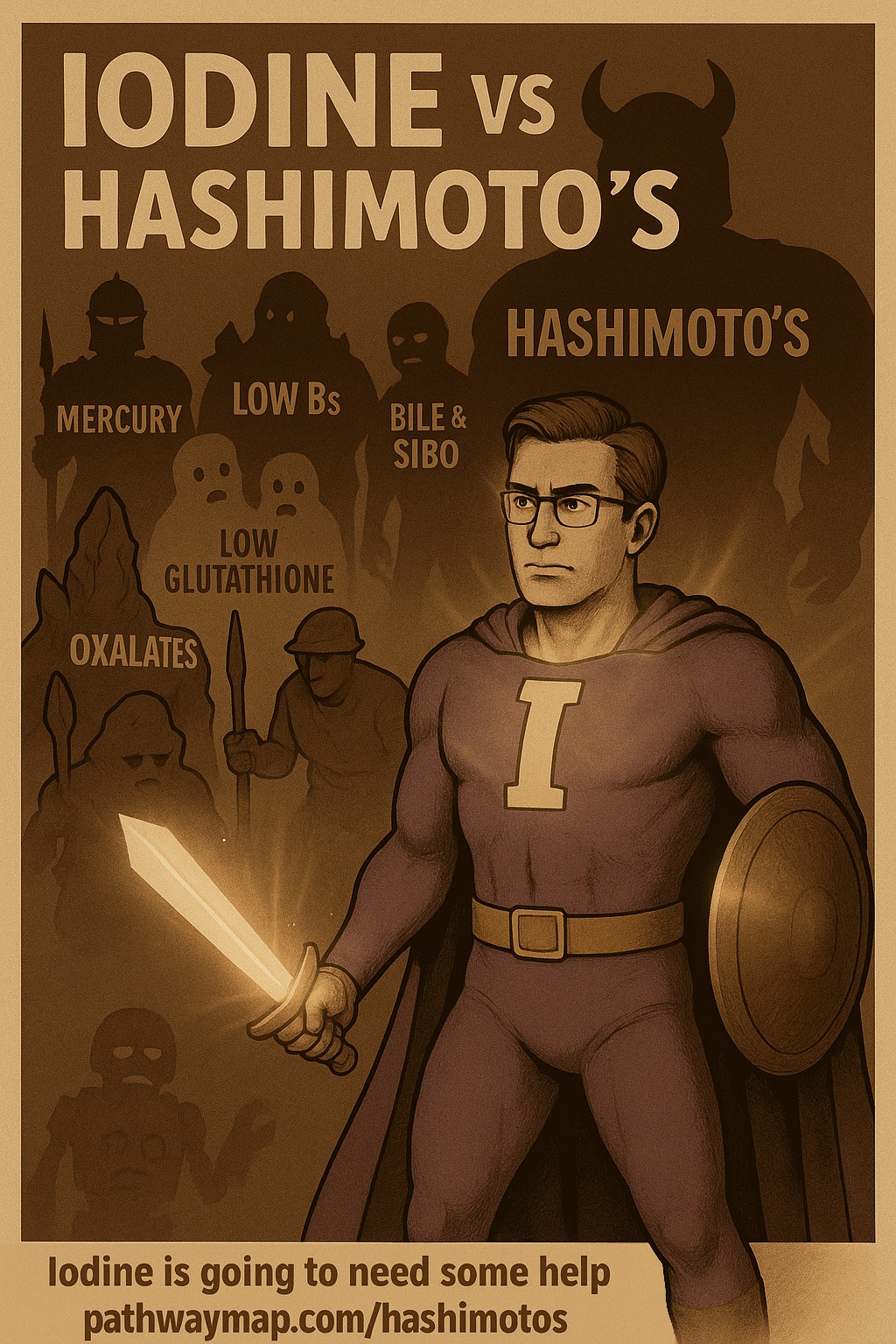
Iodine supplementation in hyperthyroid conditions remains controversial, yet clinical experience from experts like Dr. David Brownstein and Dr. Guy Abraham suggests careful implementation can benefit even Graves’ disease patients. The Wolff-Chaikoff effect—where high iodine temporarily shuts down thyroid hormone synthesis—serves as a natural regulatory mechanism that fails in certain disease states. The Jod-Basedow phenomenon of iodine-induced hyperthyroidism occurs in less than 1% of properly screened patients according to Dr. Brownstein’s 16+ years treating over 6,000 patients.
The protocol requires meticulous preparation. Selenium supplementation (200mcg daily) must begin 2-4 weeks before iodine to prevent autoimmune exacerbation. Magnesium (400-1200mg), B-complex vitamins, and vitamin C provide essential cofactor support. Iodine introduction starts conservatively at 12.5-25mg daily using Lugol’s solution or Iodoral, with close monitoring of TSH, free T3, free T4, and symptoms every 2-4 weeks initially. Dr. Brownstein’s “rule of thirds” predicts outcomes: one-third of patients eliminate thyroid medication entirely, one-third reduce dosage by half, and one-third maintain their current dose while improving symptoms.
Natural compounds offer additional support. Bugleweed (Lycopus europaeus) inhibits TSH binding and reduces T4-T3 conversion, with case studies showing normalization of TSI in Graves’ disease. Lemon balm blocks TSH and reduces T4 synthesis while calming the nervous system. L-carnitine at 2-6 grams daily blocks thyroid hormone entry into cells, providing rapid symptom relief within days to weeks. These interventions allow symptom management while addressing underlying causes.
Conclusion
The research illuminates a new paradigm for understanding hyperthyroid symptoms—one where mercury toxicity, bile stagnation, copper imbalance, sulfite dysfunction, mineral deficiencies, and methylation disruption create perfect thyroid storm mimics. This complexity explains why patients with “textbook” hyperthyroid symptoms often show normal labs or fail conventional treatment. Success requires thinking beyond the thyroid gland itself to address the intricate web of metabolic factors that influence thyroid hormone production, conversion, transport, and cellular uptake.
The clinical approach must evolve accordingly. Comprehensive evaluation including heavy metal testing, mineral analysis, methylation assessment, and digestive function provides the foundation for targeted intervention. Treatment sequencing matters—addressing toxicities and deficiencies before introducing iodine or thyroid hormone prevents adverse reactions. Natural compounds offer valuable tools for symptom management while root causes are systematically addressed. Most importantly, recognizing these alternative pathways to hyperthyroid symptoms prevents unnecessary thyroid suppression in patients whose thyroids are essentially innocent bystanders to systemic metabolic chaos.
Note from the Author
Just wanted to point out the high dose situation again.
I am trying to highlight what I see and link it up to data available, which causes these write ups to mention a handful of large doses.
Keep in mind most of these large doses are known because that’s how much they needed in order to cause some sort of response without supporting the whole machine. Use this info to look in a direction but don’t jump into these amounts without seeing how you respond first.