Vitamin K
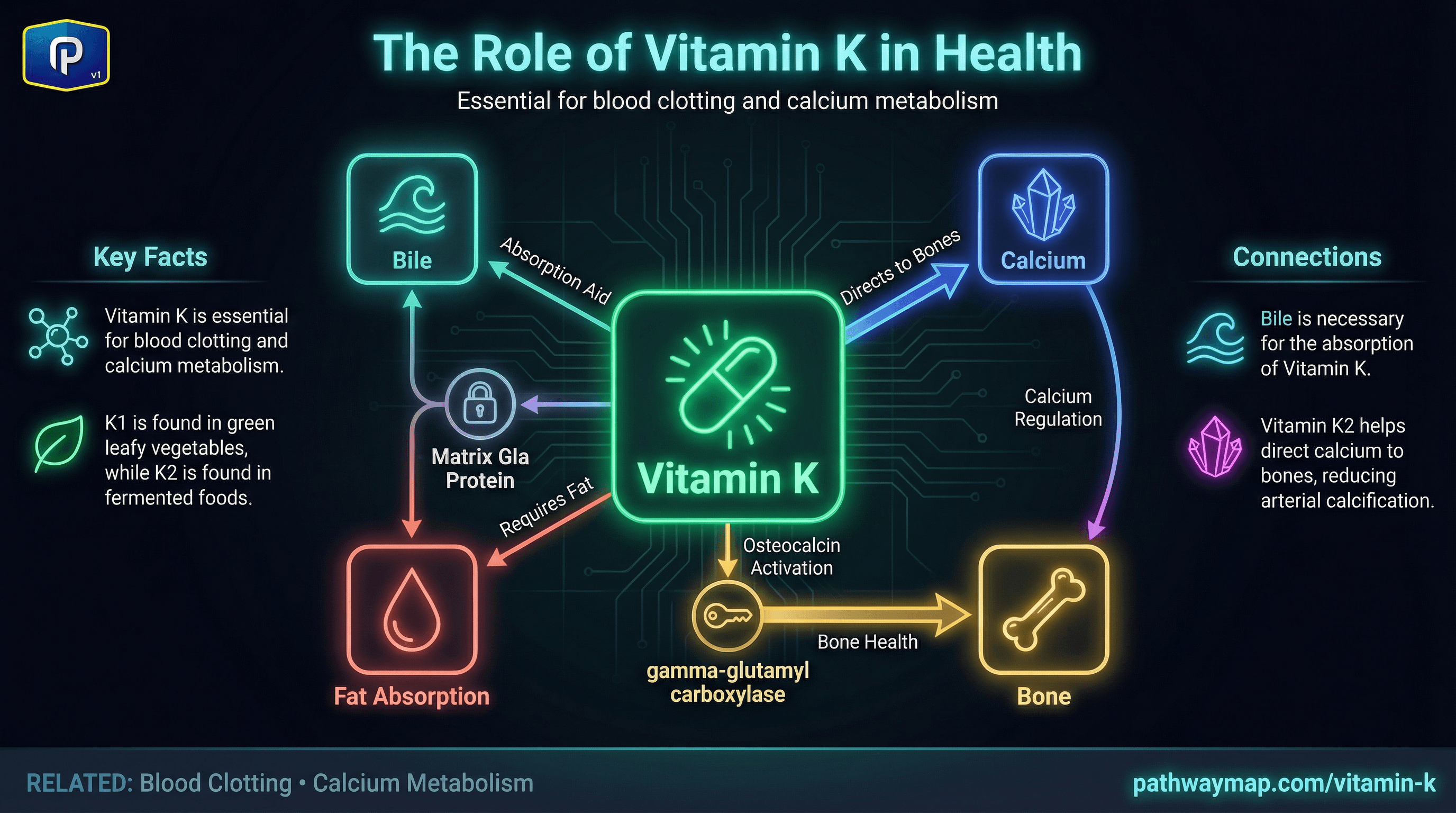
The calcium traffic cop. Vitamin K activates proteins that control where calcium goes in your body. K1 handles blood clotting. K2 puts calcium in bones (not arteries) - potentially reducing both osteoporosis and heart disease at once.
K1 vs K2: Two Different Jobs
Vitamin K1 (Phylloquinone)
Source: Green leafy vegetables (kale, spinach, broccoli)
Primary Function: Blood clotting
Location: Stays mainly in the liver
Deficiency: Rare in adults eating vegetables
Vitamin K2 (Menaquinones)
Source: Fermented foods, animal products, gut bacteria
Primary Function: Calcium metabolism
Location: Distributed throughout body
Deficiency: Common - most people don't get enough
K2: The Calcium Traffic Director
Calcium is essential but can be dangerous if it ends up in the wrong places. Calcium in bones = good. Calcium in arteries = atherosclerosis and heart disease.
Vitamin K2 activates proteins that direct calcium where it should go and keep it out of where it shouldn't. Without K2, supplemental calcium and vitamin D may actually increase arterial calcification.
Osteocalcin (Bones)
K2 activates osteocalcin, which binds calcium into bone matrix. Inactive osteocalcin = weak bones.
Matrix Gla Protein (Arteries)
K2 activates MGP, which inhibits calcification of arteries. Inactive MGP = stiff, calcified arteries.
K2 Subtypes: MK-4 vs MK-7
MK-4
- •Found in animal products (meat, eggs, dairy)
- •Short half-life (hours)
- •Higher doses needed (45mg in Japanese studies)
- •May have unique tissue-specific effects
MK-7
- •Found in natto (fermented soy), some cheeses
- •Long half-life (2-3 days)
- •Lower doses effective (100-200mcg)
- •Better studied for cardiovascular benefits
Food Sources
K1 Sources
Kale, spinach, broccoli, Brussels sprouts, collard greens, Swiss chard. Any green leafy vegetable.
K2 Sources
Natto (highest by far), aged cheeses, egg yolks, liver, grass-fed butter, fermented foods.
Note
K1 is easy to get from vegetables. K2 is harder - most people benefit from either natto or supplements.
Why K2 and D3 Go Together
Vitamin D increases calcium absorption from food. Without K2 to direct that calcium, it may end up in arteries rather than bones.
Some researchers believe high-dose vitamin D without K2 may actually worsen arterial calcification. Taking them together provides the full calcium-directing system.
Recommended Pairing
- • Vitamin D3: 2,000-5,000 IU daily
- • Vitamin K2 (MK-7): 100-200mcg daily
- • Take with fat for absorption
- • Many D3/K2 combo products available
Warfarin and Vitamin K
Warfarin (Coumadin) works by blocking the vitamin K recycling enzyme. This depletes active vitamin K, reducing blood clotting. It's used to prevent strokes and blood clots.
If you're on warfarin, you must keep vitamin K intake consistent (not necessarily low, just stable). Sudden increases in K can reduce warfarin's effect; sudden decreases can cause excessive bleeding.
If You're on Warfarin
- •Don't start K supplements without MD approval
- •Keep vegetable intake consistent day-to-day
- •Monitor INR closely if diet changes
- •DOACs (newer anticoagulants) don't interact with K


