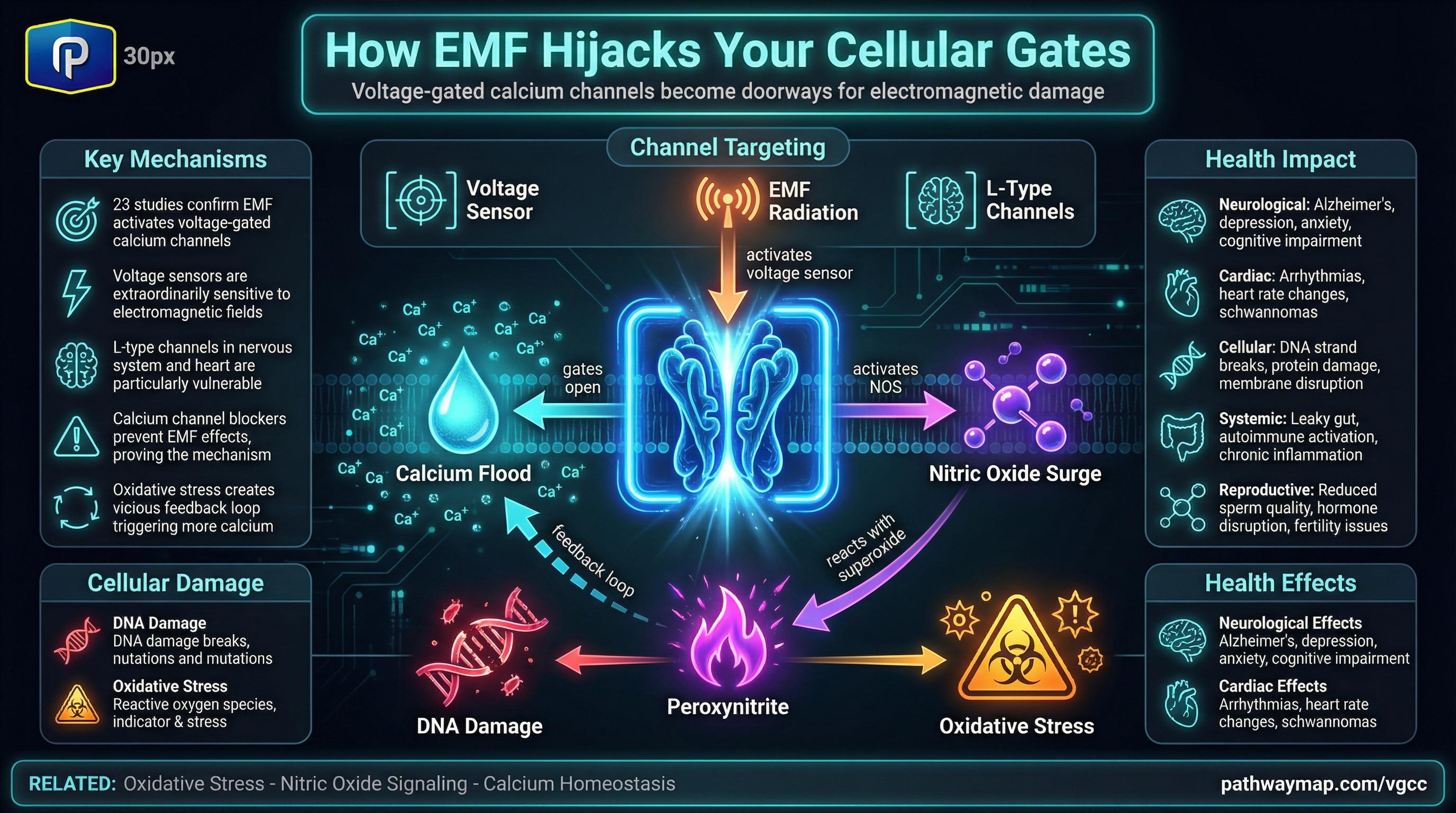

All of these write ups on pathway map are an attempt at relating my understanding of health to data that is available. But sometimes the science is broken. I am doing my best to stick to science but some of these things are going to need more explanation in order to make sense of the situation. I still need to figure out how to make that more apparent in an easy way without injecting too much of my own bias into what I’m trying to share.
Please read my post about this on Facebook that explains why I put this together. I’m trying to highlight that sometimes the $cience does not match reality. You may have come here from that post. https://www.facebook.com/micah.john.coffey/posts/pfbid0mdnfotj2ToqfXrbELWTcoxmsG7VPeHUKir1buyAnYuE5nSgHXLy8bmgaejmz2XCwl
K, back to the good kinda radiation
The scientific consensus finds no established health effects from amateur radio operations when conducted within regulatory guidelines, despite decades of research into radiofrequency (RF) electromagnetic field exposure. Multiple systematic reviews, epidemiological studies, and regulatory assessments consistently demonstrate that typical amateur radio RF exposures fall 100-1000 times below established safety thresholds.
While some military studies suggest increased lymphatic cancer risks in high-power radar operations, amateur radio operators actually show lower overall mortality than the general population, and the intermittent nature of ham radio transmissions results in exposures comparable to or lower than everyday sources like smartphones and WiFi routers.
Table of Contents
- The Physics of RF Exposure from Amateur Radio Transmissions
- Common Health Conditions Reported by Radio Operators
- Epidemiological Evidence Reveals Complex Patterns
- RF Exposure Symptoms and Electromagnetic Sensitivity
- Health Patterns Among High-Power Transmitter Users
- Scientific Evidence Weighs Against Significant Health Effects
- Occupational Health Data Reveals the Importance of Exposure Levels
- Amateur Radio Compares Favorably to Everyday RF Sources
- Conclusion
The Physics of RF Exposure from Amateur Radio Transmissions
Amateur radio operators transmit across frequencies from 1.8 MHz to 1300 MHz at power levels ranging from 5 to 1500 watts, though most operators use significantly less power than the legal maximum. The primary biological mechanism of RF interaction with human tissue remains thermal heating, which only becomes significant when tissue temperatures rise more than 1°C above normal levels – a threshold requiring exposure levels far exceeding those encountered in amateur radio operations.
The human body resonates most efficiently with RF energy at approximately 70 MHz for ungrounded adults and 35 MHz for grounded individuals, placing some amateur frequencies directly in this absorption range. However, current safety standards incorporate this resonance effect through frequency-dependent exposure limits.
The International Commission on Non-Ionizing Radiation Protection (ICNIRP) sets whole-body Specific Absorption Rate (SAR) limits at:
- 0.08 W/kg for the general public
- 0.4 W/kg for occupational exposure
- Local SAR limits of 2 W/kg over 10 grams of tissue
These limits include substantial safety margins – typically 50-fold below levels where any biological effects have been observed.
Non-thermal biological effects have been extensively investigated through thousands of studies examining potential impacts on cellular processes, oxidative stress, and DNA integrity. A 2024 WHO-commissioned systematic review concluded that despite some laboratory studies reporting cellular changes at low exposure levels, no consistent evidence demonstrates adverse health effects below thermal thresholds.
“The ICNIRP’s comprehensive 2020 assessment stated unequivocally that acute and long-term effects of RF exposure below thermal thresholds have been studied extensively without demonstrating adverse health consequences.” – ICNIRP Guidelines 2020
Common Health Conditions Reported by Radio Operators
Amateur radio operators have reported various symptoms they attribute to RF exposure, though scientific evidence does not support direct causation. The most frequently mentioned concerns include headaches, fatigue, sleep disturbances, tinnitus, and cognitive effects.
A 2024 systematic review examining 486,558 participants across 13 European studies found no indication that RF electromagnetic fields below guideline values cause these symptoms.
Electromagnetic Hypersensitivity (EHS)
The concept of electromagnetic hypersensitivity affects an estimated 1.5-5% of the population who report sensitivity to electromagnetic fields. However, over 30 double-blind provocation studies have consistently demonstrated that individuals claiming EHS cannot distinguish between real EMF exposure and sham exposure under controlled conditions.
“The World Health Organization acknowledges that while EHS symptoms are real and can be disabling, scientific evidence does not establish that these symptoms are caused by exposure to electromagnetic fields. The nocebo effect – where symptoms arise from the belief in exposure rather than actual exposure – appears to play a significant role.”
Physical Health Conditions
Physical health conditions documented in amateur radio operators primarily involve thermal injuries from direct contact with energized RF conductors rather than field exposure effects. The FCC/EPA joint study of nine amateur radio stations in Southern California found that most stations operated well below safety limits due to:
- Relatively low power usage
- Intermittent transmission characteristics
- Appropriate antenna placement
Ground-level field strengths typically measured 0.1-5 V/m, with maximum readings of 55 V/m near high-power HF stations – still below occupational limits of 61 V/m.
Epidemiological Evidence Reveals Complex Patterns
The epidemiological landscape for amateur radio operators presents mixed findings that require careful interpretation.
The Milham Studies (1985, 1988)
The seminal Milham studies examined 67,829 amateur radio operators from Washington State and California, finding:
- Overall mortality rate of 71% of expected levels – significantly lower than the general population
- Statistically significant increase in lymphatic and hematopoietic malignancies with a standardized mortality ratio of 162
- Study did not control for lifestyle factors, smoking, diet, or actual RF exposure levels
National Cancer Institute Study
A larger National Cancer Institute study following 108,586 amateur radio licensees in California from 1966-1995 revealed more nuanced results:
Cancer Type
Standardized Mortality Ratio
Statistical Significance
Lung Cancer
0.65
Significant (protective)
Brain Tumors (Glioma)
1.14
Not significant
Leukemia (all types)
0.89
Not significant
Hodgkin’s Disease
1.3
Not significant
ALS
No increase
Not significant
Critically, the study found no statistically significant increases in brain tumors, leukemia, Hodgkin’s disease, or ALS – conditions often hypothesized to link with RF exposure.
Military Studies
Military studies reveal more concerning patterns in high-exposure environments:
Israeli military research documented hematolymphatic cancer percentage frequencies of 40-41% versus 23% expected in radar and radio communication personnel, with similar elevations reported in:
- Polish military (36% vs 12%)
- Belgian radar battalions
However, these military exposures involve continuous, high-power radar systems operating at levels far exceeding typical amateur radio operations.
The Korean War Navy technicians study found overall cancer deaths significantly below expectation, though nonlymphocytic leukemia was elevated in aviation electronics technicians.
RF Exposure Symptoms and Electromagnetic Sensitivity
Research into symptoms potentially related to electromagnetic field exposure from radio equipment has produced largely null results when subjected to rigorous scientific scrutiny.
Meta-Analysis Findings
A comprehensive 2024 meta-analysis examining various symptoms found:
- Tinnitus: Pooled relative risk of 1.43 per 100 minutes of mobile phone use per week, but with confidence intervals crossing 1.0, indicating no statistically significant effect
- Migraine headaches: Relative risk of 1.2 for mobile phone subscribers versus non-subscribers showed marginal significance but suffered from very low certainty due to study limitations
Laboratory Studies
Controlled laboratory studies examining acute RF exposure effects consistently fail to demonstrate symptom induction below safety limits:
- Sleep studies using EEG monitoring show minor changes in brain wave patterns during RF exposure but no clinically significant sleep disruption
- Cognitive function research yields similarly inconclusive results
- A 2024 systematic review found very low to low certainty evidence of little to no association between RF exposure and learning, memory, or executive function
“Provocation studies show that symptom severity correlates more strongly with the belief in exposure than with actual electromagnetic field presence, and successful treatments often involve cognitive behavioral therapy rather than exposure reduction.” – WHO Statement on EHS
Health Patterns Among High-Power Transmitter Users
Amateur radio operators using high-power transmitters – those approaching the 1500-watt legal limit – represent a unique exposure scenario worth examining separately.
Exposure Calculations
FCC compliance calculations show that even these high-power stations typically maintain exposure levels 10-100 times below safety limits when proper antenna installation practices are followed:
Power Level
Antenna Type
Controlled Environment Distance
Uncontrolled Environment Distance
100 watts
Unity-gain
3-13 feet
6-30 feet
1500 watts
Beam antenna
10-40 feet
20-80 feet
Professional Broadcast Station Operators
Professional broadcast station operators provide insights into higher-exposure scenarios. A cross-sectional study of 110 broadcast and TV station operators found significantly higher:
- Systolic and diastolic blood pressure
- Total cholesterol
- LDL cholesterol compared to matched controls
However, these workers face continuous occupational exposure at power levels of 1-50 kilowatts – vastly exceeding amateur operations.
Duty Cycle Protection
The duty cycle characteristics of amateur radio provide substantial protection even for high-power operators:
- Single sideband voice transmissions operate at approximately 20% duty cycle
- Continuous wave (Morse code) at 40%
- Only FM and digital modes approach 100% during actual transmission periods
- Combined with intermittent nature of amateur communications (typically 30-50% transmit time during conversations)
- Time-averaged exposures remain well below continuous-duty commercial operations
Scientific Evidence Weighs Against Significant Health Effects
The weight of scientific evidence accumulated over decades does not support significant health effects from amateur radio operation within established guidelines.
World Health Organization Position
The World Health Organization’s International EMF Project, launched in 1996, represents the most comprehensive assessment of electromagnetic field health effects, concluding that current evidence does not confirm any health consequences from low-level electromagnetic field exposure.
This position is supported by the FDA, which stated in 2020 that scientific evidence indicates RF exposures at or below U.S. safety limits do not cause health problems.
IARC Classification Context
The International Agency for Research on Cancer’s 2011 classification of RF radiation as “possibly carcinogenic to humans” (Group 2B) requires context:
This classification places RF radiation in the same category as coffee, pickled vegetables, and talcum powder – agents with limited evidence of carcinogenicity in humans and limited evidence in experimental animals. The classification was primarily driven by two case-control studies on mobile phone use and brain tumors, not amateur radio operations. Regarding occupational and environmental RF exposure specifically, IARC found the evidence inadequate to formulate conclusions.
Animal Studies
The National Toxicology Program’s extensive rodent studies, examining 52 chronic bioassays, found no consistent evidence of carcinogenicity across most organ systems. While some evidence emerged for brain tumors in male rats at high SAR levels, these findings were:
- Not reproducible across studies
- Occurred at exposure levels far exceeding those from amateur radio operations
- Meta-analyses reveal high heterogeneity between results, limiting quantitative synthesis
Occupational Health Data Reveals the Importance of Exposure Levels
Professional radio operators provide valuable comparative data for understanding potential health effects.
Key Findings from Occupational Studies
Studies of radar operators, telecommunications workers, and RF equipment maintenance personnel have generally found no consistent increases in cancer risk when proper safety protocols are followed. The key distinction lies in exposure characteristics – military radar operators facing the highest risks work with continuous, high-power systems generating exposures orders of magnitude above amateur radio operations.
The British TETRA radio study following 48,518 police officers found no association between personal radio use and overall cancer risk, with a hazard ratio of 0.98 for regular users.
Cardiovascular Effects
The cardiovascular effects observed in professional broadcast operators merit attention. Multiple studies document elevated blood pressure and cholesterol levels in this population, suggesting potential cardiovascular impacts from chronic high-level RF exposure. However, these workers experience:
- Continuous occupational exposure at power levels of 1-50 kilowatts
- Compared to intermittent 5-100 watt transmissions typical of amateur radio
- The absence of similar findings in amateur radio populations suggests a threshold effect requiring sustained high-level exposure
Occupational Safety Standards
Occupational safety standards reflect this exposure-dependent risk profile. The FCC and ICNIRP maintain separate limits for occupational and general public exposure, with occupational limits set five times higher based on the assumption that workers:
- Receive training
- Understand risks
- Can control their exposure
Amateur radio operators, classified as informed users, can apply occupational limits to themselves while maintaining general public limits for family members and neighbors.
Amateur Radio Compares Favorably to Everyday RF Sources
Quantitative comparison reveals that amateur radio RF exposure typically falls below that from common consumer devices.
Comparative Exposure Levels
Source
Power/SAR
Typical Exposure
Safety Margin
Smartphones (against head)
0.5-1.6 W/kg SAR
Approaching FCC limit
1-3x below limit
100W Amateur Station
<0.1 µW/cm²
Ground level
1000x below limit
WiFi Router
0.1 watts
0.05-0.2 V/m
100x below limit
Smart Meters
Peak 10-50 µW/cm²
0.1-5 µW/cm² average
200x below limit
Microwave Oven (leakage)
5 watts max
<0.1 V/m at 1 meter
50x below limit
Cell Towers
Various
<0.01 mW/cm²
1000x below limit
Intermittency Advantage
The intermittent nature of amateur radio transmissions provides additional protection:
While smartphones and WiFi devices operate continuously, amateur radio involves conversational exchanges with typical transmit duty cycles of 20-50%. This intermittency, combined with appropriate antenna placement maintaining 10+ feet separation from occupied areas, results in time-averaged exposures often 100-1000 times below those from personal electronic devices.
Even during contest operations involving 48+ hours of activity, the combination of low duty cycle and antenna separation maintains exposures well within safety margins.
Conclusion
The comprehensive body of scientific evidence does not support significant health risks from amateur radio operation when conducted within established RF exposure guidelines. While epidemiological studies reveal some associations between RF exposure and hematolymphatic cancers in military high-power radar operations, these findings do not translate to the substantially lower exposures typical of amateur radio.
Key Takeaways:
- The amateur radio population actually demonstrates lower overall mortality than the general population, likely reflecting socioeconomic and lifestyle factors
- Current safety standards, based on preventing thermal effects with 50-fold safety margins, appear to provide adequate protection
- The 2021 updates to FCC amateur radio RF exposure evaluation requirements, while removing blanket exemptions, maintain the same exposure limits that have protected operators for decades
- Amateur radio’s intermittent transmission patterns, moderate power levels, and established antenna placement practices combine to create exposures typically 100-1000 times below safety limits
- These exposures compare favorably to ubiquitous sources like smartphones and WiFi networks
The persistence of health concerns despite reassuring scientific evidence highlights the importance of continued education and transparent communication about RF safety. Amateur radio operators should:
- Maintain awareness of exposure guidelines
- Conduct required station evaluations
- Follow established best practices for antenna placement and power management
However, the weight of evidence accumulated over decades of research supports the conclusion that amateur radio, when operated responsibly within regulatory guidelines, presents no significant health risks while providing substantial benefits through emergency communications, technical education, and international cooperation.
Primary Sources: This report synthesizes findings from the FCC, WHO, ICNIRP, ARRL, and numerous peer-reviewed studies from PubMed and scientific journals.