Major telecommunications companies have systematically defrauded consumers, violated privacy rights, and endangered public health while extracting over $10 billion in documented penalties, settlements, and stolen subsidies since 2000. Court records, regulatory findings, and whistleblower testimony reveal a pattern of treating multi-million dollar fines as simply the cost of doing business while continuing the same violations year after year.
Selling your location to bounty hunters without consent
The most shocking privacy violation emerged when investigative journalists discovered they could track any phone in America for just $300 through bounty hunters who purchased data from major carriers. AT&T, Verizon, T-Mobile, and Sprint sold real-time customer location data to 316 third-party entities without consent, leading to a 4-year FCC investigation that resulted in $196 million in fines in 2024. Despite promising to stop in 2018, carriers continued selling this data for over a year – Verizon took 320 days to cease operations, while Sprint continued for 386 days. The data ended up with stalkers, unauthorized law enforcement, and prison officials who used Securus Technologies to spy on citizens without warrants. An $8 billion class action lawsuit is currently pending against the carriers.
Even more disturbing is the NSA surveillance cooperation revealed by whistleblowers. AT&T’s Room 641A in San Francisco contained NSA equipment that captured ALL internet traffic passing through AT&T’s backbone – domestic and international – using fiber optic splitters. Similar rooms operated in Seattle, San Jose, Los Angeles, San Diego, and Atlanta from 2003-2013. Snowden documents revealed AT&T voluntarily shared 1.1 billion cellphone records daily with the NSA starting in 2011, earning designation as the agency’s most “extreme[ly] willing” partner. When Congress granted telecoms retroactive immunity in 2008, it killed lawsuits seeking accountability for this mass surveillance.
Stealing billions through cramming while throttling “unlimited” customers
Mobile cramming – unauthorized third-party charges on phone bills – generated $217.5 million in FTC settlements from AT&T and T-Mobile alone. AT&T collected 35-40% commission on every fraudulent $9.99 monthly charge for fake horoscopes and ringtones, affecting 2.7 million customers. T-Mobile’s cramming had refund rates up to 40% in a single month, yet they deliberately made bills “nearly impossible” for consumers to understand the charges.
While stealing through cramming, carriers simultaneously deceived “unlimited” data customers. AT&T received a record $100 million FCC fine for throttling speeds by up to 90% after just 2GB of usage, affecting 3.5 million customers who were throttled 25 million times. AT&T’s own focus groups showed customers felt this violated “unlimited” promises, yet they continued the practice. The FTC secured an additional $60 million settlement with $52 million in refunds distributed. T-Mobile paid $48 million for similar violations.
Hidden administrative fees extracted billions more. Verizon’s $100 million settlement for undisclosed fees covered 2016-2023, though customers reported receiving far less than promised after attorney fees. A current class action against T-Mobile targets their $3.49 monthly “Regulatory Programs Fee” misrepresented as government-mandated when it’s purely discretionary – with 100 million customers, this single fee generates over $4 billion annually.
Taking $10 billion in rural broadband money without delivering service
The Connect America Fund II program gave telecoms $10 billion from 2014-2021 to bring broadband to rural America. The results constitute what former FCC official Jonathan Chambers called “scandalous graft”: 93% of 3.7 million locations received only 10/1 Mbps service – speeds already deemed inadequate when the program started. CenturyLink, the largest recipient at $500+ million annually, failed deployment requirements in 23 of 33 states. UC Santa Barbara research found only 55% of subsidized locations still receive service after funding ended.
The Universal Service Fund faces even more egregious fraud. Q Link Wireless owner Issa Asad pled guilty to wire fraud for stealing Lifeline subsidies through fraudulent applications. American Broadband paid $63 million – the largest USF fraud settlement to date – for enrolling deceased individuals in fake accounts. The FCC established a new Fraud Division in 2024 as criminal convictions and civil settlements exceed $100 million annually.
The Rural Digital Opportunity Fund saw $2.8 billion in defaults, including LTD Broadband’s $1.3 billion award rejection for unrealistic promises and Starlink’s $886 million clawback for bidding on parking lots and airport tarmacs. Taxpayers now fund the $42.5 billion BEAD program to serve the same areas previously subsidized under failed programs.
International bribery networks funding terrorists and dictators
Ericsson holds the record for telecom corruption with $1.26 billion in penalties across multiple violations. After paying $1.06 billion in 2019 for bribery in Djibouti, China, Vietnam, Indonesia, and Kuwait, Ericsson breached their deferred prosecution agreement by hiding Iraq operations where they paid “tens of millions” to ISIS terrorists for network access on a route called “Speedway.” The company only disclosed this after journalists exposed the terrorist payments.
The Uzbekistan scandal saw TeliaSonera, VimpelCom, and MTS funnel over $1 billion in bribes to President Karimov’s daughter through shell companies. TeliaSonera alone paid $320 million to a Gibraltar shell company for market access. Swiss authorities froze $912 million in assets while investigations spanned seven countries.
Environmental disasters and health cover-ups endangering communities
Over 2,000 lead-sheathed telecom cables installed from the 1880s-1960s continue poisoning American soil and water. A Lake Tahoe water sample showed 38,000 parts per billion lead – there is no safe level, especially for children who suffer permanent neurological damage. Despite 300+ cables threatening community drinking water sources, telecoms abandoned them in place when obsolete rather than pay for cleanup.
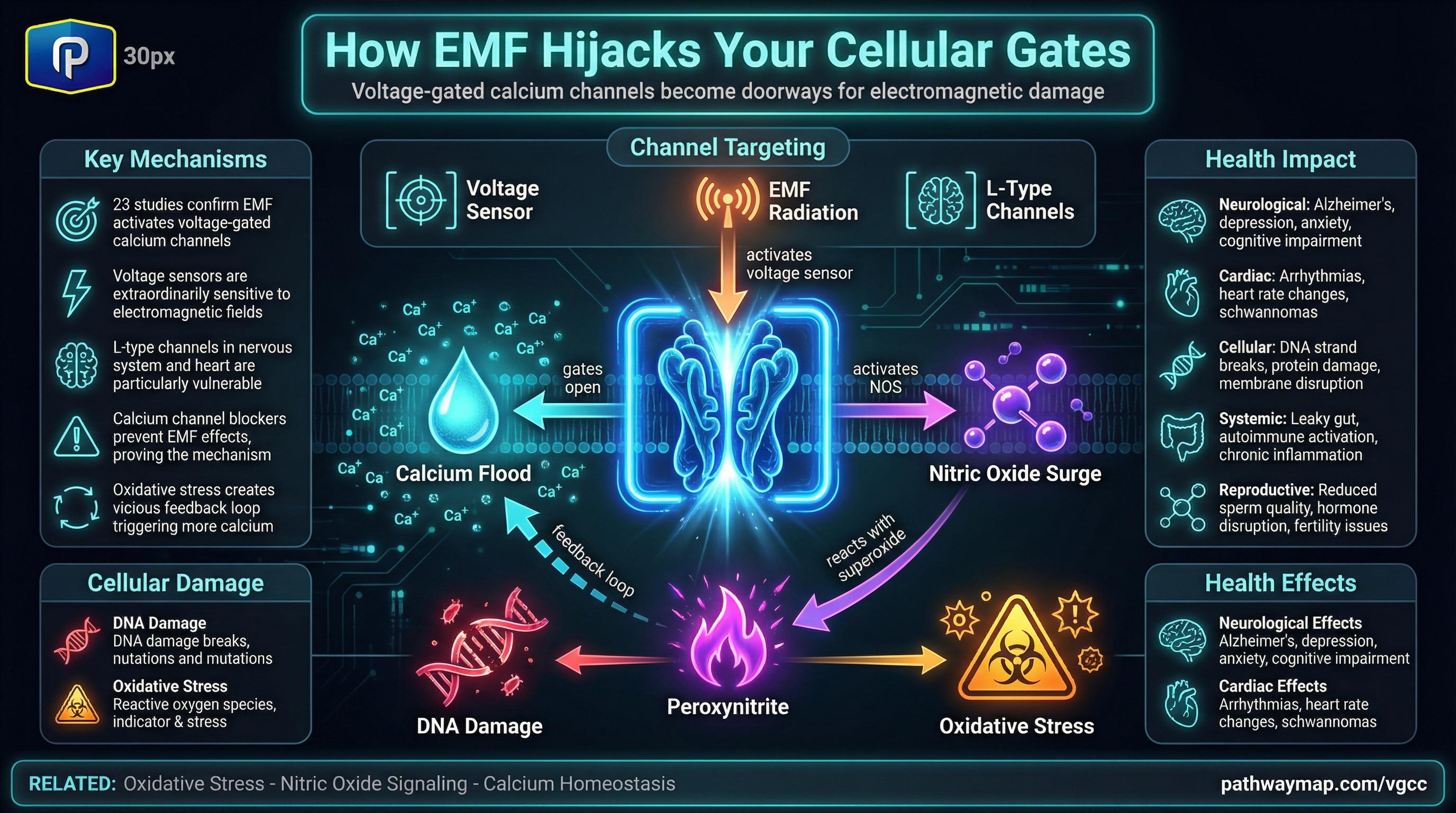
Cell tower health risks remain deliberately obscured. When Pittsfield, Massachusetts residents living within 400 feet of a Verizon tower reported nausea, headaches, and wildlife disappearance, the city’s Board of Health issued the first-ever cease-and-desist order against a major carrier in 2022. T-Mobile’s own SEC filings warn shareholders about “adverse health effects” liability while communities receive no such warnings. The industry cannot obtain insurance coverage for long-term health damages from radiation exposure.
Tower workers face a fatality rate 10 times higher than construction workers – nearly 100 climbers killed in 9 years among just 10,000 workers nationwide. OSHA found 96% of accidents were preventable with proper safety measures. Workers report: “We don’t climb the towers when they’re on. We know they’re cancer-producing.”
Deceptive advertising extracting billions through false promises
A $10.25 million multistate settlement in 2024 addressed years of false advertising by AT&T, Verizon, T-Mobile, Cricket, and TracFone. All 50 state attorneys general found systematic deception around “unlimited” data that wasn’t unlimited, “free” phones requiring hidden fees, and false promises about covering switching costs. The settlement requires carriers to use “unlimited” only when truly unlimited and clearly disclose all conditions.
The National Advertising Division repeatedly sanctioned carriers for false network claims. AT&T failed to disclose their financial relationship with testing companies when claiming “best network.” T-Mobile’s “America’s Best Unlimited Network” claims weren’t supported across coverage and reliability metrics. Coverage maps show full service in areas with “No Service,” misleading consumers about actual network reach.
Serial offenders treating fines as business expenses
The pattern is unmistakable: major carriers are repeat offenders who continue the same violations despite penalties. AT&T has paid fines for data breaches ($177 million), location data selling ($57 million), throttling ($160 million total), and cramming ($105 million) – over $499 million just in these categories. Verizon accumulated $147 million in similar violations. T-Mobile faces $240 million across various settlements.
Internationally, companies under compliance monitoring continue violations. Ericsson breached their deferred prosecution agreement by hiding terrorist payments. Multiple European carriers coordinate price-fixing and privacy violations, with Spanish carriers receiving €120 million in fines overturned on technicalities while continuing the same practices.
The systematic betrayal continues unchecked
The telecommunications industry has weaponized regulatory capture, with the Telecommunications Act of 1996 prohibiting local governments from considering health effects in cell tower decisions. Federal preemption shields carriers from accountability while fines remain trivial compared to revenues – AT&T’s $177 million data breach settlement represents less than two days of revenue for a company earning $120 billion annually.
These documented cases – supported by court records, regulatory findings, and billions in settlements – reveal an industry that profits from systematic deception, privacy violations, subsidy fraud, and environmental destruction. With carriers treating multi-million dollar penalties as operating expenses while continuing identical violations, consumers remain vulnerable to an industry that has proven it will prioritize profits over people at every opportunity. The $10 billion in documented penalties, stolen subsidies, and fraud represents merely what authorities have caught and prosecuted – the true scale of consumer harm likely reaches far higher.