Molybdenum
The sulfite solution. Molybdenum is a trace mineral that activates enzymes critical for sulfur metabolism, particularly sulfite oxidase. If you react to wine, dried fruit, or sulfur-rich foods, molybdenum might be the missing link. It's also needed for uric acid production and aldehyde detoxification.
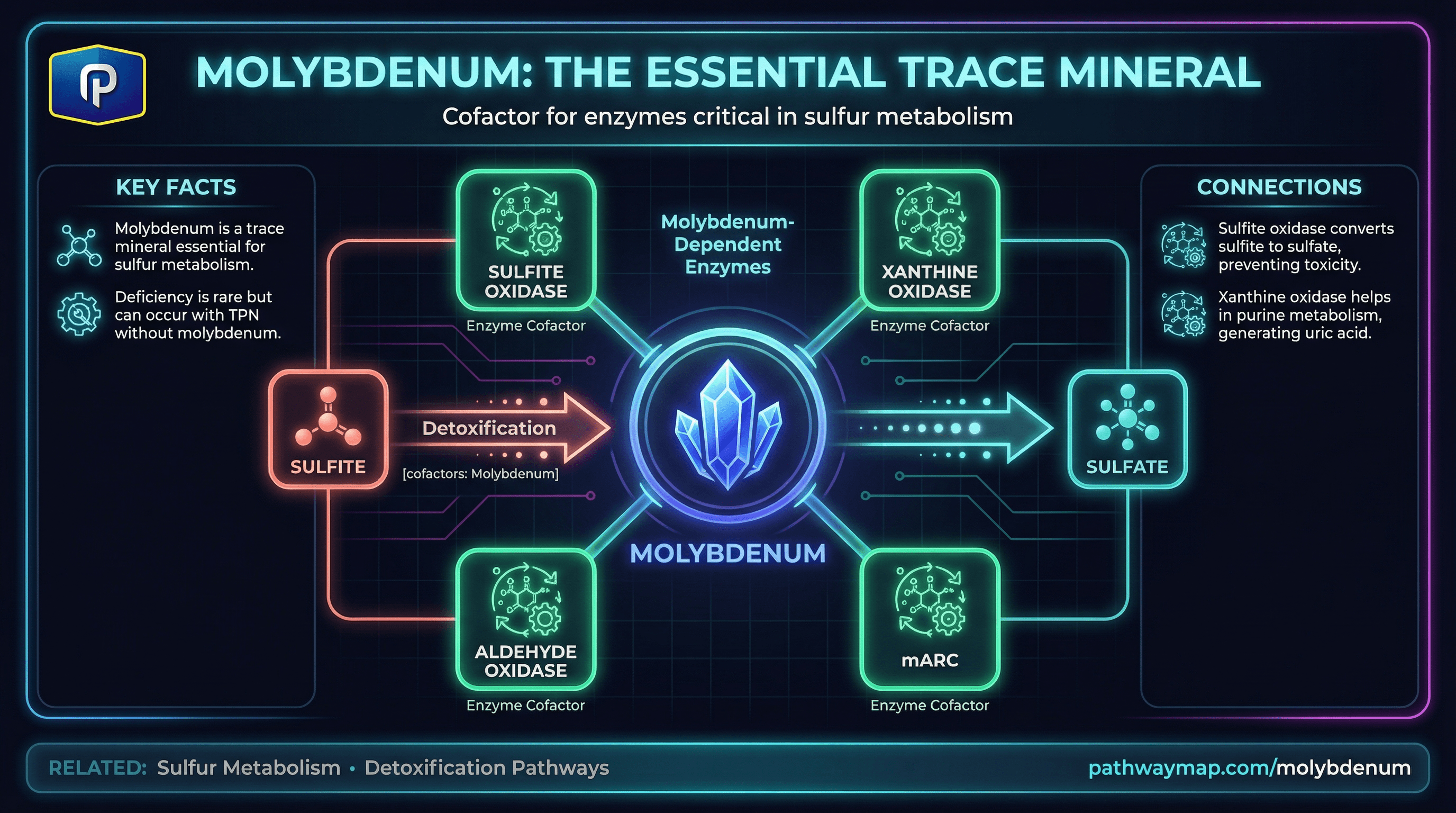
Molybdenum-Dependent Enzymes
Sulfite Oxidase
Converts toxic sulfite to safe sulfate. Essential for sulfur amino acid metabolism. Wine/sulfite sensitivity when low.
Xanthine Oxidase
Breaks down purines to uric acid. Also produces superoxide. Involved in gout.
Aldehyde Oxidase
Detoxifies aldehydes including acetaldehyde. Important for drug metabolism.
The Sulfite Connection
Sulfite Sensitivity Signs
- Reactions to wine (contains sulfites)
- Issues with dried fruit (preserved with sulfites)
- Headaches after certain foods
- Asthma triggered by sulfite foods
- General sulfur food sensitivity
How Mo Helps
- Activates sulfite oxidase enzyme
- Converts sulfite → sulfate (safe)
- Allows better sulfur tolerance
- May improve CBS/sulfur pathway issues
- 150-500μg often used therapeutically
Food Sources
Best Sources
Legumes (lentils, beans, peas), nuts, grains, liver. Soil content affects plant levels.
Absorption
Very well absorbed (40-100%). Quickly excreted—doesn't accumulate. Hard to become toxic from food.
Cautions
Copper Antagonism
High molybdenum can deplete copper. Don't supplement long-term without monitoring. Balance matters.
Upper Limit
2mg/day tolerable upper limit. Gout-like symptoms possible at very high doses (uric acid).
Videos, studies & resources
Browse all 7 in the Library →Mo content of the daily average diet in
Mo content of the daily average diet in the United States is 0.07 ppm and that of the United Kingdom 0.04 ppm. However, CNS disease occurs in Mo-deficient sheep that are ingesting dietary purines, when the dietary Mo level falls below 0.04 ppm.
Open ↗Molecular basis of the
Molecular basis of the biological function of molybdenum: the relationship between sulfite oxidase and the acute toxicity of bisulfite and sulfur dioxide(SO2)
Open ↗molybdenum and Parkinson’s
molybdenum and Parkinson’s disease w/dementia
Open ↗Uric acid and alterations of purine
Uric acid and alterations of purine recycling disorders in Parkinson’s disease
Open ↗Using microbes to reduce
Using microbes to reduce molybdenum in soil. Why don't they worry about mercury etc in the soil??
Open ↗People use molybdenum for
People use molybdenum for molybdenum deficiency. It is also used for acne, cancer, liver disease, osteoporosis, and other many conditions, but there is no good scientific evidence to support these uses.
Open ↗