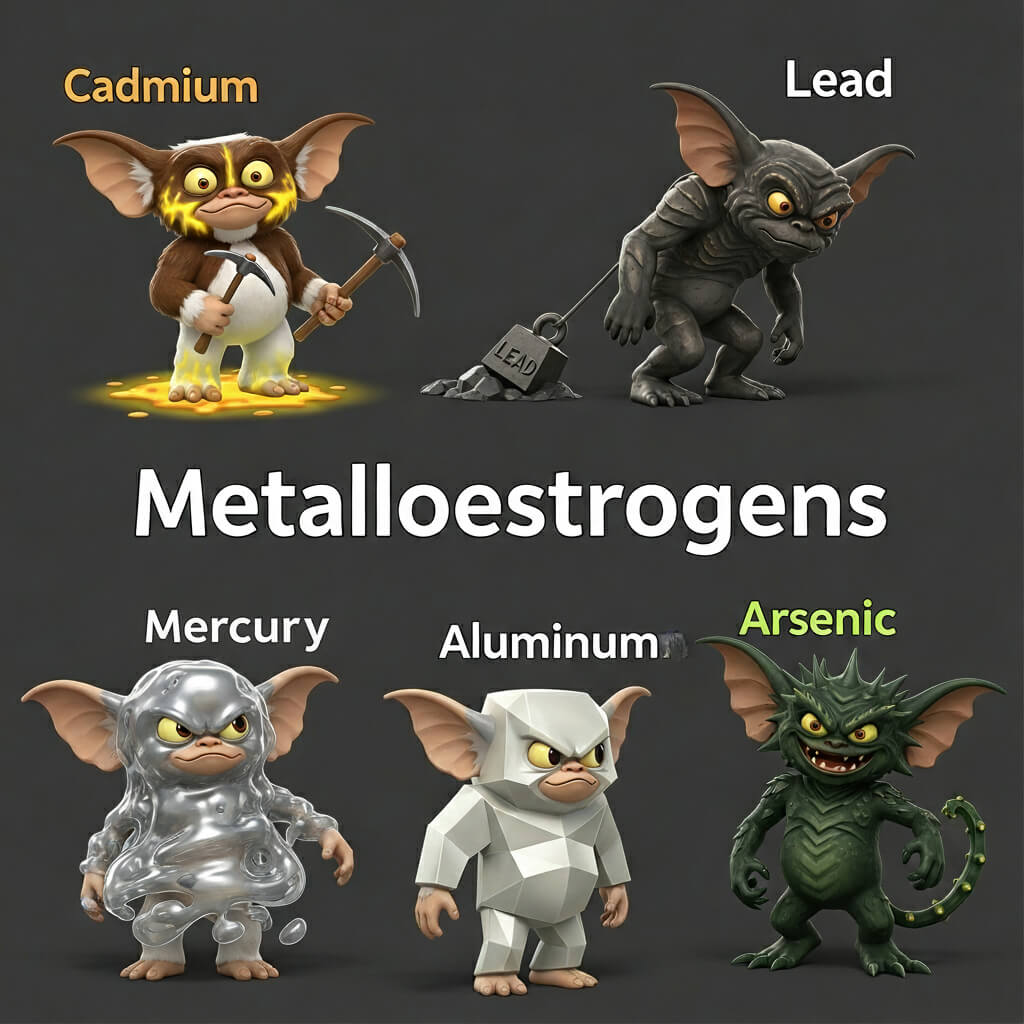

Metalloestrogens are inorganic metals that bind to and activate estrogen receptors, mimicking natural estrogen in the absence of estradiol – and they're accumulating in our bodies right now. These metals, including cadmium, lead, mercury, aluminum, and arsenic, represent an emerging class of endocrine disruptors with biological half-lives measured in decades rather than days. With cadmium persisting 10-30 years in the body and lead stored in bones for a lifetime, these metals pose a unique threat: unlike organic toxins that metabolize relatively quickly, metalloestrogens bioaccumulate progressively throughout life. Research shows that cadmium concentrations in breast tissue can be 200-300 times higher than in blood, while aluminum has no natural elimination pathway, leading to continuous tissue accumulation. The health implications are profound – from increased breast cancer risk and reproductive disorders to developmental effects in children and metabolic dysfunction.
How Metals Hijack Our Estrogen Receptors
Metalloestrogens operate through a fascinating molecular mechanism distinct from traditional hormone mimics. Rather than entering the estrogen receptor's binding pocket like estradiol, these metals bind to four specific calcium/metal interaction sites on the receptor's surface, causing conformational changes that activate estrogen-responsive genes. This non-competitive binding means metalloestrogens can trigger estrogenic effects even when natural estrogen is present, essentially hijacking our body's hormonal signaling system. Cadmium activates estrogen receptor alpha at concentrations as low as 10⁻¹¹ M, demonstrating remarkable potency despite being 10,000-fold weaker than estradiol in binding affinity.
The metals fall into two distinct subclasses based on their structure. Bivalent cationic metals like cadmium, lead, mercury, nickel, and copper directly interact with amino acid residues on the receptor surface, rotating key helices to stabilize an agonist-like conformation. Metal/metalloid anions such as arsenite and selenite operate through different binding mechanisms but achieve similar estrogenic activation. Each metal exhibits unique characteristics – mercury blocks estradiol binding while accumulating in brain tissue, lead replaces zinc in DNA binding domains slightly increasing receptor affinity, and aluminum causes perinuclear localization of receptors affecting mitochondrial function. The complexity deepens when multiple metalloestrogens are present simultaneously, creating synergistic "stew effects" that amplify hormonal disruption beyond what individual metals would cause alone.
Our Daily Dose Comes from Everywhere
Environmental contamination has made metalloestrogen exposure virtually unavoidable in modern life. Industrial emissions release chromium, lead, and cadmium into ambient air at concentrations that vary dramatically by proximity to metallurgical facilities, with welding operations alone producing manganese levels of 1.45 ± 1.08 mg/m³ in worker breathing zones. Water systems carry industrial discharge, agricultural runoff laden with cadmium from phosphate fertilizers, and lead leaching from aging infrastructure – a problem affecting millions of homes with pipes installed before 1986. Soil contamination is ubiquitous globally, with toxic metals detected at 796,084 sampling points worldwide, creating a reservoir of exposure through dust, gardening, and food production.
The modern diet serves as a primary exposure route for most people. Large predatory fish bioaccumulate methylmercury to levels prompting FDA consumption advisories, while rice concentrates arsenic from contaminated groundwater, particularly concerning for infant cereals. Chocolate lovers face a bitter truth – cocoa products contain cadmium levels that triggered California's reproductive harm warnings at just 4.1 micrograms daily. Aluminum enters the food supply through canned beverages containing 5-7 times higher levels than bottled alternatives, processed foods with aluminum additives, and contamination from cookware. Even organic vegetables grown in uncontaminated soil can uptake metals from naturally occurring geological deposits, with leafy greens and mushrooms showing the highest accumulation rates.
Consumer products deliver metalloestrogens directly to our bodies through daily routines. A single application of antiperspirant can provide 50,000-75,000 micrograms of aluminum directly to underarm skin near breast tissue. Cosmetics harbor lead in lipstick ranging from 14.2 to 27,032 µg/g, while eye shadows contain 20,000-50,000 µg/g aluminum. Stainless steel cookware leaches nickel and chromium during cooking, particularly with acidic foods, and non-stick coatings degrade to release additional metal contaminants. The occupational landscape presents even higher exposures – battery manufacturing workers show 3-4 fold elevated blood levels of toxic metals, dental professionals inhale mercury vapor during amalgam procedures, and e-waste recyclers face a cocktail of metalloestrogen exposure affecting millions globally.
Routes into Our Bodies Mirror Exposure Sources
The body absorbs metalloestrogens through three primary pathways, each with distinct characteristics affecting uptake and distribution. Ingestion through food and water represents the dominant route for the general population, with absorption rates varying dramatically based on nutritional status – cadmium absorption doubles in individuals with calcium, protein, or zinc deficiency, while children absorb up to 50% of ingested lead compared to 5-10% in adults. The gastrointestinal tract's selective permeability means methylmercury achieves near-complete absorption while inorganic arsenic uptake depends on solubility and chemical form.
Inhalation poses the greatest risk in occupational settings where respirable particles smaller than 2.5 micrometers penetrate deep into lung alveoli. Mercury vapor demonstrates over 80% absorption efficiency through lungs, rapidly entering systemic circulation and crossing the blood-brain barrier. Workers exposed to manganese concentrations above 1-5 mg/m³ for two decades develop irreversible neurological effects resembling Parkinson's disease. Dermal absorption, while generally less efficient than other routes, becomes significant with repeated exposure to aluminum-containing antiperspirants applied to freshly shaved underarm skin where the barrier is compromised. Absorption rates vary dramatically by body region, with scrotal skin showing the highest permeability, followed by forehead and armpit areas where many metal-containing personal care products are applied.
Health Impacts Cascade Through Multiple Systems
The evidence linking metalloestrogen exposure to breast cancer has grown increasingly robust. Three large U.S. epidemiological studies found workers in cadmium-based industries had 33% higher breast cancer risk, while tissue analysis reveals significantly elevated levels of cadmium, chromium, lead, and nickel in cancer biopsies compared to healthy tissue. The mechanism involves direct activation of estrogen receptor alpha, triggering cell proliferation pathways particularly relevant for hormone-positive breast cancers. Beyond cancer, metalloestrogens profoundly disrupt reproductive health – cadmium stimulates endometrial stromal cell proliferation contributing to endometriosis, lead diminishes steroidogenic protein expression affecting PCOS development, and mercury exposure correlates with decreased sperm quality and long-term amenorrhea in women.
Developmental windows represent periods of extreme vulnerability. In utero cadmium exposure accelerates puberty onset in female offspring while increasing mammary gland epithelial area and terminal end buds – structures associated with later cancer risk. Prenatal aluminum exposure shows the most significant contribution to impaired neurodevelopment, with exposed children demonstrating 18% lower odds of normal breast development progression through Tanner stages. The thyroid gland's high affinity for cadmium and mercury leads to thyrotoxicity and follicular cell death, while metabolic systems suffer through metalloestrogen-induced insulin resistance and β-cell failure, significantly increasing gestational diabetes risk. Neurological effects manifest as cognitive impairment, tremors, and developmental delays, with children showing particular susceptibility due to their developing nervous systems and higher absorption rates.
Supporting Our Body's Natural Detoxification
The body's detoxification capacity can be significantly enhanced through targeted nutritional interventions. N-acetylcysteine (NAC) serves as a crucial glutathione precursor, with doses of 600-1,800 mg daily replenishing this master antioxidant that directly binds heavy metals for elimination. Alpha-lipoic acid demonstrates unique versatility, crossing the blood-brain barrier to chelate mercury, lead, and cadmium while simultaneously restoring intracellular glutathione levels – clinical studies utilize 300-1,800 mg daily of the more bioavailable R-ALA form. Selenium at 200 mcg daily significantly increases glutathione peroxidase levels, as demonstrated in chronic kidney disease patients, while zinc supplementation at 15-30 mg supports metallothionein production – specialized proteins that bind and transport heavy metals for elimination.
Food-based approaches offer gentler yet effective detoxification support. Cruciferous vegetables, particularly broccoli sprouts with their exceptional sulforaphane content, activate Phase II detoxification enzymes through Nrf2 pathway stimulation. Fresh cilantro mobilizes mercury and lead from tissues when combined with binding agents like chlorella, which demonstrates high affinity for multiple heavy metals without depleting essential minerals. Garlic's sulfur compounds proved as effective as pharmaceutical chelator d-penicillamine in reducing lead levels in rat studies, while 25-35 grams of daily fiber from barley and oats binds bile acids containing toxins for elimination. These dietary interventions work synergistically with lifestyle modifications – infrared sauna therapy induces sweating that eliminates arsenic, cadmium, lead, mercury, and nickel at concentrations exceeding blood or urine levels, while moderate aerobic exercise for 30-60 minutes enhances circulation, lymphatic drainage, and toxin excretion through exercise-induced perspiration.
For more intensive interventions, several chelation and binding agents show clinical efficacy. Modified citrus pectin at 5-15 grams daily enters the bloodstream to bind heavy metals throughout the body, with studies documenting significant increases in urinary metal excretion within 24-48 hours. Pharmaceutical chelators like DMSA effectively remove lead, mercury, and arsenic but require medical supervision due to potential mineral depletion and redistribution concerns. Supporting the liver's detoxification pathways proves essential – Phase I enzymes require B-vitamins and antioxidants, Phase II conjugation needs sulfur compounds and glutathione precursors, while Phase III elimination depends on adequate hydration and regular bowel movements to prevent toxin reabsorption. (this is why I stick with nutrients and listen to my cells)
Metallothioneins Act as Our Cellular Bodyguards
Metallothioneins represent the body's sophisticated defense system against metal toxicity. These small, cysteine-rich proteins containing approximately 30% cysteine residues bind heavy metals with remarkable efficiency, serving dual roles in maintaining essential mineral homeostasis while protecting against toxic metal accumulation. Their production can be strategically enhanced through targeted nutrition – zinc supplementation at 15-30 mg daily serves as the primary inducer of metallothionein synthesis, while adequate protein intake of 0.8-1.2 grams per kilogram body weight provides the amino acid building blocks, particularly cysteine, methionine, and histidine. Selenium at 55-200 mcg daily supports metallothionein function as a cofactor for related antioxidant enzymes, creating a coordinated cellular defense network. The synergy extends to B-vitamins supporting methylation pathways and magnesium serving as an enzymatic cofactor, demonstrating how comprehensive nutritional support amplifies the body's natural detoxification capacity beyond what single interventions achieve.
Prevention Strategies We Can Implement Today
Protecting ourselves from metalloestrogen exposure requires a multi-faceted approach targeting the primary contamination sources in daily life. Water filtration stands as the first line of defense – reverse osmosis systems augmented with activated carbon pre- and post-filters can remove over 99% of metalloestrogens, with recent innovations using 80-micrometer spherical activated carbon achieving near-complete estradiol removal. Kitchen safety extends beyond water to cookware choices, where glass, ceramic, and well-seasoned cast iron replace aluminum and damaged non-stick surfaces that leach metals into food. Organic produce selection reduces exposure to metal-containing pesticides and fertilizers, though thorough washing remains essential as even organic vegetables can uptake metals from natural geological deposits.
Personal care products deserve scrutiny given their direct application to skin – choosing aluminum-free deodorants, lead-tested cosmetics, and products verified through databases like EWG's Skin Deep significantly reduces daily exposure. Home environment management through HEPA filtration, regular vacuuming with sealed systems, and removing shoes at entry prevents accumulation of metal-containing dust particles that contribute to chronic low-level exposure. For those in high-risk occupations, proper ventilation, personal protective equipment including respirators, and regular biomonitoring become essential safeguards against the elevated exposures inherent in mining, welding, battery manufacturing, and electronics recycling industries.
Testing Helps Track Our Exposure Burden
Understanding our metalloestrogen body burden requires appropriate testing methods, each offering different insights into exposure patterns. Blood testing provides a snapshot of recent exposure, with established reference ranges – lead below 5 μg/dL for adults and below 3.5 μg/dL for children, mercury under 10 μg/L, and cadmium below 1.0 μg/L for non-smokers. While blood tests reflect current circulating levels useful for acute exposure assessment, they miss chronic accumulation in tissues where metals sequester for years or decades. Unprovoked 24-hour urine collection better assesses the body's natural excretion capacity and chronic exposure, with cadmium levels below 2 μg/g creatinine considered acceptable by NHANES standards.
Hair mineral analysis offers a three-month exposure window, with the CDC recognizing hair mercury as a useful biomarker for methylmercury exposure. Elements concentrate 200-300 times more in hair than blood or urine, providing enhanced detection sensitivity, though external contamination and hair treatments can affect results. Critically, provoked urine testing using chelating agents like DMSA or EDTA, while popular in some clinical settings, lacks standardized reference ranges and is not recommended by major medical toxicology organizations due to high false-positive rates and the inappropriate application of unprovoked reference ranges to provoked samples. The key insight across all testing methods: normal blood levels don't rule out significant tissue accumulation, particularly for metals like cadmium that preferentially sequester in organs rather than circulating systemically.
Research Reveals Mounting Future Challenges
The metalloestrogen landscape is rapidly evolving with three major concerns emerging from current research. Climate change acts as a threat multiplier – rising temperatures increase metal solubility in water systems while enhanced precipitation mobilizes contaminated sediments, with Swedish research showing a 20% increase in precipitation correlates with 17% higher metal loads in rivers. The global e-waste crisis compounds exposure risks, with 53.6 million metric tons generated in 2019 expected to reach 74.7 million tons by 2030, releasing over 1,000 chemical substances through informal recycling that affects millions of workers and nearby communities. Perhaps most concerning is the proliferation of engineered nanoparticles in consumer products – silver nanoparticles compromise mammary gland development, titanium dioxide nanoparticles demonstrate estrogenic effects in combination with other compounds, and metal oxide nanoparticles in everything from cosmetics to food packaging pose largely unknown risks due to insufficient toxicological testing and poorly understood environmental fate.
Recent mechanistic discoveries reveal metalloestrogens cause epigenetic changes including DNA methylation alterations and telomere attrition that can transmit across generations through placental transfer. The "stew effects" of multiple metal exposure create cumulative impacts exceeding the sum of individual exposures, with age-specific associations showing cadmium affects younger women more strongly while lead impacts increase with age. Advanced analytical methods now detect metalloestrogens at previously unmeasurable concentrations, revealing widespread contamination in populations previously considered unexposed. These findings underscore the urgent need for comprehensive metalloestrogen testing and regulation, strengthened e-waste management with worker protections, mandatory safety assessment of nanomaterials before market entry, and updated drinking water standards addressing these emerging contaminants.
Conclusion
Metalloestrogens represent a unique class of endocrine disruptors whose persistence and bioaccumulation distinguish them from organic toxins that metabolize and clear relatively quickly. While complete avoidance remains impossible in our industrialized world, the evidence clearly demonstrates that strategic interventions can significantly reduce exposure and support the body's elimination of these persistent metals. The convergence of climate change, electronic waste proliferation, and nanotechnology creates an increasingly complex exposure landscape requiring both individual action and systemic change. By implementing comprehensive prevention strategies – from installing appropriate water filtration to choosing safer cookware and supporting natural detoxification pathways through targeted nutrition – we can meaningfully reduce our metalloestrogen burden while advocating for the regulatory reforms necessary to protect public health at the population level.
Note from the Author
The info I link to mention large amounts of these nutrients. This is how much it takes to juice people that are not supporting their system overall. I recovered my health by trying small amounts of these nutrients and sticking with the ones I noticed any sort of benefit from. This is how I see our cells healing, and I think people are stimulating themselves away from healing by juicing larger amounts of only a handful of nutrients.
If we actually find ways to reduce stress on our cells, and provide more of the building blocks they need, they will respond to these various nutrients better. ATM, for most of us at least, our cells are afraid to open up to us.
I'm linking to some of the nutrients mentioned to help provide examples of decent sources. If you are looking for filler-free etc, try Bulk Supplements brand.
NAC https://crrnt.app/SEEK/WwNQ0epY
Zinc https://crrnt.app/SEEK/moVgYBB2
R-ALA https://amzn.to/3HXurFZ
Selenium https://amzn.to/41wQytE
Pectin https://amzn.to/4mJiJ10 (mean headaches etc if you start too quick)
Cilantro https://amzn.to/3HNJEJU
Garlic https://amzn.to/3HYDnuQ (these can help, but Allicin only forms when garlic is freshly crushed or chopped, and even then, it's very unstable—breaking down within hours.)
Black Garlic https://amzn.to/4oYnHZ5
Sweating https://amzn.to/425wbnq (https://www.facebook.com/groups/redlight)