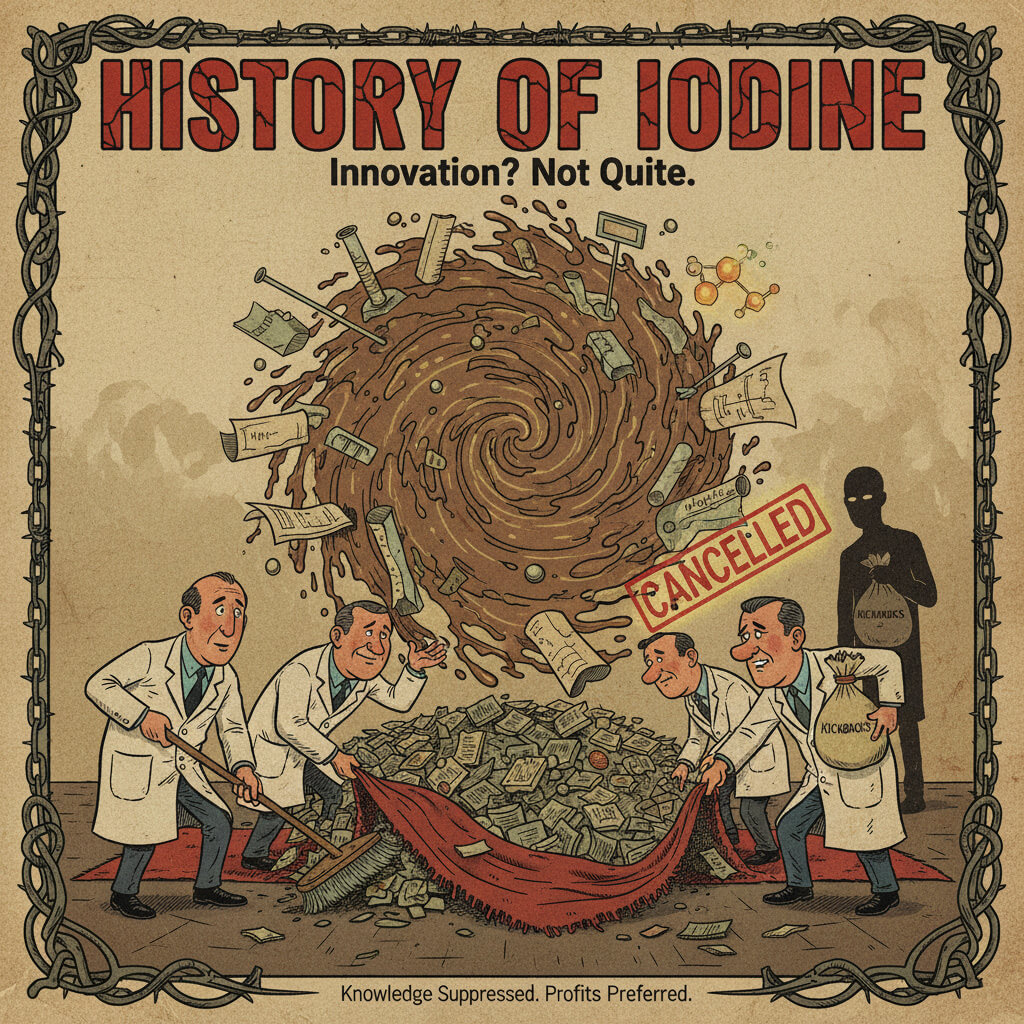

The history of iodine reveals one of modern medicine’s greatest public health triumphs followed by its quiet unraveling. Beginning in the 1980s, iodine was systematically removed from bread and reduced in dairy products while being replaced with toxic halogen competitors like bromide, leading to the re-emergence of deficiency disorders that affect nearly 2 billion people globally. This comprehensive investigation exposes how industrial decisions, regulatory changes, and the introduction of competing halogens have created a perfect storm of iodine deficiency linked to rising rates of thyroid disorders, obesity, cancer, and cognitive decline.
From Accidental Discovery to Medical Miracle
Bernard Courtois’s accidental discovery of iodine in 1811 while manufacturing gunpowder from seaweed launched a medical revolution that would save millions from intellectual disability. By 1829, French physician Jean Lugol had created his famous solution containing 5% elemental iodine and 10% potassium iodide, which became medicine’s Swiss Army knife for treating everything from tuberculosis to surgical wounds. The solution’s 37.5 mg daily dose – 250 times higher than today’s recommended intake – was considered both safe and therapeutic for infectious diseases.
The true breakthrough came with understanding iodine’s role in preventing goiter and cretinism. Swiss physician Jean-François Coindet’s pioneering 1819 study treated 150 goiter patients with alcoholic tincture of iodine at doses of 165-330 mg daily, achieving visible goiter reduction within one week. This work laid the foundation for David Marine and O.P. Kimball’s landmark Akron study (1917-1922), which proved that supplementing schoolgirls with 200 mg sodium iodide prevented goiter in 99.8% of cases compared to over 25% developing goiter in the control group.
The success led to America’s first iodized salt appearing on Michigan grocery shelves on May 1, 1924, containing 100 mg iodine per kilogram – more than double today’s levels. Within decades, the “goiter belt” affecting 26-70% of children in the Great Lakes and Appalachian regions virtually disappeared. By the 1950s, 70-76% of U.S. households used iodized salt, and endemic goiter became a historical footnote. The stage was set for what should have been permanent victory over iodine deficiency disorders.
The Great Iodine Removal Begins in Earnest
The systematic removal of iodine from the American food supply began in the 1960s and accelerated dramatically through the 1980s, driven by a combination of health concerns, industrial convenience, and regulatory decisions that prioritized other considerations over maintaining adequate iodine nutrition. The timeline reveals a coordinated though perhaps unintentional dismantling of multiple overlapping sources of dietary iodine.
The bread industry’s pivotal switch occurred between the 1960s and 1980s, when commercial bakers replaced potassium iodate with potassium bromate as a dough conditioner. Bromate, first patented in 1914 and commercially introduced in 1923, offered what bakers claimed were “more dependable results” and better elasticity for industrial baking processes. By 1980, Japanese manufacturers voluntarily stopped using bromate due to health concerns, and major U.S. companies began following suit throughout the decade, though the FDA only “urged” cessation in 1991 without mandating it. The result: bread transformed from a significant iodine source to a vehicle for bromide, a toxic halogen that actively competes with iodine for thyroid uptake.
Simultaneously, the dairy industry experienced dramatic changes in iodine content. From the 1930s through 1970s, dairy products accidentally became major iodine sources through two mechanisms: farmers adding iodine to cattle feed to improve fertility and lactation, and the widespread adoption of iodophor disinfectants for sanitizing milking equipment in the 1960s. Australian milk in 1975 contained 583-593 μg/L of iodine – levels that would be considered excessive today. However, regulatory concerns about “toxicity” led to systematic changes: Australia set milk iodine limits of 500 μg/L in 1982, triggering replacement of iodophors with chlorine-based sanitizers, while the UK reduced maximum permitted iodine in animal feeds from 10 mg/kg to 5 mg/kg in 2005. Current Australian milk contains only 140-195 μg/L, a 70% reduction from peak levels.
Even iodized salt, the cornerstone of deficiency prevention, underwent subtle but significant changes. The original 1924 formulation contained 100 mg iodine/kg, providing an estimated 500 μg daily intake. Current U.S. levels have been reduced to 45 mg/kg, and a 2008 study found that 47 of 88 table salt brands contained less than the FDA’s recommended range. Combined with public health campaigns to reduce sodium intake and the food industry’s preference for non-iodized salt in processed foods, even this primary source of iodine has become less reliable.
The Hidden Hands Behind Iodine’s Decline
The removal of iodine from the food supply involved a complex web of regulatory bodies, industry players, and scientific advisors whose decisions – whether intentional or inadvertent – fundamentally altered population iodine status. The FDA’s role proved particularly consequential: while approving potassium bromate at 50 ppm in 1941 and increasing it to 75 ppm in 1952, the agency maintained bromate’s GRAS (Generally Recognized as Safe) status even after the International Agency for Research on Cancer classified it as a possible carcinogen in 1999.
Morton Salt Company, which pioneered iodized salt distribution in 1924 to address the “goiter belt” crisis, saw its market influence wane as voluntary iodization remained the U.S. standard while 124 other countries adopted mandatory programs. The U.S. remains one of the few developed nations without mandatory salt iodization, a 1948 bill to require it having failed amid industry opposition. Major bread manufacturers made individual decisions to switch from iodate to bromate throughout the 1980s, with only companies like King Arthur Flour maintaining their commitment to never using bromated flour.
International organizations played contradictory roles. While the WHO launched ambitious global iodization programs and set the 2020 goal of eliminating iodine deficiency disorders, other regulatory changes undermined these efforts. The UK Food Standards Agency’s 2005 decision to halve maximum iodine in animal feeds exemplified how concerns about “exceeding tolerable upper limits” took precedence over maintaining adequate population intake. Food Standards Australia’s 1982 milk iodine limits similarly prioritized theoretical toxicity risks over the practical benefits of iodine-rich dairy products.
The influence of the Copenhagen Consensus, which ranked salt iodization as one of the most cost-effective development interventions at just $0.02-$0.10 per person annually, failed to translate into comprehensive protection of existing iodine sources. Dr. Michael Zimmermann, Executive Director of the Iodine Global Network since 2005, has overseen a period where global coverage expanded while developed nations paradoxically experienced declining status. The disconnect between international advocacy and domestic regulatory decisions reveals how economic and industrial considerations often override nutritional priorities.
Halogens at War Inside the Human Body
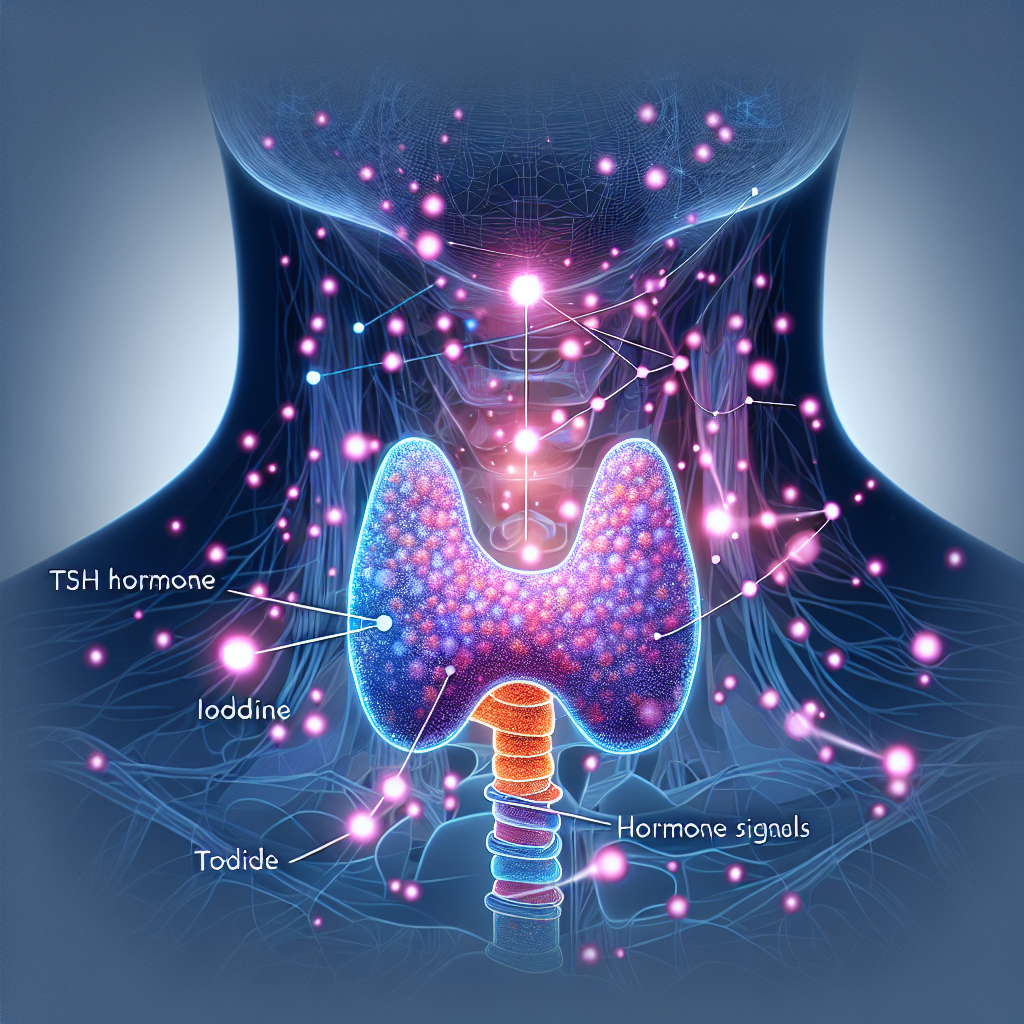
The replacement of iodine with toxic halogen competitors represents one of the most overlooked aspects of this public health crisis. Bromide, fluoride, and chlorine all compete with iodine for the sodium/iodide symporter (NIS), the critical transporter responsible for thyroidal iodine uptake. This molecular gateway cannot effectively distinguish between these similar elements, allowing toxic halogens to occupy binding sites meant for essential iodine. The competitive order of potency follows a disturbing hierarchy, with perchlorate being 30 times more potent than iodide itself at blocking uptake.
Bromide contamination through bread has reached alarming levels. Studies in Bamenda found potassium bromate concentrations in bread ranging from 48.50 to 10,148.50 mg/kg – up to 203 times the FDA recommended maximum. Once absorbed, bromide can replace up to one-third of iodine content in thyroid tissue, causing not just deficiency but active toxicity. The Environmental Working Group identified over 200 products containing potassium bromate currently on the U.S. market, despite bans in the European Union (1990), Canada (1994), China (2005), and India (2016).
Water fluoridation, celebrated as a dental health triumph, creates another front in this halogen competition. A 2015 UK study of 7,935 general practices found that areas with fluoride levels of 0.3-0.7 mg/L had 1.37 times higher odds of hypothyroidism compared to areas below 0.3 mg/L. The West Midlands, with fluoridated water, showed nearly twice the hypothyroidism prevalence of non-fluoridated Greater Manchester. Among iodine-deficient adults, each 1 mg/L increase in urinary fluoride correlates with a 0.35 mIU/L increase in thyroid-stimulating hormone, demonstrating how fluoride specifically targets those already vulnerable from inadequate iodine.
Perchlorate contamination adds yet another layer of interference. The 2001-2002 NHANES study detected perchlorate in 100% of 2,820 urine specimens tested, with this rocket fuel component showing up in drinking water, leafy vegetables, milk, and even dietary supplements. With inhibitory effects 15 times greater than thiocyanate and 240 times greater than nitrate, perchlorate doesn’t just block iodine uptake – it actively accumulates in thyroid tissue through the same NIS transporter, creating a double mechanism of disruption.
Chronic Disease Epidemics Follow Iodine’s Decline
The temporal correlation between declining iodine status and rising chronic disease rates provides compelling evidence of causation. U.S. dietary iodine levels fell over 50% between 1971 and 1994, precisely coinciding with the onset of multiple health epidemics. NHANES data shows median urinary iodine concentration plummeting from 320 μg/L in 1971-1974 to just 145 μg/L by 1988-1994, with current levels stabilized at a concerning 133-164 μg/L. Among women of reproductive age, 42.3% now have levels below 100 μg/L, the WHO threshold for deficiency.
Thyroid disorders have skyrocketed in parallel with iodine decline. Thyroid cancer incidence nearly tripled in the U.S. from the 1980s through mid-2010s, reaching 13.5 per 100,000 persons annually. The shift in cancer subtypes proves particularly telling: populations with adequate iodine show papillary to follicular ratios of 6.5:1, while iodine-deficient areas see this drop to 0.19:1, indicating a shift toward more aggressive cancer forms. Studies consistently demonstrate that correcting iodine deficiency shifts thyroid cancer toward less malignant subtypes.
The obesity epidemic’s timing aligns disturbingly well with iodine reduction. Mouse studies reveal that iodine deficiency causes a 2.3-fold increase in fat oxidation and 30% higher food intake while maintaining body weight – metabolic disruptions that promote fat storage. Human studies confirm this connection: obese women show significantly lower urinary iodine (96.6 vs 173.3 μg/g) compared to non-obese women, with BMI independently associated with lower iodine levels. The mechanism involves disrupted glucose metabolism, altered lipid processing, and compromised mitochondrial function extending beyond simple thyroid hormone effects.
Cognitive impacts prove especially devastating for developing brains. Meta-analyses of Chinese studies document a 12.45 IQ point loss in children exposed to severe iodine deficiency, with only partial recovery (8.7 points) possible through pregnancy supplementation. The ALSPAC study found children of iodine-deficient mothers scored lower on verbal IQ, reading accuracy, and comprehension tests. Most alarmingly, an Italian study found 68.7% of children in iodine-deficient areas had ADHD compared to 0% in iodine-sufficient regions, suggesting that rising ADHD rates may partly reflect widespread maternal deficiency.
The Wolff-Chaikoff Effect: How Misunderstood Research Created Iodophobia
The medical establishment’s fear of iodine supplementation largely stems from a 1948 study that has been profoundly misinterpreted for over 70 years. The Wolff-Chaikoff effect – the temporary suppression of thyroid hormone synthesis following high iodine intake – was observed in rats given massive doses equivalent to 2,000 times normal intake. What researchers failed to emphasize was that this effect is both transient and protective, with the thyroid “escaping” from suppression within 24-48 hours through downregulation of the sodium-iodide symporter.
This adaptive mechanism actually protects the thyroid from excess iodine while maintaining normal function – yet it became the basis for widespread “iodophobia” among physicians. The original study used intraperitoneal injection of radioactive iodine in rats, not oral consumption in humans, making extrapolation to dietary intake scientifically questionable. More importantly, the Wolff-Chaikoff effect has never been documented to cause permanent hypothyroidism in humans with normal thyroids. Cases of iodine-induced hypothyroidism occur almost exclusively in patients with underlying autoimmune thyroiditis or other thyroid pathology.
Dr. Guy Abraham’s extensive review of the literature found that fears of iodine-induced hypothyroidism were based on misinterpretation and poor study design. The “escape” phenomenon – where the thyroid resumes normal hormone production despite continued high iodine intake – demonstrates our body’s remarkable ability to self-regulate. Japanese populations consuming 50-80 times the Western RDA show no epidemic of hypothyroidism, and historical medical practice routinely used gram doses of iodine (6,000 times the RDA) without causing widespread thyroid shutdown.
The tragedy is that iodophobia has prevented clinicians from using therapeutic doses of iodine that were standard practice for over a century. Physicians who understand the transient nature of the Wolff-Chaikoff effect successfully use 12.5-50 mg daily doses for conditions ranging from fibrocystic breast disease to chronic fatigue, with thyroid function typically normalizing within weeks as the escape mechanism activates. The key is gradual dose escalation and monitoring, not avoidance based on misunderstood rat studies from 1948.
Japanese Iodine Intake Exposes Western Guidelines
The contrast between Japanese and Western iodine consumption further challenges the fears instilled by misinterpretation of the Wolff-Chaikoff effect. While Western authorities set the RDA at 150 μg daily with an upper limit of 1,100 μg, Japanese people routinely consume 1,000-3,000 μg daily, with some estimates reaching 12-13 mg from seaweed consumption. This 80-fold difference in intake correlates with Japan having the world’s highest life expectancy, lowest cancer rates, and highest percentage of centenarians.
The Japanese experience suggests that Western RDAs prevent only severe deficiency rather than optimizing health. Japanese breast cancer rates remain among the world’s lowest despite – or perhaps because of – their high iodine intake. Their population appears adapted through generations to process higher iodine loads, with cases of iodine-induced hypothyroidism proving both uncommon and reversible through simple dietary modification. The organic forms of iodine in seaweed may also confer different biological effects than the inorganic supplements used in Western fortification.
Critics of current guidelines, including physicians practicing “ortho-iodosupplementation,” recommend 2-5 mg daily for whole-body sufficiency, arguing that iodine supports functions far beyond thyroid hormone production. Clinical trials using 1,500-6,000 μg daily for fibrocystic breast disease achieved 65% objective improvement with 98% becoming pain-free after nine months. Side effects remained minimal (10.9% incidence) and mostly cosmetic, including acne (1.1%) and hair thinning (1.0%), while thyroid dysfunction occurred in less than 0.4% of patients.
Recent research confirms iodine’s roles beyond the thyroid: direct antimicrobial effects, heavy metal detoxification through increased urinary excretion of lead and mercury, enhanced phase I and II liver detoxification, and direct apoptotic effects on cancer cells through mitochondrial membrane disruption. These findings suggest that focusing solely on preventing goiter and cretinism has caused medicine to overlook iodine’s broader physiological importance.
The Re-emergence of an Ancient Affliction
The current state of global iodine nutrition represents a public health paradox: while 89% of the world’s population theoretically has access to iodized salt, nearly 2 billion people remain iodine deficient, including 285 million school-aged children. Europe shows the highest prevalence at 59.9% of children with inadequate intake, while even the “iodine-sufficient” United States shows concerning trends in vulnerable populations. The re-emergence of deficiency in developed nations after decades of adequacy proves that nutritional victories require constant vigilance.
The systematic documentation reveals that iodine removal resulted not from conspiracy but from thousands of individual decisions prioritizing cost, convenience, and misguided safety concerns over nutritional adequacy. Bakers chose bromate for “better” dough. Regulators worried about “toxicity” from levels the Japanese consume daily. Dairy farmers switched to cheaper sanitizers. Public health campaigns reduced salt intake without ensuring alternative iodine sources. Each decision seemed reasonable in isolation; together, they dismantled a crucial nutritional safety net.
The path forward requires acknowledging that successful fortification programs need protection from industrial and regulatory erosion. Mandatory rather than voluntary iodization, monitoring of multiple food sources beyond salt, regulation of competing halogens, and recognition of iodine’s importance beyond preventing severe deficiency all prove essential. The Japanese example suggests that Western populations may benefit from significantly higher intakes than current guidelines recommend, particularly given ubiquitous exposure to competitive halogens.
The history of iodine teaches that public health victories are never permanent. What began as humanity’s triumph over preventable intellectual disability has evolved into a cautionary tale about the fragility of nutritional gains. As rising rates of thyroid disorders, obesity, cancer, and cognitive decline correlate with declining iodine status, the evidence demands urgent reconsideration of current approaches. The systematic removal of iodine from our food supply may prove to be one of the most consequential yet overlooked public health failures of the past century.
Read More
I suspect what happened with iodine was not by chance /iodine-conspiracy