H. pylori
The ulcer bug—and more. Helicobacter pylori infects about half the world's population, surviving in the acidic stomach by producing ammonia. It causes most peptic ulcers and increases gastric cancer risk—but eradication isn't always straightforward, and the relationship is more complex than "always bad."
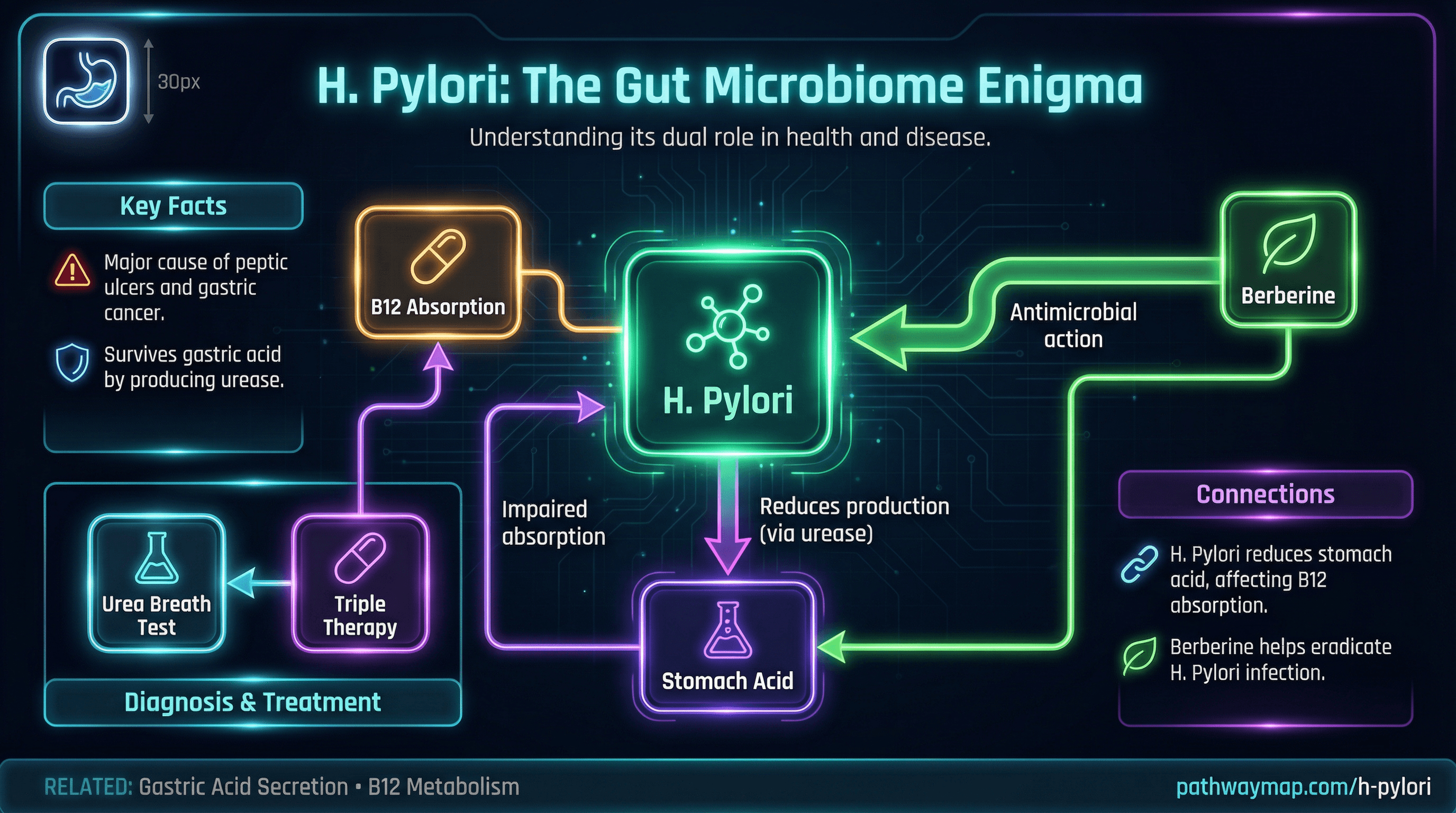
What H. pylori Does
Survives Stomach Acid
Produces urease enzyme that converts urea to ammonia, creating alkaline microenvironment.
Damages Mucosa
Burrows into mucus layer. Causes chronic inflammation. Damages protective lining.
Alters Acid Production
Can increase OR decrease stomach acid depending on location. Antrum = more acid. Body = less.
Ulcer Formation
Causes 80% of gastric ulcers, 90% of duodenal ulcers. Changed understanding of ulcer disease.
Cancer Risk
Class 1 carcinogen. Increases gastric cancer and MALT lymphoma risk. But only 1-2% develop cancer.
Nutrient Theft
Depletes B12 (intrinsic factor), iron (bleeding, reduced absorption), possibly zinc.
Symptoms & Testing
Common Symptoms
- Burning pain: Upper abdomen, especially when stomach empty
- Bloating: Especially after meals
- Nausea: Loss of appetite, early fullness
- Unexplained anemia: Iron or B12 deficiency
- Many asymptomatic: Most infected have no symptoms
Testing Methods
- Urea breath test: Gold standard. Drink labeled urea, measure CO2.
- Stool antigen: Good accuracy. Easy collection.
- Blood antibodies: Only shows exposure, not active infection.
- Endoscopy: Direct biopsy. For complicated cases.
- Stop PPIs: 2 weeks before testing (false negatives).
Treatment Approach
Triple Therapy
PPI + 2 antibiotics (clarithromycin, amoxicillin or metronidazole). 14 days. 70-85% success.
Quadruple Therapy
PPI + bismuth + 2 antibiotics. Higher success rate. Used for resistant cases or first-line in some areas.
Confirm Eradication
Retest 4+ weeks after treatment ends. 1-2 weeks off PPIs. Breath or stool test.
Adjunct Support
Probiotics during treatment may improve eradication and reduce side effects. S. boulardii studied.
The Nuanced View
H. pylori isn't purely harmful—context matters:
Potential Benefits
Some studies link eradication to increased reflux, asthma, allergies. May have regulatory role in immune development.
When to Treat
Active ulcer, gastric cancer family history, MALT lymphoma, unexplained anemia, ITP, long-term PPI use.
When to Consider Leaving
Asymptomatic, elderly, multiple treatment failures, strong family history of esophageal issues.
Individual Decision
Not black and white. Discuss with gastroenterologist. Consider symptoms, risk factors, family history.