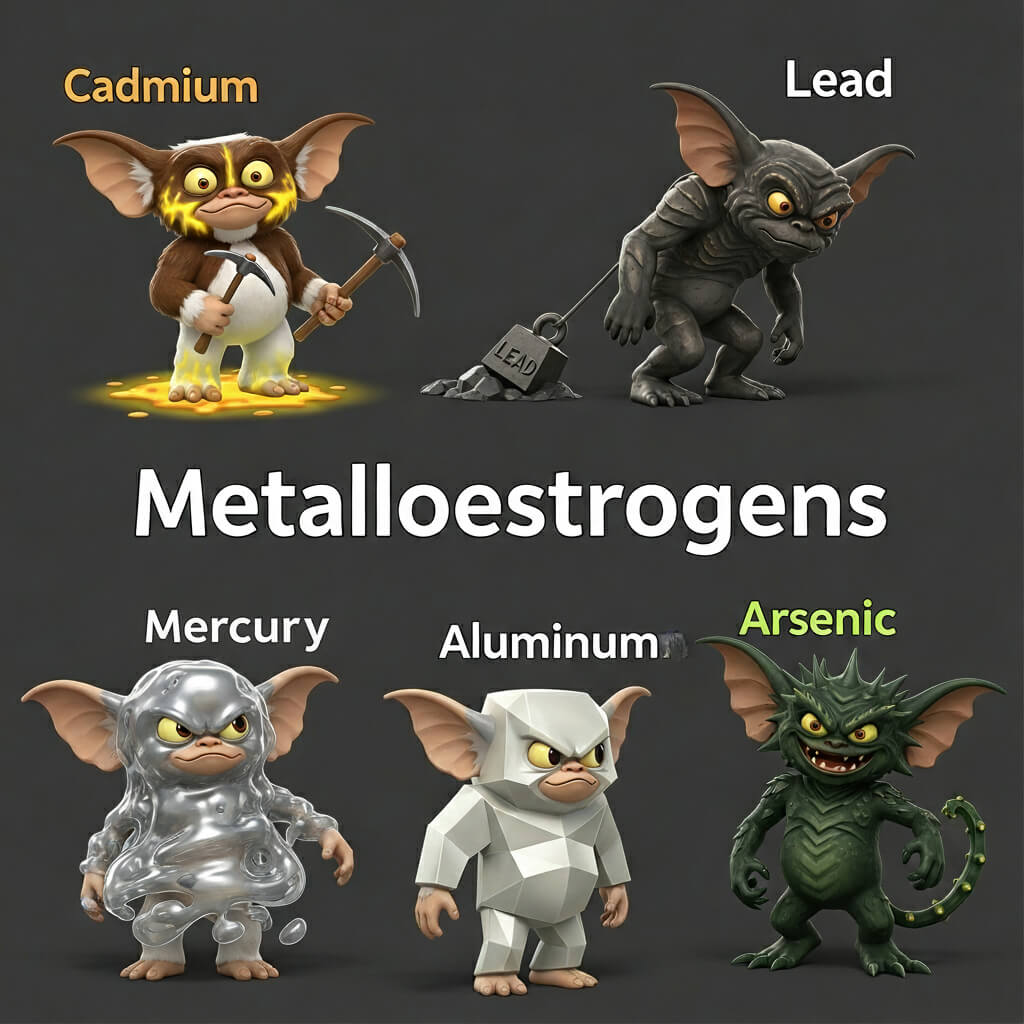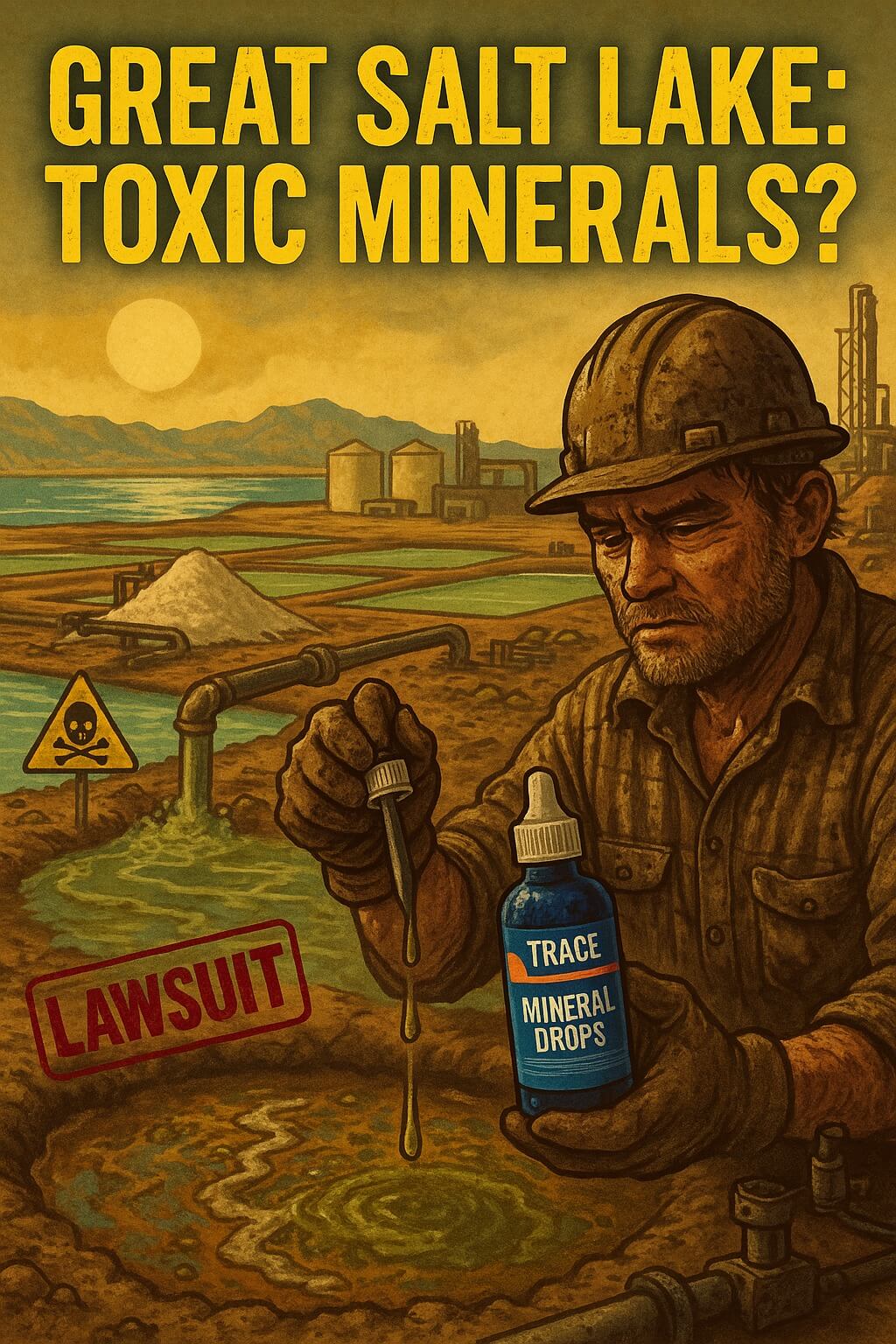

Bottom line up front: Trace mineral supplements sourced from the Great Salt Lake, including popular products like ConcenTrace, contain documented heavy metal contamination including mercury, lead, and arsenic at levels that have triggered lawsuits and regulatory concerns. Scientific studies reveal the lake contains some of the highest mercury levels ever measured by the USGS, with over a century of mining pollution creating a contaminated source that concentrates toxins during mineral extraction. While manufacturers claim their products meet safety standards, independent testing is limited, and safer alternatives from ancient seabeds and clean ocean sources offer superior purity profiles without the contamination risks.
The Great Salt Lake’s transformation from mineral resource to environmental hazard reflects a broader crisis in supplement safety. This terminal lake, which has no outlet to flush contaminants, has accumulated over 150 years of industrial pollution from the adjacent Kennecott Copper Mine—one of the world’s largest—along with smelters, agricultural runoff, and atmospheric deposition. As the lake shrinks to historic lows, these contaminants become increasingly concentrated in the remaining brine that mineral companies harvest for supplements consumed by millions seeking health benefits.
The Source: A Century of Contamination Meets Modern Extraction
The Great Salt Lake’s mineral extraction industry operates in waters carrying a toxic legacy. A 2024 University of Utah study using inductively coupled plasma mass spectrometry found arsenic levels exceeding EPA residential screening levels by up to 1,200%, with 60% of samples surpassing safety thresholds. The research documented concerning levels of multiple heavy metals: arsenic reaching 118.89 μg/g, copper up to 70.1 μg/g, and thallium exceeding environmental limits. These findings emerge from sediments where mineral extraction companies harvest their raw materials.
Historical analysis reveals the contamination timeline began with mining operations in the 1860s. A 2020 study in Environmental Pollution documented peak contamination in the 1950s when metal concentrations reached 20-40 times above natural background levels for copper, lead, silver, and molybdenum. While some improvement followed the 1963 Clean Air Act, current surface sediments still show 2-5 fold elevations above baseline. The persistence of these contaminants matters because the Great Salt Lake functions as a terminal basin—water flows in but never escapes, creating what researchers describe as a permanent toxic repository.
The extraction process itself concentrates these pollutants. Companies pump lake brine into massive evaporation ponds where solar energy removes water, leaving behind concentrated minerals. This same process that isolates desired trace minerals also concentrates heavy metals and toxins alongside the commercial product. Seven percent of the lake’s total water depletion comes from mineral extraction, with Compass Minerals alone using 145,000 acre-feet annually. As evaporation proceeds, both beneficial minerals and contaminants become progressively concentrated in the remaining brine.
Mercury Levels That Shocked Government Scientists
USGS research hydrologist David Naftz expected to find elevated mercury in the Great Salt Lake, but the actual measurements stunned the scientific team. “We thought we would find some high levels of methylmercury, but not some of the highest the USGS has ever found,” Naftz reported. The lake’s methylmercury concentrations exceed 25 nanograms per liter—25 times higher than levels triggering fish consumption warnings. Deep brine layers likely contain even higher concentrations than surface measurements reveal.
The mercury problem extends throughout the ecosystem in a process called biomagnification. Research published in Environmental Toxicology and Chemistry tracked mercury accumulation up the food chain: periphyton algae contains 152 μg/g mercury, brine fly larvae 189 μg/g, pupae 379 μg/g, and adults 659 μg/g. By the time mercury reaches common goldeneye ducks, concentrations spike to 8,000 μg/g in muscle tissue—a 50-fold increase from the base of the food chain. Similar patterns occur with selenium, reaching 24,000 μg/g in goldeneye liver tissue. These same waters supply the raw materials for trace mineral supplements marketed as health products.
The bioaccumulation data carries troubling implications for human consumption. While supplement manufacturers dilute their products to meet regulatory standards, the source material comes from an ecosystem where toxic metals concentrate at each trophic level. ConcenTrace, the market-leading Great Salt Lake supplement, contains 0.009 parts per million mercury according to company specifications—below EPA’s 0.1 ppm limit but still representing daily mercury exposure from a supplement intended to improve health.
ConcenTrace Under Legal Fire for Lead Contamination
The most popular Great Salt Lake mineral supplement faced serious legal challenges over heavy metal contamination. In 2014, the Environmental Research Center filed suit against Trace Minerals Research in California Superior Court, alleging the company failed to warn consumers about lead levels exceeding California’s Proposition 65 safe harbor limit of 0.5 micrograms per day. The lawsuit targeted eight products including ConcenTrace Trace Mineral Tablets, Complete Calcium & Magnesium, and ActivJoint Plus.
Court documents reveal the products violated California’s strictest-in-the-nation standards for reproductive toxicity warnings. The company ultimately settled, agreeing to either reformulate products or add required health warnings. This legal action established a precedent: Great Salt Lake mineral products contain sufficient heavy metal contamination to trigger mandatory consumer warnings under state law. The settlement amount and specific reformulation details remain sealed, but the case highlighted the gap between company safety claims and independent legal scrutiny.
Trace Minerals Research maintains their products undergo extensive testing. The company claims third-party laboratory verification and adherence to Good Manufacturing Practices. They provide Certificates of Analysis upon request and emphasize their GRAS (Generally Recognized as Safe) status. However, the California lawsuit demonstrates that meeting federal standards doesn’t guarantee freedom from concerning contamination levels, particularly under more stringent state regulations designed to protect vulnerable populations.
Environmental Catastrophe Compounds Supplement Concerns
The Great Salt Lake faces an environmental crisis that directly impacts mineral quality. The lake has shrunk to historic lows, exposing 800 square miles of lakebed—an area larger than Maui. This exposed sediment contains decades of accumulated heavy metals that become airborne during wind events. A 2024 study found this dust shows higher oxidative potential than other regional sources, with arsenic and lithium exceeding EPA residential screening levels.
Contributing to the contamination, the US Magnesium facility on the lake’s western shore earned Superfund designation in 2009. This site released dioxins, hexachlorobenzene, polychlorinated biphenyls, arsenic, chromium, mercury, copper, and zinc into lake waters. The company ceased magnesium production in 2022 but failed to complete required containment measures, leaving a toxic legacy in waters used for mineral extraction. The facility’s environmental violations included contamination levels requiring National Priority List designation—reserved for America’s most hazardous waste sites.
Recent monitoring reveals emerging threats. In 2023, selenium levels in shorebird eggs exceeded safety thresholds for the first time since regular testing began. Two selenium groundwater plumes from Kennecott Copper Mine’s tailings pond continue migrating toward lake wetlands. The Utah Division of Water Quality documented the tailings pond sinking over 20 feet, raising concerns about structural integrity and potential catastrophic release. State regulators recently removed requirements for the mining company to study connectivity between their operations and lake contamination—a decision environmental groups called “unconscionable” given the documented pollution.
Regulatory Gaps Leave Consumers Vulnerable
The supplement industry operates in a regulatory gray zone that particularly affects mineral products from contaminated sources. The FDA has established no specific heavy metal limits for dietary supplements, instead relying on general food safety authority and voluntary compliance. This hands-off approach means companies self-certify safety without mandatory pre-market testing. The agency’s “Closer to Zero” initiative targets reducing heavy metal exposure but focuses primarily on infant foods rather than supplements.
International standards offer little additional protection. The European Union sets a maximum lead limit of 3.0 parts per million for food supplements—less stringent than California’s Proposition 65 when converted to daily exposure limits. The World Health Organization provides guidance on 19 trace elements but lacks enforcement mechanisms. The United States Pharmacopeia created voluntary standards through Chapter 2232 for elemental contaminants, establishing Permitted Daily Exposure limits for arsenic (1.5 μg/day), lead, cadmium, and mercury. However, these remain voluntary guidelines that most Great Salt Lake mineral products have not been certified to meet.
Third-party certification could fill the regulatory void, but few Great Salt Lake products pursue independent validation. NSF International offers rigorous testing for 290+ substances including heavy metals, while USP verification requires twice-annual facility audits. ConsumerLab.com has tested over 6,000 supplements with a 20% failure rate, yet publicly available test results for Great Salt Lake minerals remain scarce. The absence of mandatory testing or comprehensive standards leaves consumers to trust manufacturer claims without independent verification.
Scientific Studies Reveal Systemic Ecosystem Contamination
The scientific literature paints a disturbing picture of Great Salt Lake contamination affecting the entire ecosystem. A landmark study published in Frontiers in Soil Science used two extraction methods to simulate how contaminants might behave in human lung fluid. Researchers found arsenic concentrations reaching 118.89 μg/g—over 12 times the threshold effects concentration. The bioavailable extraction method, designed to mimic physiological conditions, still showed significant heavy metal release.
Utah State University research documented how native plants absorb and concentrate these toxins. Invasive phragmites showed the highest concentrations of lead and mercury in their seeds, while native bulrush stored selenium and arsenic below ground. When researchers analyzed the food web, they found copper and cadmium levels 10 times higher in predatory insects than in plants, demonstrating how bioaccumulation amplifies contamination at each trophic level. Scientists recommended cutting and burying contaminated vegetation to prevent metals from cycling back into the ecosystem—hardly reassuring for a supplement source.
Long-term cardiovascular research adds another dimension of concern. A study examining trace minerals and heart health found a “J- or U-shaped relationship between transition minerals and cardiovascular events,” meaning both deficiency and excess pose risks. For supplements sourced from contaminated waters, this research suggests chronic consumption could tip users from beneficial supplementation into the harmful excess range, particularly for elements like selenium that have narrow therapeutic windows.
Consumer Reports Document Adverse Reactions
Despite limited formal studies on Great Salt Lake supplement safety, consumer experiences reveal concerning patterns. Amazon reviews for ConcenTrace frequently mention formula changes, with long-term users reporting the product was “secretly changed” resulting in altered taste, consistency, and effects. Multiple reviewers describe experiencing severe nausea, intense headaches, and persistent diarrhea after beginning supplementation. Others report brain fog, joint aches, and heart palpitations that resolved only after discontinuing use.
These anecdotal reports gain credibility when considered alongside the contamination data. The symptoms align with known effects of chronic low-level heavy metal exposure: gastrointestinal distress from arsenic, neurological symptoms from mercury, and cardiovascular irregularities from various toxic metals. While individual sensitivities vary, the pattern of adverse reports suggests some consumers experience genuine toxicity reactions rather than benign supplement side effects.
The Better Business Bureau maintains a profile for Trace Minerals Research but the company lacks BBB accreditation. Social media platforms increasingly feature discussions about heavy metal contamination in supplements, with the recent Celtic Sea Salt class action lawsuit for lead and arsenic contamination heightening consumer awareness. TikTok videos warning about trace mineral contamination have garnered millions of views, reflecting growing public concern about supplement safety.
Alternative Sources Offer Contamination-Free Minerals
Research reveals stark quality differences between Great Salt Lake products and alternatives. Ancient seabed minerals from the Zechstein formation—protected 1,600-2,000 meters underground for 250 million years—test completely free of mercury, lead, arsenic, and fluoride. These deposits formed before industrial contamination existed, sealed beneath impermeable rock layers. Companies extracting Zechstein minerals maintain ISO 9001 and 14001 certifications with full batch testing documentation.
Ocean-sourced minerals, particularly from the Southern Hemisphere, offer another superior alternative. These products benefit from 88% less pollution exposure than Northern Hemisphere sources, drawing from pristine Antarctic-influenced waters. The dynamic ocean ecosystem continuously dilutes contaminants, unlike the Great Salt Lake’s terminal basin that concentrates pollution. Australian ocean minerals and deep-sea sources from below the thermocline provide trace elements without the heavy metal burden.
Chelated minerals represent the safest option from a contamination perspective. These laboratory-synthesized forms bind minerals to amino acids, enhancing absorption while eliminating environmental contamination risks. Studies demonstrate 11% better zinc absorption and 4-fold reduction in required dosage compared to inorganic forms. While lacking the full spectrum of trace elements found in natural sources, chelated minerals guarantee purity for consumers requiring contamination-free supplementation.
Independent Testing Remains Frustratingly Limited
Major consumer protection organizations have conducted minimal public testing of Great Salt Lake supplements. ConsumerLab.com includes a trace minerals category but keeps specific test results behind a paywall. Their general testing reveals a 20% supplement failure rate, raising questions about untested products. Labdoor previously posted concerning heavy metal results for ConcenTrace but retracted them after company complaints, later certifying only Trace Minerals’ magnesium product. The Clean Label Project, which exposed heavy metals in protein powders, hasn’t published trace mineral supplement results.
This testing gap leaves consumers reliant on manufacturer-provided Certificates of Analysis—documents experts warn may not reflect actual product quality. Some laboratories engage in “dry labbing,” issuing reports without conducting tests. Testing methods vary significantly, producing different results for identical samples. Without mandatory independent verification or standardized testing protocols, consumers cannot objectively evaluate product safety claims.
The absence of comprehensive third-party testing particularly concerns given the documented contamination in source waters. While companies claim internal and external testing, the 2014 California lawsuit proved these measures failed to prevent lead contamination exceeding legal limits. Current testing may meet federal guidelines while still exposing consumers to cumulative heavy metal intake from a daily supplement intended for long-term use.
Expert Assessments and Professional Warnings
Dr. Mark Sircus, author of “Transdermal Magnesium Therapy,” explicitly warns against Great Salt Lake products: “It is not advisable to take someone’s word on such matters… one needs to be seriously concerned about purchasing products coming from the Great Salt Lake.” His assessment reflects growing professional concern about contaminated mineral sources marketed as health supplements.
The Cleveland Clinic’s review of trace mineral supplements notes insufficient research for definitive safety recommendations, particularly for long-term use. They emphasize that while trace minerals play essential physiological roles, supplementation from contaminated sources may cause more harm than benefit. Nutritional professionals increasingly recommend authenticated clean sources or targeted single-mineral supplementation over broad-spectrum products from questionable origins.
Environmental health researchers express particular concern about vulnerable populations. Pregnant women, children, and those with compromised detoxification systems face heightened risks from heavy metal exposure. The developing nervous system shows exceptional sensitivity to mercury and lead, while accumulated toxins can transfer through breast milk. These populations—often targeted by mineral supplement marketing—require the highest purity standards that Great Salt Lake sources cannot guarantee.
Conclusions Reveal an Industry Requiring Urgent Reform
The investigation exposes a fundamental contradiction: supplements marketed to enhance health are sourced from one of America’s most contaminated water bodies. With mercury levels that shocked government scientists, arsenic exceeding EPA safety limits by 1,200%, and documented lead contamination triggering legal action, Great Salt Lake minerals pose unnecessary risks in a market offering cleaner alternatives. The lack of mandatory testing, absence of federal contamination limits, and minimal enforcement create an environment where consumers unknowingly ingest heavy metals with their daily supplements.
The solution requires multiple interventions. Consumers should demand batch-specific Certificates of Analysis, seek third-party certified products, and consider alternatives from ancient seabeds or clean ocean sources. Regulatory agencies must establish enforceable heavy metal limits for supplements and mandate pre-market safety testing. The supplement industry needs transparent sourcing disclosure and independent contamination monitoring. Until these changes occur, the safest approach remains avoiding Great Salt Lake-sourced minerals entirely, choosing products that provide essential trace elements without the toxic burden of a poisoned ecosystem.
Complete Source List
- Frontiers in Soil Science – Toxic elements in benthic lacustrine sediments of Utah’s Great Salt Lake
- Environmental Pollution – Effects of a century of mining and industrial production on metal contamination
- PubMed – Mining and industrial production effects on Great Salt Lake
- USGS – Mercury and Selenium Contamination in Waterbird Eggs
- Utah State University – Toxic Metals Absorbed by Great Salt Lake Plants and Insects
- KSL – Hazardous metals in Great Salt Lake ecosystem
- Smithsonian Magazine – Toxic Arsenic-Laced Dust from Drying Great Salt Lake
- Salt Lake Tribune – Mineral companies’ water usage restrictions
- Salt Lake Tribune – EPA: US Magnesium out of compliance
- Salt Lake Tribune – Rising selenium levels linked to mine’s tailings pond
- Friends of Great Salt Lake – US Magnesium
- University of Utah – Great Salt Lake dust danger research
- The Analytical Scientist – Great Salt Lake, Greater Toxicity
- Trace Minerals Research Official Site
- ConcenTrace Trace Mineral Drops Product Page
- Amazon – ConcenTrace Customer Reviews
- Better Business Bureau – Trace Minerals Research Profile
- TikTok – Trace Minerals Lawsuit Discussion
- Ancient Minerals – Zechstein Pure Magnesium Oil
- Aussie Trace Minerals – Ocean-sourced minerals
- Healthline – Chelated Minerals: Types, Benefits, and Recommendations
- ConsumerLab.com – Independent Supplement Testing
- ConsumerLab.com – Trace Minerals Reviews
- ConsumerLab.com – Trusting Certificates of Analysis
- Trace Minerals – Labdoor Certification
- Clean Label Project
- NSF International – Supplement Certification
- USP – Dietary Supplement Verification Program
- FDA – Lead in Food and Foodwares
- GMP Compliance – Heavy Metal Limits in Food Supplements
- WHO – Trace elements in human nutrition and health
- PubMed – Trace minerals intake: Risks and benefits for cardiovascular health
- Cleveland Clinic – Fulvic Acid and Trace Minerals
- Utah Public Radio – Increasing Great Salt Lake salinity
- BYU – Emergency measures needed to rescue Great Salt Lake
- Wikipedia – Great Salt Lake
- Utah Business – Bottling A Cure
- Salt Lake Tribune – Great Salt Lake dust harm studies
- Outliyr – Best Trace Minerals Supplements Review
- Ritual – Clean Label Project Certification