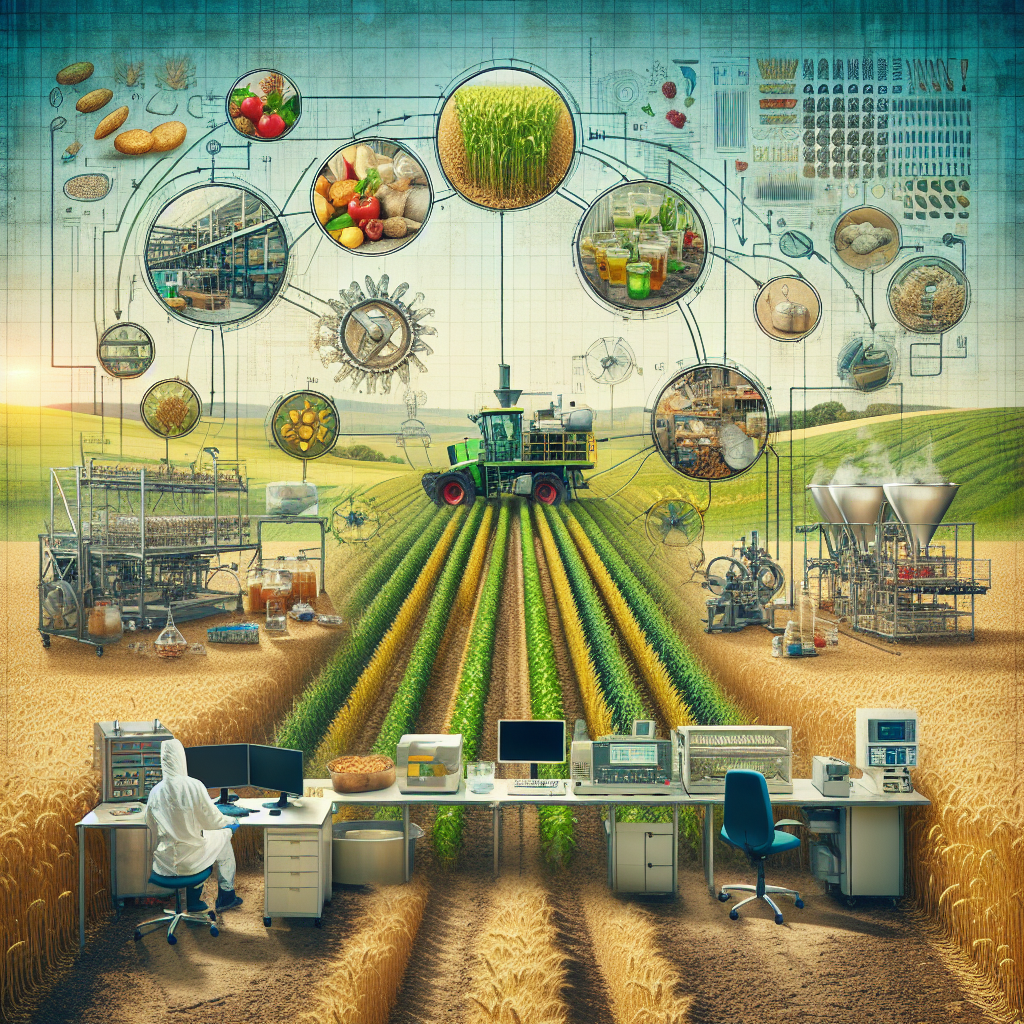

Glyphosate desiccation—the practice of spraying crops with herbicide just before harvest to accelerate drying—accounts for only 2% of total agricultural glyphosate use in the United States but contributes to over 50% of Americans’ dietary exposure to this controversial chemical. This agricultural technique, which began in Scotland in the 1980s and spread to North American grain fields by 2002, now faces mounting industry rejection and consumer pressure despite remaining federally approved and widely practiced in northern farming regions.
The Evolution from Scottish Innovation to North American Adoption
The practice of using glyphosate as a pre-harvest desiccant emerged in early 1980s Scotland, where farmers struggled with uneven wheat drying in wet climate conditions. By killing crops 1-2 weeks before harvest, farmers could achieve uniform grain moisture and harvest earlier—a critical advantage in regions with short growing seasons. The technique spread throughout the UK by the mid-1980s, with 12% of UK wheat crops receiving pre-harvest glyphosate by 2002.
North American adoption accelerated dramatically around 2002, particularly in the northern grain-growing regions. Canadian provinces embraced the practice most enthusiastically, with 90-95% of Manitoba wheat acres currently receiving pre-harvest glyphosate applications. In contrast, less than 3% of total US wheat acres receive desiccant treatment, though usage remains concentrated in northern states like Montana (55% of winter wheat), North Dakota (45% of spring wheat), and Washington (45% of spring wheat). The practice expanded beyond wheat to include oats, barley, lentils, peas, edible beans, canola, sunflowers, and even potatoes.
Patent history reveals Monsanto’s strategic positioning: after patenting glyphosate as an herbicide in 1974 (US Patent 3,799,758), the company successfully petitioned EPA in the 1990s to raise tolerance levels 300-fold from 0.1 ppm to 30 ppm, specifically to accommodate pre-harvest use. This regulatory adjustment enabled widespread adoption despite the practice representing a fundamental shift from weed control to direct application on food crops immediately before harvest.
Current Usage Reveals Regional Concentration and Declining Trends
The United States applies approximately 287 million pounds of glyphosate annually across all agricultural uses, with an estimated 5.7 million pounds specifically for desiccation purposes. While this 2% volume share appears minimal, the timing of application—directly on mature grain just days before harvest—creates disproportionate human exposure through food residues.
Application follows strict timing protocols: farmers spray 22 fluid ounces per acre (0.75 pounds active ingredient) when grain moisture drops below 30%, typically 7-14 days before harvest. The practice concentrates in northern tier states (Montana, North Dakota, Minnesota, Wisconsin) and Pacific Northwest regions where wet conditions complicate natural field drying. Southern Great Plains states like Kansas and Oklahoma use desiccants sparingly, only in unusually wet years.
Market rejection is rapidly reshaping usage patterns. Major grain buyer Grain Millers stopped accepting glyphosate-treated oats in 2015, citing quality concerns—the chemical disrupts natural starch maturation, affecting processing characteristics. Richardson International, Canada’s largest agribusiness, announced in 2020 it would stop accepting glyphosate-treated oats as of January 2021. Food manufacturers followed suit: Kellogg’s committed to phase out pre-harvest glyphosate by 2025, while General Mills began contracting for glyphosate-free oats in 2019. These industry moves suggest desiccant use may have already peaked and entered decline.
Residue Data Documents Widespread Food Contamination
Government testing programs and independent analyses reveal extensive glyphosate contamination in the food supply. FDA testing found glyphosate in 63% of corn samples and 67% of soybean samples, though all remained below EPA tolerance levels. The Environmental Working Group’s 2018 testing detected glyphosate in 100% of 45 oat-based products, with Quaker Oatmeal Squares containing 2,837 parts per billion—18 times EWG’s children’s health benchmark of 160 ppb.
International studies paint a similar picture. A Lebanese market survey found glyphosate in 100% of flour samples (median 50-103 ppb) and 80% of bread samples (median 15-53 ppb). Canadian testing revealed 80% of wheat samples and 74% of oat samples contained detectable residues. The concentration pattern follows predictable grain anatomy: 81% of glyphosate concentrates in bran, shorts, and feed fractions during milling, with whole grain products containing four times higher levels than refined flour.
Human biomonitoring confirms widespread exposure. CDC’s National Health and Nutrition Examination Survey found 81% of Americans over age 6 have detectable urinary glyphosate, with geometric mean concentrations of 0.392 μg/L. Children aged 6-11 show higher concentrations than adults, and a California longitudinal study documented a 500% increase in detection rates between 1993 and 2016. Notably, only 1% of consumed glyphosate appears in urine unchanged, suggesting actual internal exposure may be significantly higher than previously estimated.
Processing provides limited reduction. Research shows baking has no effect on glyphosate levels, though milling can reduce exposure by removing bran fractions. Maximum Residue Limits vary internationally: the US allows 30 ppm for wheat, while the EU typically maintains 0.01-10 ppm limits. Despite these regulatory thresholds, over 99% of samples meet legal standards, though this compliance doesn’t address concerns about chronic low-dose exposure effects.
Health Research Reveals Vulnerable Populations and Emerging Concerns
The scientific community remains deeply divided on glyphosate’s health impacts. The International Agency for Research on Cancer’s 2015 classification of glyphosate as “probably carcinogenic to humans” contradicted EPA’s position that it’s “not likely to be carcinogenic,” creating ongoing regulatory uncertainty. Meta-analyses of epidemiological studies found 41% increased risk of Non-Hodgkin’s lymphoma in highest exposure groups, though the massive Agricultural Health Study of 54,000 participants found no overall NHL association while detecting increased acute myeloid leukemia risk.
Recent research highlights particular vulnerability during pregnancy and childhood. A 2022 Indiana University study found glyphosate in 99% of pregnant women, with higher exposure significantly reducing birth weight. An earlier 2018 Indiana study detected glyphosate in over 90% of pregnant women, with higher levels associated with shorter pregnancies and increased NICU admissions. The American Academy of Pediatrics advised physicians in 2024 to recommend organic foods to avoid glyphosate exposure.
Gut microbiome disruption emerges as a critical mechanism of harm. Glyphosate inhibits the shikimate pathway enzyme EPSPS, present in approximately 54% of core human gut bacteria species, according to research from the University of Turku that classified bacterial sensitivity to glyphosate. Studies show beneficial bacteria like Lactobacillus and Bifidobacterium demonstrate greater sensitivity than pathogenic species, potentially driving dysbiosis linked to inflammatory bowel disease and neurological effects through the gut-brain axis. Low-dose exposure approximating the US Acceptable Daily Intake significantly altered gut microbiota composition and reduced short-chain fatty acid production in animal models.
Additional concerns span multiple organ systems. A 2025 review of 40+ studies found glyphosate may significantly raise risk of metabolic dysfunction-associated liver disease. French researchers detected glyphosate in over 50% of sperm samples at concentrations four times higher than blood levels. Neurological research published in 2024 found glyphosate exposure caused significant brain inflammation in mice, with biomarkers suggesting links to neurodegenerative disease.
Regulatory Landscape Shows US Isolation from International Restrictions
The United States maintains notably permissive regulations compared to international standards. EPA’s current tolerance of 30 ppm for wheat represents a 300-fold increase from the original 1993 level of 0.1 ppm. The agency’s 2020 Interim Registration Review Decision finding “no human health risks of concern” was withdrawn in September 2022 following Ninth Circuit Court challenges that found EPA “did not adequately consider whether glyphosate causes cancer” and violated the Endangered Species Act.
International contrasts are stark. The European Union explicitly prohibits pre-harvest desiccant use, stating “uses for desiccation to control the time point of harvest or to optimise threshing are not permitted.” EU Maximum Residue Limits typically range from 0.01-10 ppm, substantially lower than US standards. Several countries implemented broader restrictions: Austria banned glyphosate in 2019, Germany phases out use by 2024, and six Gulf states prohibited it entirely in 2016.
No US state has enacted comprehensive pre-harvest use bans, though over 150 cities implemented various pesticide restrictions on public property. The only federal legislative attempt, Representative Rosa DeLauro’s “Keep Food Safe from Glyphosate Act,” would ban pre-harvest use on oats and reduce tolerance to 0.1 ppm but gained only seven co-sponsors and hasn’t advanced since 2019.
Private litigation drives policy changes faster than regulation. Bayer faces 42,000+ pending lawsuits over cancer claims, having paid over $10 billion in settlements with an additional $4.5 billion reserved. These legal pressures prompted Bayer to end residential glyphosate sales by 2023 and motivated industry-wide voluntary restrictions. Market forces and consumer awareness appear more effective than regulatory action in reducing desiccant use.
The Practice Faces Extinction Through Market Rejection Rather Than Regulation
The trajectory of glyphosate desiccation illustrates how agricultural practices can evolve from regional solutions to widespread adoption, then face reversal through market dynamics rather than regulatory intervention. Despite representing only 2% of agricultural glyphosate use, pre-harvest application creates the majority of human dietary exposure—a disproportion that highlights the critical importance of application timing over volume.
Industry retreat accelerates even as federal approval continues. Major food companies’ phase-out commitments, grain buyers’ quality concerns, and consumer pressure create economic incentives stronger than regulatory requirements. The contrast between North American practices and European prohibition underscores divergent approaches to precautionary principles in food safety regulation.
Future research priorities should address critical knowledge gaps: standardized assessment of glyphosate-based formulations rather than technical glyphosate alone, multi-generational health outcome studies, and mechanistic research on gut microbiome disruption at environmentally relevant doses. As one researcher noted, the finding that only 1% of consumed glyphosate appears in urine suggests we may have “significantly underestimated” actual internal exposure for decades.
The evolution of glyphosate from herbicide to harvest aid to health concern encapsulates modern agriculture’s complex relationship with chemical inputs—where efficiency gains must be continually weighed against emerging evidence of unintended consequences, and where consumer sentiment increasingly drives agricultural practice independent of regulatory frameworks.
Note on Sources: This report synthesizes information from peer-reviewed research, government agencies, industry publications, and environmental organizations. All claims are linked directly to their supporting sources. Click any link to verify the information at its original source.