
How Mothers Pass Toxins to Children Across Generations
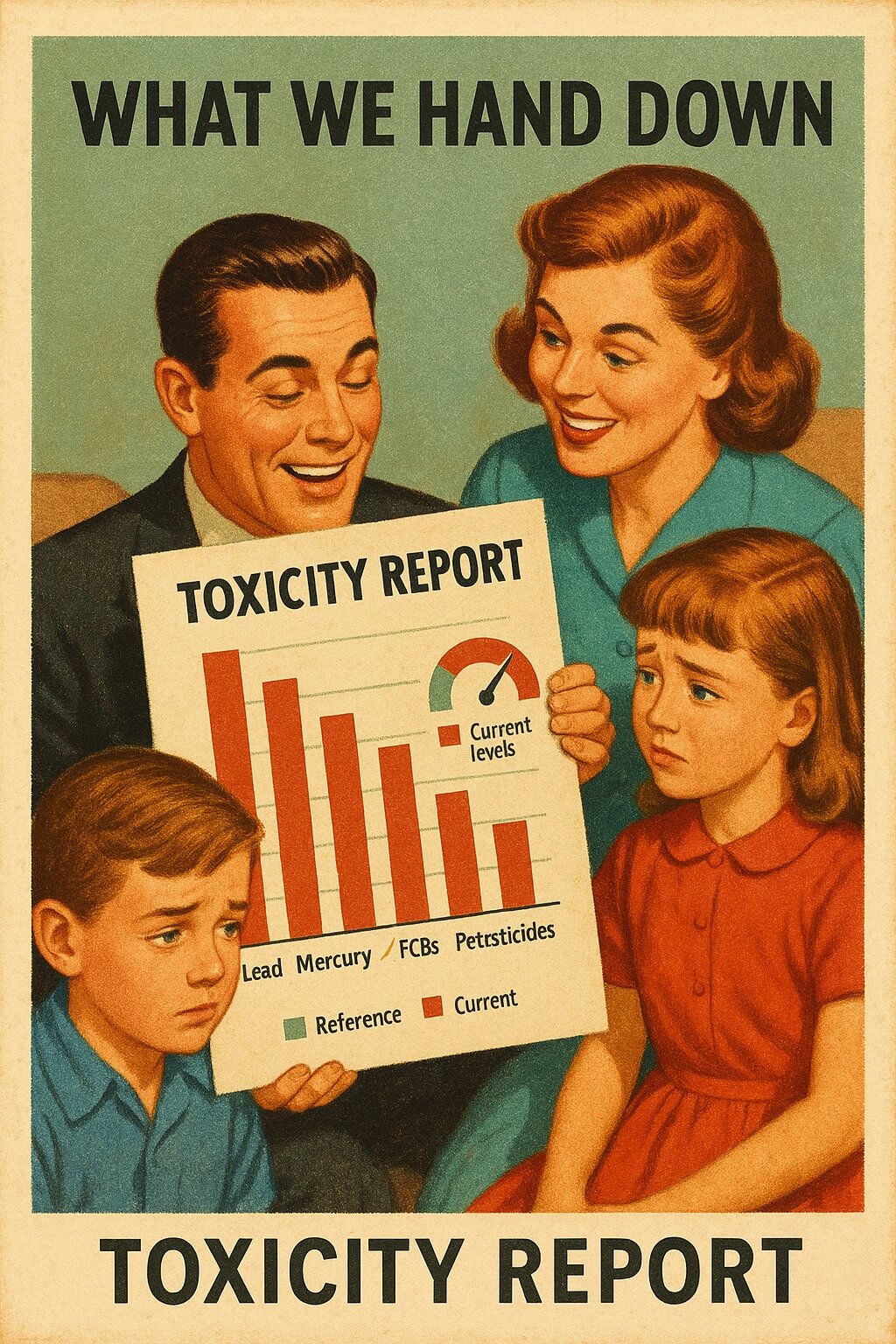
Environmental toxins accumulate in human bodies over lifetimes and pass from mothers to children during pregnancy and nursing, creating a transgenerational inheritance of chemical burden that threatens human health and reproductive viability. Scientific evidence demonstrates that mercury levels in fetal cord blood can be 76-81% higher than maternal blood, heavy metals like lead persist in bones for 20-30 years before mobilizing during pregnancy, and sperm counts have declined by over 50% since 1973—with projections suggesting median counts could reach zero by 2045 if current trends continue.
The Chemicals That Persist Across Generations
Research has documented transgenerational accumulation for dozens of environmental toxins, each with distinct patterns of persistence and transfer. Lead stored in maternal bones for decades mobilizes during pregnancy when calcium demands increase, achieving cord-to-maternal blood transfer ratios of 0.72. Mercury, particularly methylmercury from fish consumption, shows even more alarming patterns—fetal blood often contains 50% higher levels than maternal blood, with transfer ratios reaching 1.76-1.81.
Persistent organic pollutants present a particularly insidious threat due to their extreme longevity in the body. DDT’s primary metabolite DDE persists for 10-20 years in adipose tissue, while polychlorinated biphenyls (PCBs) remain for 1-10 years depending on the specific congener. These lipophilic chemicals concentrate in breast milk at levels 10-100 times higher than maternal serum, creating substantial infant exposure during nursing. The newer “forever chemicals”—PFAS compounds like PFOA and PFOS—demonstrate half-lives of 3.8-5.4 years with the highest placental transfer efficiency among their class, detected in 100% of breast milk samples tested in recent studies with levels doubling every four years.
Modern chemicals of concern include endocrine disrupting compounds that interfere with hormonal signaling even at minute concentrations. Bisphenol A (BPA) appears in over 90% of maternal urine samples despite its relatively short six-hour half-life, suggesting continuous exposure. Phthalates, particularly DEHP and DBP, metabolize rapidly but accumulate in adipose tissue, with toxic metabolites detected in sweat at concentrations exceeding those in urine—indicating tissue storage and gradual release.
Historical Evidence Reveals Multigenerational Impacts
The Michigan PBB cohort provides the longest-running evidence of transgenerational toxin effects, following 7,500 individuals for over 45 years across three generations after accidental contamination of cattle feed in 1973. Participants still show elevated PBB levels compared to the general population, with documented health effects including thyroid conditions, breast cancer risk, and reproductive abnormalities extending to the grandchildren of those originally exposed. Metabolomic studies reveal distinct metabolic alterations in both directly exposed individuals and their children, demonstrating biological impacts persist across generations without additional exposure.
Historical contamination events provide natural experiments in multigenerational toxin impacts. The 1976 Seveso dioxin accident in Italy affected 278,108 people now followed for over 25 years, revealing altered male-to-female birth ratios in offspring of exposed fathers and epigenetic alterations in sperm cells affecting gene methylation patterns. The Minamata mercury poisoning in Japan demonstrated progressive symptom worsening—individuals with mild symptoms in the 1970s developed typical Minamata Disease symptoms 25-30 years later, while children born to exposed mothers showed severe developmental delays termed “fetal Minamata disease.”
Biomonitoring programs reveal the universal nature of chemical body burden. The National Health and Nutrition Examination Survey (NHANES) has tracked over 200 environmental chemicals in Americans since 1999, finding measurable levels of industrial chemicals in every participant tested. Children consistently show higher cumulative exposure estimates than adults, with 42 analyzed chemicals linked to measurable impacts on wellness indices. While banned substances like PCBs show declining levels, newer contaminants rise to take their place—PBDE flame retardants increased until their phase-out, only to be replaced by other problematic compounds.
Health Impacts Cascade Through Generations
The neurodevelopmental consequences of transgenerational toxin exposure manifest most clearly in cognitive deficits. Mercury exposure causes an 18 IQ point loss per part per million in maternal hair, with children whose cord blood mercury exceeds 7.5 μg/L being four times more likely to have IQs below 80—the clinical threshold for borderline intellectual disability. Lead produces behavioral problems and decreased intelligence at blood levels as low as 3.5 μg/dL, well below previous “safe” thresholds. These impacts extend beyond direct exposure: vinclozolin exposure in laboratory animals produced motor hyperactivity in the unexposed F3 generation, demonstrating true transgenerational inheritance through epigenetic mechanisms.
Reproductive health faces particularly severe transgenerational impacts. Systematic reviews confirm associations between endocrine disrupting chemical exposure and conditions like endometriosis and polycystic ovary syndrome (PCOS), with 70% of reproductive-age women carrying detectable EDC levels. PCOS prevalence increases fivefold in daughters of mothers with prenatal androgen exposure. The infamous case of diethylstilbestrol (DES) exposure from 1940-1971 affected 5-10 million people, with impacts now documented in grandchildren—DES granddaughters show higher rates of menstrual irregularities and preterm births, while grandsons have increased hypospadias rates exceeding 3% versus population baselines.
Metabolic dysfunction emerges as another transgenerational consequence. The Dutch Hunger Winter study revealed that grandchildren of fathers exposed to famine showed significantly increased body mass index, demonstrating nutritional stress can alter metabolic programming across generations. Experimental studies confirm these patterns: paternal high-fat diet increases adiposity and serum leptin in the F2 generation, while obesogen exposure during pregnancy causes transgenerational obesity extending to the F3 generation. BPA exposure produces glucose intolerance and pancreatic β-cell dysfunction that persists across multiple generations through epigenetic modifications.
The immune system also suffers transgenerational impacts. Prenatal exposure to compounds like chlordane and benzo[a]pyrene produces lifelong immunosuppression in animal models, while TCDD (dioxin) exposure interferes with normal self-tolerance development, potentially promoting autoimmunity. Children of mothers with autoimmune disease show nearly double the risk of autoimmune disease hospitalization themselves, with abnormal immunity patterns including both immune overreaction and response failure.
Cancer risks demonstrate clear transgenerational patterns. Tobacco smoke exposure during both grandmother’s and mother’s pregnancies increases childhood cancer risk, with grandmother smoking during oogenesis conferring an odds ratio of 2.2 for childhood cancer in grandchildren. Prenatal pesticide exposure links to childhood retinoblastoma, with specific compounds like acephate and bromacil showing odds ratios of 1.70 and 1.87 respectively. DES exposure increases breast cancer risk after age 40, while animal studies demonstrate transgenerational mammary tumor development following EDC exposure.
Future Projections Warn of Existential Threats
Current trajectories paint an alarming picture for human health and reproduction. The Lancet Commission on Pollution and Health reports that pollution causes 9 million premature deaths annually—one in six deaths worldwide—with economic costs exceeding $4.6 trillion yearly, equivalent to 6.2% of global GDP. Modern pollution risk factors have increased by 66% since 2000, with deaths from ambient air pollution and toxic chemicals rising 7% just since 2015, indicating acceleration rather than improvement.
The human fertility crisis represents perhaps the most existential threat. Sperm counts have declined by 52.4% in Western countries between 1973 and 2011, with the decline accelerating after 2000. Linear projections by leading reproductive health researcher Dr. Shanna Swan suggest median sperm counts could reach zero by 2045 if current trends continue. This decline now appears global, with 24-27% decreases documented in non-Western countries. Simultaneously, rates of cryptorchidism, hypospadias, and testicular cancer increase while puberty timing shifts earlier in girls and anogenital distance decreases in boys—all indicators of systemic reproductive disruption.
Scientists identify multiple approaching tipping points where gradual accumulation may trigger sudden, irreversible changes. Endocrine disrupting chemicals demonstrate non-monotonic dose responses where low doses prove more harmful than moderate doses, defying traditional toxicology assumptions. Mixture effects create synergistic impacts exceeding individual chemical contributions, while transgenerational amplification means the F3 generation often shows more severe effects than the F1 generation despite no direct exposure. Current regulatory frameworks remain inadequate for assessing these mixture effects and low-dose chronic exposures.
Emerging threats compound existing concerns. Microplastics now contaminate 93% of bottled water samples, with humans consuming an estimated 39,000-52,000 particles annually. These particles appear in human placenta, blood, and organs, potentially serving as vectors for other toxins while causing their own health impacts. Climate change amplifies chemical threats—rising temperatures increase chemical volatility and bioavailability, extreme weather mobilizes legacy contaminants, and Arctic warming releases persistent organic pollutants previously trapped in ice and permafrost.
The scale of chemical production presents an accelerating challenge. Over 80,000 chemicals are registered in the United States alone, with 2,000 new chemicals introduced yearly. Global chemical production is expected to double by 2030, while regulatory systems struggle to keep pace—chemicals enter commerce with minimal testing and are removed only after harm is proven, often decades later. Novel materials like PFAS replacements and pharmaceutical residues introduce unknown long-term effects that may not manifest for generations.
Scientific Consensus Demands Urgent Action
Major scientific institutions unanimously warn of the severity of this crisis. The International Federation of Gynecology and Obstetrics states that “exposure to toxic environmental chemicals during pregnancy and lactation is ubiquitous and is a threat to healthy human reproduction,” noting that EDC-related health costs in the European Union alone exceed €157 billion annually. The Endocrine Society’s scientific statements emphasize that “no endocrine system is immune to EDCs,” opposing traditional “safe dose” concepts and supporting enhanced regulation through precautionary approaches.
Scientists project escalating impacts across defined timelines. Near-term projections for 2025-2035 anticipate continued acceleration of sperm count decline, increasing prevalence of reproductive disorders, and rising healthcare costs from pollution-related diseases. Medium-term projections for 2035-2050 suggest a potential fertility crisis requiring widespread assisted reproduction, major population-level reproductive health impacts, and economic burdens potentially exceeding $10 trillion annually. Long-term projections beyond 2050 warn of human reproductive capacity falling below replacement levels, irreversible transgenerational health impacts, and species-level evolutionary pressure from accumulated chemical burden.
Population modeling incorporating transgenerational effects predicts more severe outcomes than single-generation assessments suggest. Fish population studies show 25% greater population declines when multigenerational impacts are included, while glyphosate studies demonstrate dramatic increases in prostate disease, obesity, and kidney disease in F2 and F3 generations despite no direct exposure. Combined chemical exposures create 50% increased obesity risk in great-grandchildren of exposed animals, illustrating how mixture effects amplify across generations.
Conclusion
The evidence for transgenerational toxin accumulation through maternal transfer presents one of the most significant threats to human health and species viability in history. The mechanisms are well-established: toxins cross the placental barrier and concentrate in breast milk, accumulating in fetal tissues during critical developmental windows when detoxification systems remain immature. The consequences manifest across every major organ system—from measurable IQ deficits and behavioral problems to reproductive dysfunction, metabolic disease, immune disruption, and increased cancer risk. These effects often intensify rather than diminish across generations through epigenetic inheritance, creating a compounding burden of disease.
Current trajectories suggest humanity approaches multiple tipping points simultaneously. The dramatic decline in sperm counts, rising rates of reproductive abnormalities, and increasing prevalence of neurodevelopmental disorders indicate systemic population-level impacts already underway. The economic burden of $4.6 trillion annually will likely double or triple without intervention, while the potential collapse of natural human reproductive capacity represents an existential threat requiring immediate action. The transgenerational nature of these effects means delays in addressing chemical exposures today lock in health impacts for generations not yet born, making this arguably the most time-critical environmental health challenge facing humanity.