Alpha-Ketoglutarate
Krebs cycle intermediate bridging energy metabolism with amino acid synthesis. Precursor to glutamate.
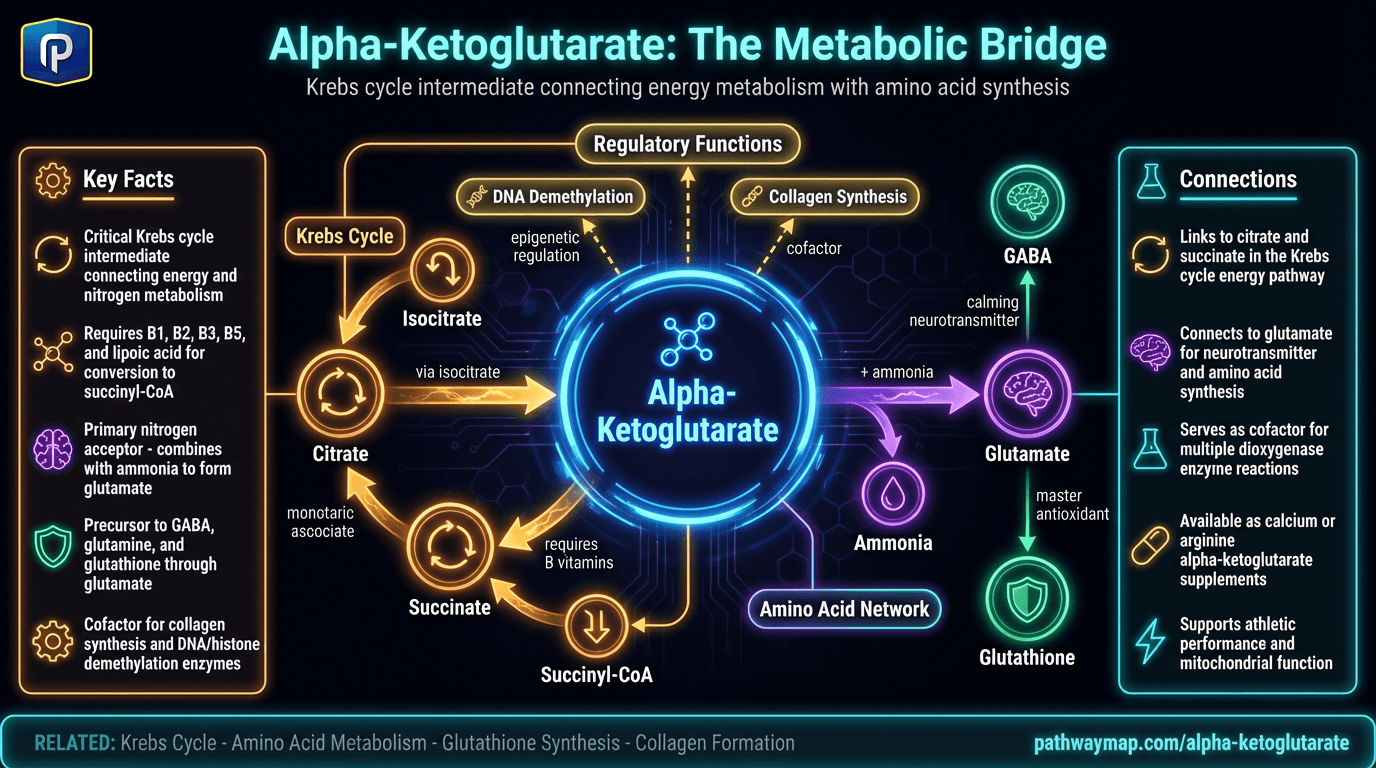
Alpha-ketoglutarate (AKG, also called 2-oxoglutarate) is a key Krebs cycle intermediate that connects carbon metabolism with nitrogen metabolism. It is produced from isocitrate by isocitrate dehydrogenase and converted to succinyl-CoA by alpha-ketoglutarate dehydrogenase (requiring B1, B2, B3, B5, and lipoic acid).
AKG serves as the primary nitrogen acceptor in amino acid metabolism. It combines with ammonia to form glutamate (via glutamate dehydrogenase), which can then donate nitrogen to synthesize other amino acids via transamination.
This makes AKG critical for protein metabolism and ammonia detoxification.
Glutamate derived from AKG is the precursor to GABA (the calming neurotransmitter), glutamine (gut fuel and ammonia carrier), and glutathione (master antioxidant). AKG is also a cofactor for numerous dioxygenase enzymes including those involved in collagen synthesis (prolyl hydroxylase), HIF regulation, and DNA/histone demethylation.
Supplemental AKG (often as calcium or arginine alpha-ketoglutarate) is used for athletic performance, anti-aging (it declines with age), wound healing, and supporting mitochondrial function. Recent research suggests AKG may extend lifespan and healthspan.
Metabolic Connections
Alpha-Ketoglutarate connects to 5 other pathways.
Metabolites

Citrate
Both are Krebs cycle intermediates; citrate is converted through isocitrate to alpha-ketoglutarate
First intermediate of the Krebs cycle. Also shuttles acetyl-CoA from mitochondria for fat synthesis.
Citrate
Both are Krebs cycle intermediates; citrate is converted through isocitrate to alpha-ketoglutarate
First intermediate of the Krebs cycle. Also shuttles acetyl-CoA from mitochondria for fat synthesis.
Neurotransmitters
Glutamate
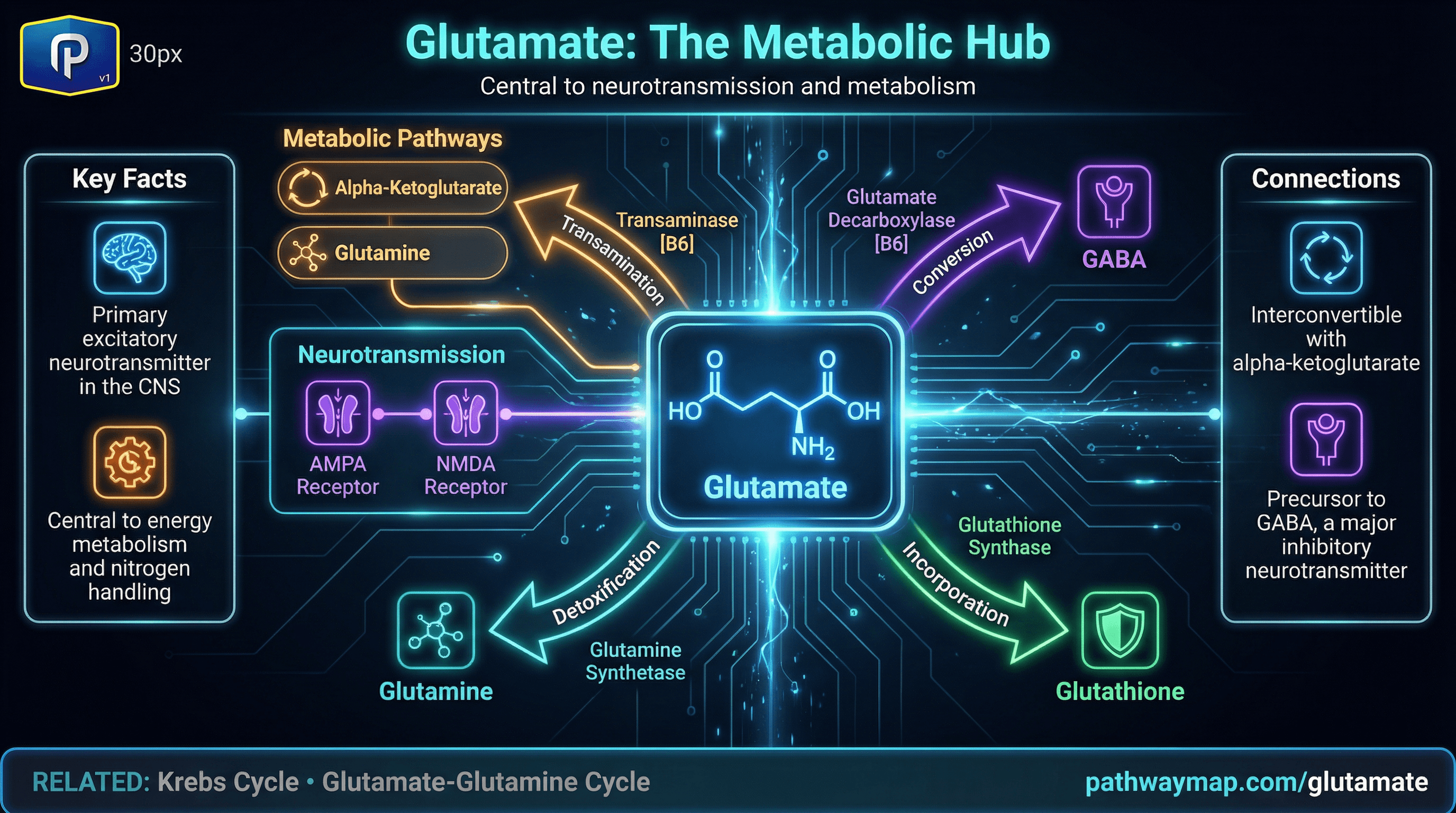
Alpha-ketoglutarate combines with ammonia to form glutamate via glutamate dehydrogenase
Primary excitatory neurotransmitter and metabolic hub. Precursor to GABA and glutathione component.
Glutamate
Glutamate can be converted to alpha-ketoglutarate by transamination or oxidative deamination
Primary excitatory neurotransmitter and metabolic hub. Precursor to GABA and glutathione component.