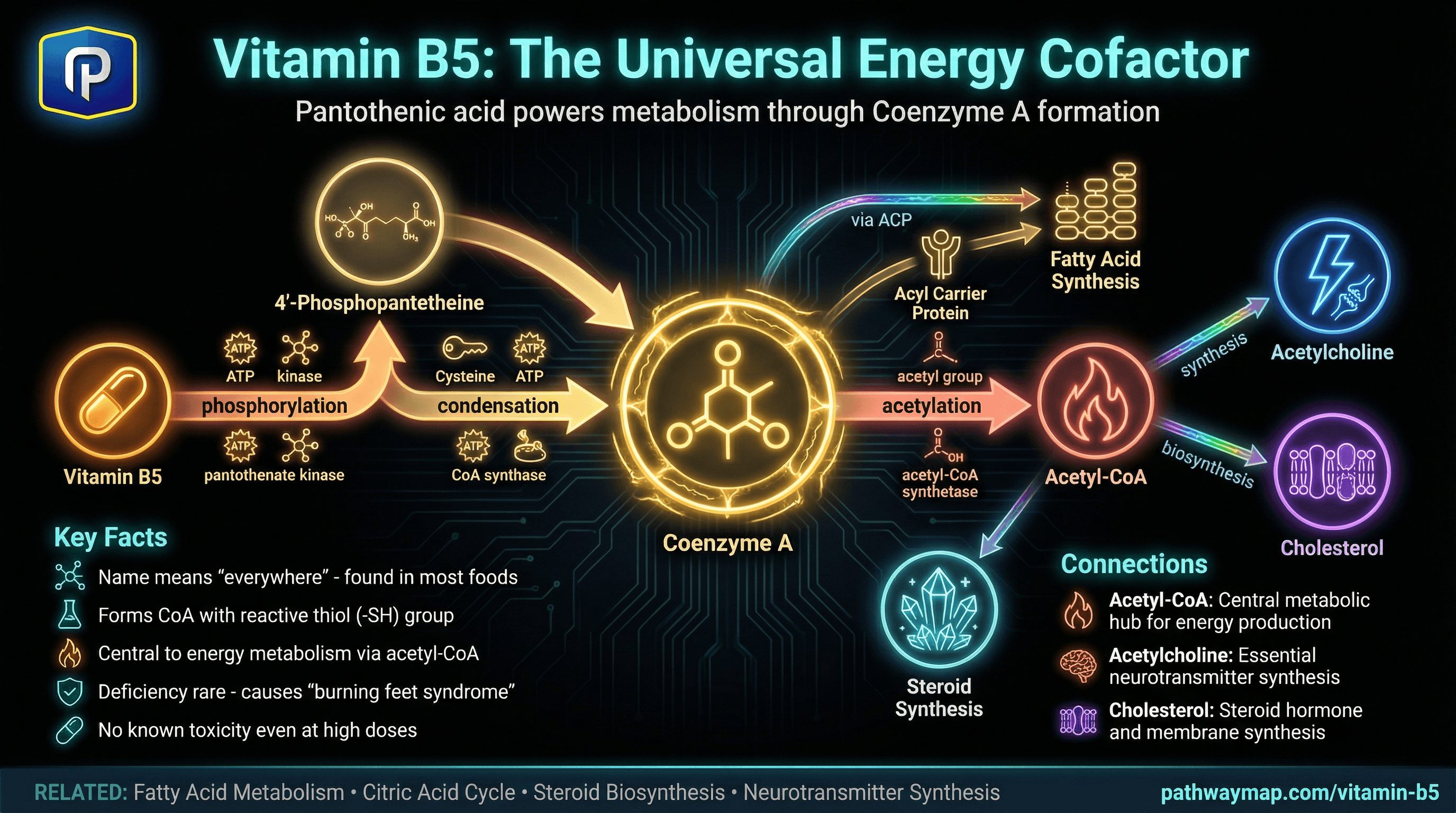
Acetyl-CoA
Central metabolite linking carbohydrate, fat, and protein metabolism. Entry point to Krebs cycle for energy production.
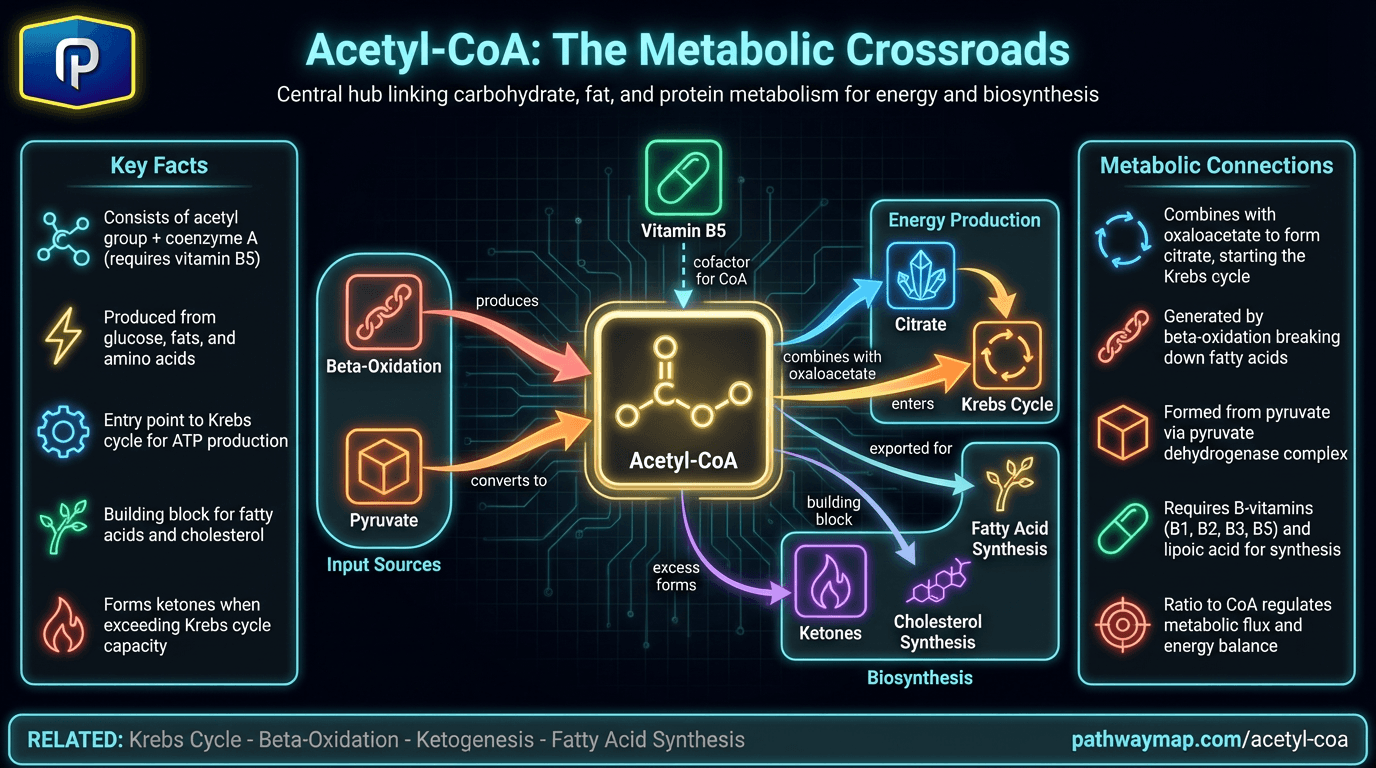
Acetyl-coenzyme A (acetyl-CoA) is a crucial metabolic intermediate that sits at the crossroads of energy metabolism. It consists of an acetyl group attached to coenzyme A (which requires vitamin B5/pantothenic acid for its synthesis). Acetyl-CoA is produced from multiple sources: pyruvate (from glucose via pyruvate dehydrogenase complex, requiring B1, B2, B3, B5, and lipoic acid), fatty acid beta-oxidation, and amino acid catabolism.
It enters the Krebs cycle by combining with oxaloacetate to form citrate. Beyond energy production, acetyl-CoA is the building block for fatty acid synthesis (when exported from mitochondria as citrate), cholesterol and steroid hormone synthesis, ketone body production, and acetylation reactions including histone acetylation (gene regulation) and neurotransmitter synthesis (acetylcholine).
The ratio of acetyl-CoA to CoA regulates metabolic flux. High acetyl-CoA signals energy abundance and promotes anabolic processes, while low levels trigger catabolic pathways. Mitochondrial dysfunction, B-vitamin deficiencies, or metabolic disorders can impair acetyl-CoA production, affecting energy, hormone synthesis, and cellular regulation.
Metabolic Connections
Acetyl-CoA connects to 9 other pathways.
Processes
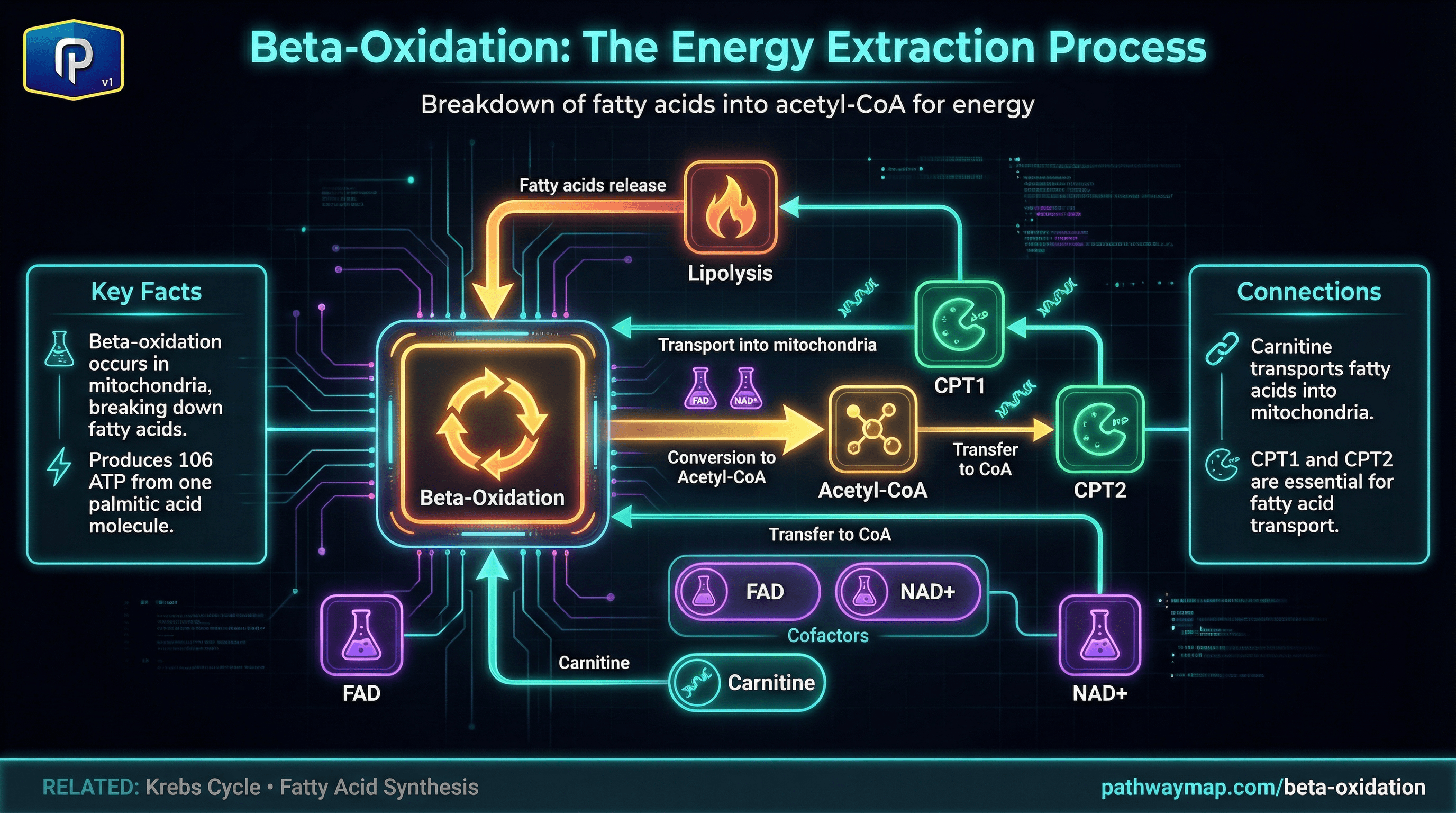
Beta-Oxidation
Beta-oxidation of fatty acids produces acetyl-CoA units that feed into the Krebs cycle for energy
Mitochondrial breakdown of fatty acids into acetyl-CoA units for energy production.
Beta-Oxidation
Beta-oxidation breaks down fatty acids into acetyl-CoA units for the Krebs cycle
Mitochondrial breakdown of fatty acids into acetyl-CoA units for energy production.
Metabolites

Citrate
Acetyl-CoA combines with oxaloacetate to form citrate, the first step of the Krebs cycle
First intermediate of the Krebs cycle. Also shuttles acetyl-CoA from mitochondria for fat synthesis.
Citrate
Acetyl-CoA combines with oxaloacetate to form citrate, the first step of the Krebs cycle
First intermediate of the Krebs cycle. Also shuttles acetyl-CoA from mitochondria for fat synthesis.
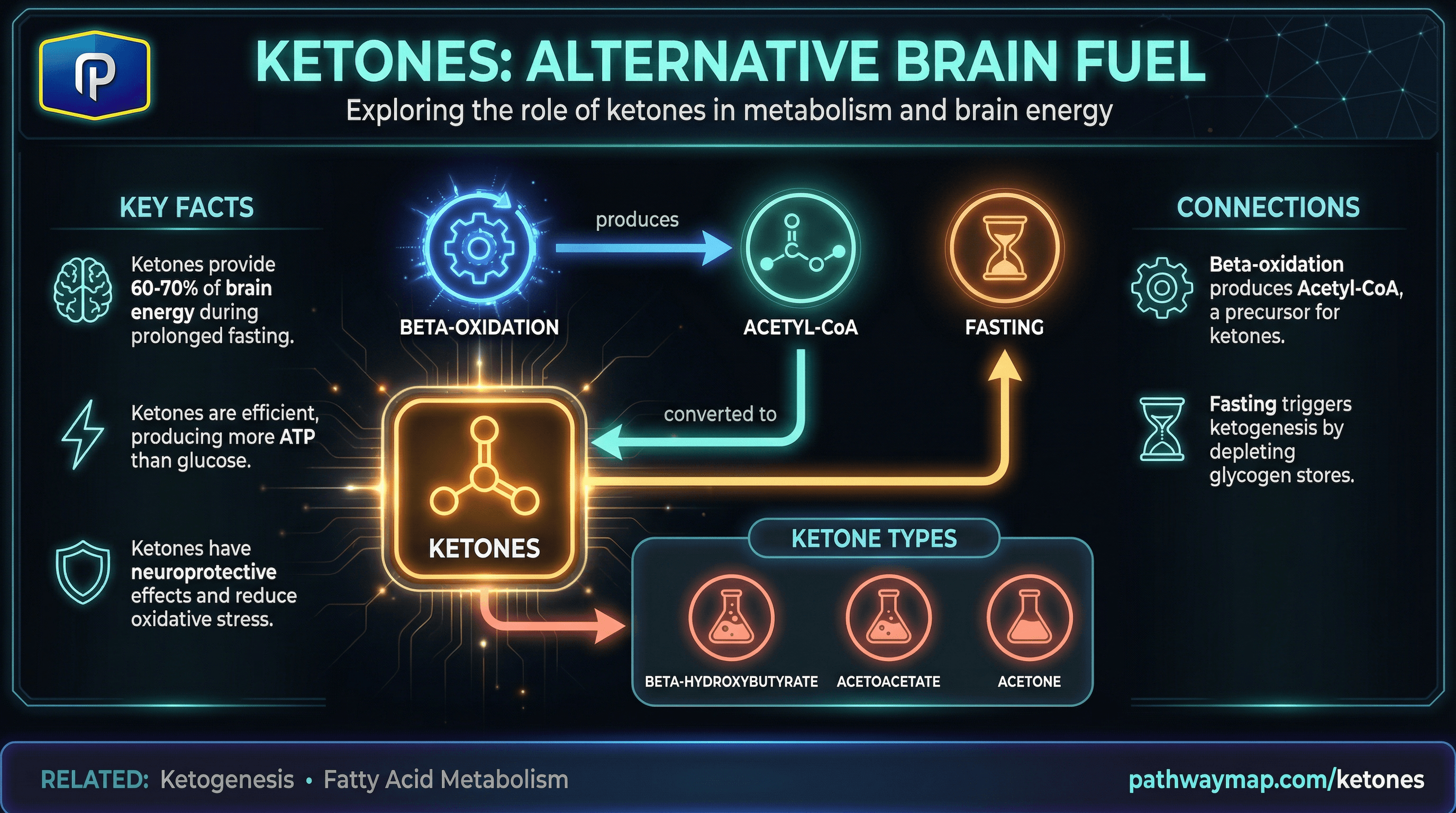
Ketones
Ketones are produced from excess acetyl-CoA when it exceeds Krebs cycle capacity
Alternative brain fuel produced from fat during fasting or low-carb eating. Include beta-hydroxybutyrate, acetoacetate, and acetone.
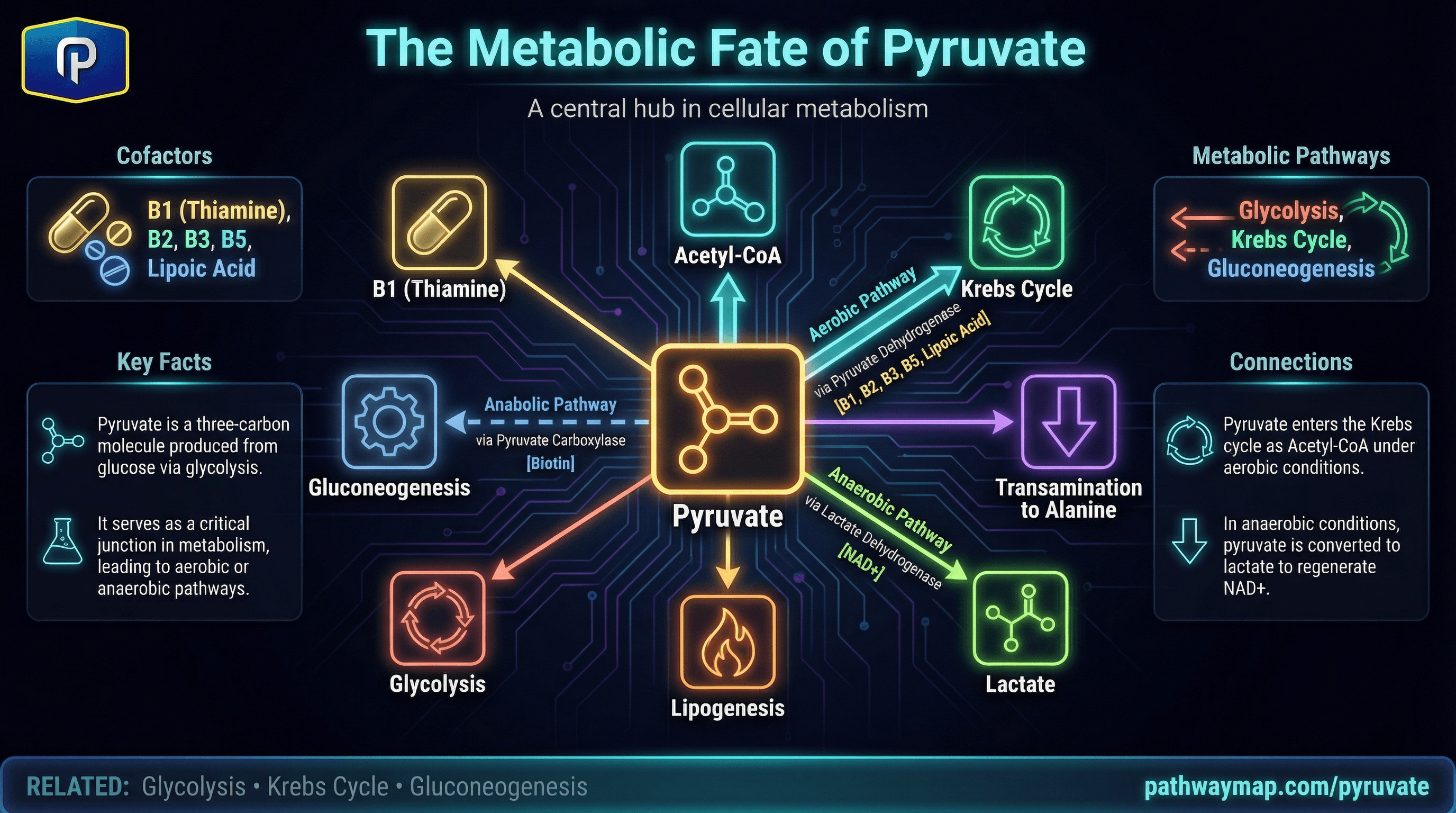
Pyruvate
Pyruvate is converted to acetyl-CoA by pyruvate dehydrogenase for the Krebs cycle
End product of glycolysis. Gateway to Krebs cycle (via acetyl-CoA) or lactate under anaerobic conditions.
Metabolic Cycles
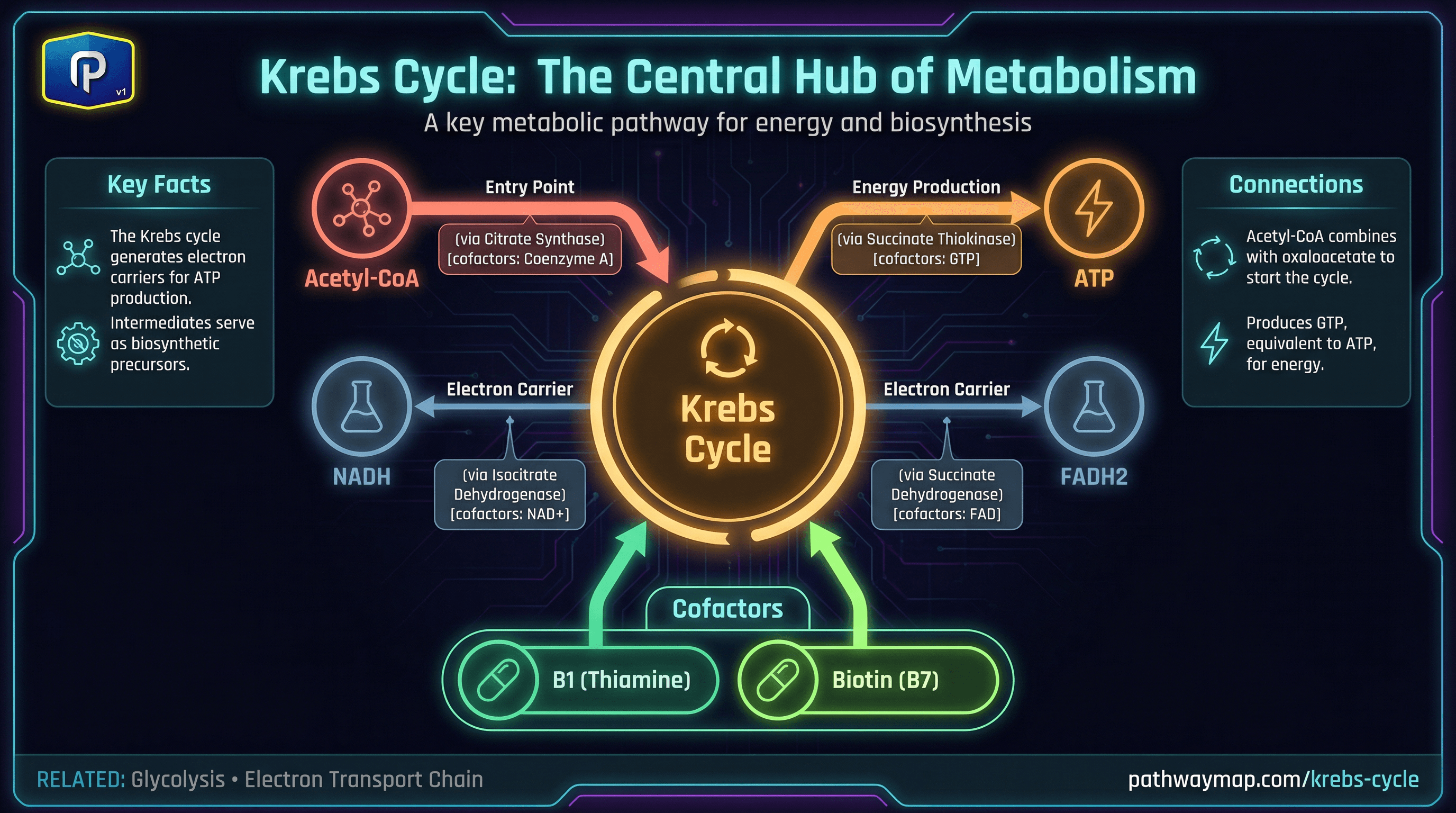
Krebs Cycle
Acetyl-CoA enters the Krebs cycle by combining with oxaloacetate to form citrate, initiating the cycle
Central metabolic pathway (citric acid cycle) that generates electron carriers for ATP production and biosynthetic precursors.
Krebs Cycle
Acetyl-CoA enters the Krebs cycle by combining with oxaloacetate to form citrate
Central metabolic pathway (citric acid cycle) that generates electron carriers for ATP production and biosynthetic precursors.